
Kerala High Court

Does A Dispute Arising After A Joint Venture Exit Remain A Commercial Dispute? Kerala High Court Answers
The Kerala High Court has recently held that a dispute arising from an agreement executed to facilitate a partner's exit from a joint venture continues to qualify as a "commercial dispute" under the Commercial Courts Act, 2015, even if the claim is based on the dishonour of a cheque issued pursuant to the exit arrangement.Justice Easwaran S. delivered the judgment while dismissing a plea challenging an order of the Commercial Court, Devikulam, rejecting an objection to the maintainability of a...
Kerala High Court Refuses To Quash Cheque Dishonour Complaint Over Defect In Cause Title
The Kerala High Court has held that a cheque dishonour complaint cannot be quashed merely because the authorised representative's name appears before the complainant society's name in the cause title. Holding that such an objection was only technical, the court observed, "As held by the Hon'ble Supreme Court in Bhupesh Rathod's case (supra), such a defect, if at all, is merely technical and cannot defeat an otherwise maintainable prosecution." Justice C.S. Dias delivered the ruling while...
CJM Can Entertain Fresh SARFAESI Plea For Possession If Borrower Re-Enters Secured Asset: Kerala High Court
The Kerala High Court has ruled that a Chief Judicial Magistrate (CJM) exercising powers under Section 14 of the SARFAESI Act does not become functus officio after handing over possession of a secured asset to a secured creditor. The court held that the Magistrate can entertain a fresh request for assistance if the secured creditor is later unlawfully dispossessed of the secured asset.For context, Section 14 empowers a Chief Judicial Magistrate to assist a secured creditor in taking possession...
Can An Arbitrator Appoint An Advocate Commissioner To Collect Evidence? Kerala High Court Says No
The Kerala High Court has ruled that an arbitral tribunal cannot appoint an Advocate Commissioner to collect evidence by invoking its power to grant interim measures under Section 17 of the Arbitration and Conciliation Act, 1996.Justice Easwaran S observed that Section 17 cannot be used to circumvent the limits imposed by Sections 26 and 27 of the Act. "Merely because Section 17 provides power to the arbitrator to grant interim relief, he cannot bypass the prohibition under Section 26 and grant...
Article 227 Petition Not Maintainable When Similar Relief Sought Before Supreme Court: Kerala High Court
The Kerala High Court on 30 July held that parties cannot invoke its supervisory jurisdiction under Article 227 of the Constitution to seek interim relief in execution proceedings when connected appeals involving the same dispute are already pending before the Supreme Court. Justice T.R. Ravi refused to stay the execution proceedings pending before the National Company Law Tribunal (NCLT), Kochi in a family dispute over management of companies, holding that the petitioners must seek such relief...
Refund Of Service Tax Cannot Be Decided Before Determining Nature Of Contract: Kerala High Court
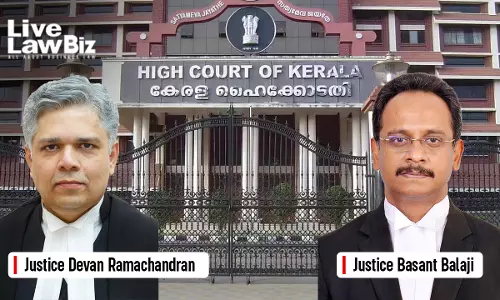
The Kerala High Court on 27 July held that the question of refund or adjustment of Service Tax cannot be decided before the Assessing Authority determines whether the underlying contract is a works contract or a service contract, as the nature of the contract determines the applicable tax liability. A Division Bench of Justices Devan Ramachandran and Basant Balaji partly allowed the appeals filed by Gaiagen Technologies Private Limited (formerly Pest Control India Private Limited) and set aside...
NI Act Notice Not Invalid Merely Because Postal Acknowledgment Signature Differs From Cheque: Kerala High Court
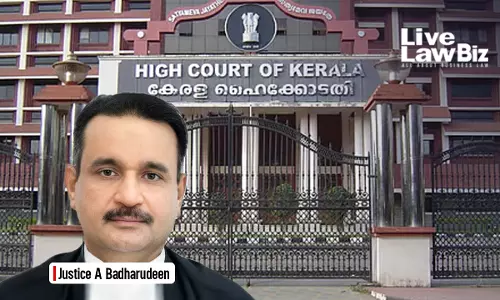
The Kerala High Court has recently ruled that once a complainant shows that a legal demand notice in a cheque bounce case was sent to the accused's correct address, a trial court cannot treat the notice as invalid merely because the signature on the postal acknowledgment card differs from the signature on the dishonoured cheque.Justice A. Badharudeen said allowing such an approach would make it easy for accused persons to avoid liability. "If such a procedure is recognized in law, clever accused...
Supreme Court Pleadings Cannot Decide Legal Status Of Nair Service Society: Kerala High Court
The Kerala High Court on 17 July dismissed a writ appeal filed by a member of the Nair Service Society (NSS) seeking action against the Society and its directors for alleged violations of the Companies Act, 2013. A Division Bench of Justices Raja Vijayaraghavan V and K.V. Jayakumar held that pleadings filed before the Supreme Court could not determine the Society's regulatory framework. The judges observed:“It can thus be held that the “court of record” attribute under Article 129 does not mean...
Return Of Title Deeds Dispute Remains Arbitrable Despite Mandatory Injunction Relief: Kerala High Court
The Kerala High Court on 14 July 2025 held that a claim for return of title deeds remains arbitrable even when framed as a suit for mandatory injunction, ruling that the nature of the relief claimed does not determine arbitrability when the dispute arises from an agreement containing a broad arbitration clause. Justice T.R. Ravi allowed the reference of the dispute between The Indian Hotels Co. Ltd. and KTC Group entities to arbitration, holding that the expression “any matter in any way...
Can A Mere Signature On A Cheque Trigger Presumption Of A Legally Enforceable Debt? Kerala High Court Explains
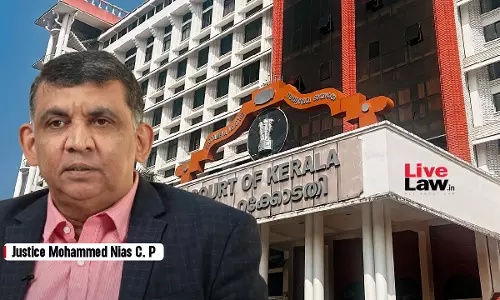
The Kerala High Court has recently held that signing, issuance and execution of a cheque are distinct legal concepts. It observed that the statutory presumptions under Sections 118(a) and 139 of the Negotiable Instruments Act, 1881 arise only when execution of the cheque is admitted or proved.Justice Mohammed Nias C.P. made the observation while setting aside a trial court judgment dismissing a money recovery suit. The Court remanded the matter for fresh consideration.“When courts say that...
Acquittal In Cheque Bounce Case Doesn't Bar Civil Recovery Suit On Same Cheque: Kerala High Court
The Kerala High Court on 29 July held that an acquittal in proceedings under Section 138 of the Negotiable Instruments Act, 1881 (dishonour of cheque for insufficiency of funds) does not prevent a civil court from deciding a recovery suit based on the same cheque, as findings recorded in criminal proceedings do not bind civil courts. A Bench comprising Justice Mohammed Nias C.P. allowed Prameela Varghese's appeal, set aside the Trial Court's decree directing her to pay the cheque amount with...
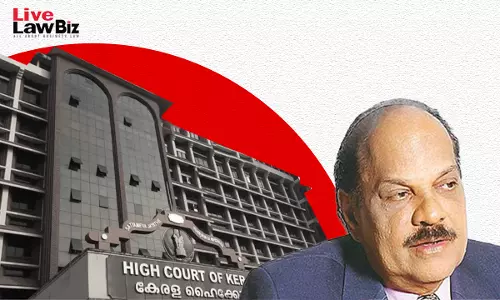
Kerala High Court Dismisses SEBI Appeal Over Escrow Funds Linked To Atlas Ramachandran
The Kerala High Court on Thursday dismissed a writ appeal filed by the Securities and Exchange Board of India (SEBI) challenging a single judge's judgment in Axis Bank's writ petition against an Income Tax Department recovery order concerning funds lying in an escrow account maintained by late Atlas Ramachandran (M.M. Ramachandran).A Division Bench of Justice Devan Ramachandran and Justice Basant Balaji held that SEBI, which was not the writ petitioner, could not maintain a collateral challenge...