
High Courts

IBBI Chairperson Cannot Act As Disciplinary Committee Under IBC: Calcutta High Court
The Calcutta High Court on 16 July held that the Chairperson of the Insolvency and Bankruptcy Board of India (IBBI) cannot act as the Disciplinary Committee under the Insolvency and Bankruptcy Code (IBC), as the Committee can consist only of Whole-Time Members of the IBBI. Justice Shampa Sarkar allowed the petition filed by Sashi Agarwal, an Insolvency Professional, and set aside the IBBI order cancelling his registration under Section 220(2) of the IBC, which empowers the Disciplinary...
IBC Cannot Be Used to Validate Illegal Constructions Or Defeat Town Planning Laws: NCLAT
The National Company Law Appellate Tribunal (NCLAT) in Delhi has held that while a corporate debtor's subsisting contractual and development rights under a hire-purchase agreement may constitute assets under the Insolvency and Bankruptcy Code (IBC), the insolvency process cannot be used to legitimise unauthorised construction or defeat statutory town planning laws. A bench of Judicial Member Justice Mohd. Faiz Alam Khan and Technical Member Naresh Salecha observed: “We emphasise that...
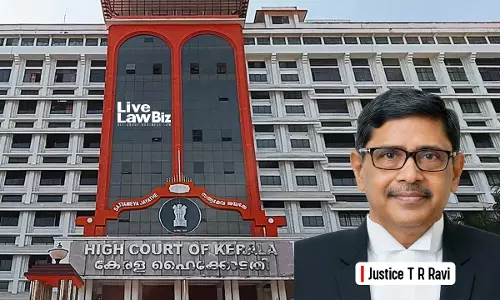
Article 227 Cannot Be Used To Bypass NCLAT Remedy Against NCLT Orders: Kerala High Court
The Kerala High Court on 14 July held that parties cannot invoke the High Court's supervisory jurisdiction under Article 227 of the Constitution to challenge orders passed by the National Company Law Tribunal (NCLT) when the Insolvency and Bankruptcy Code, 2016 provides an effective statutory appellate remedy before the National Company Law Appellate Tribunal (NCLAT). Justice T.R. Ravi dismissed a petition filed by Erattupetta Municipality, observing: “When a person chooses not to take any...

Suit Filed During IBC Interim Moratorium Attracts Rejection Of Plaint Provision Under CPC: Calcutta High Court
The Calcutta High Court has held that a court cannot entertain a suit instituted during the operation of an interim moratorium under the Insolvency and Bankruptcy Code where the statutory bar applies. It ruled that once the embargo is brought to the court's notice, the court must act in accordance with the law. Where the statutory conditions are met, the plaint must be rejected. A division bench of Justice Debangsu Basak and Justice Md. Shabbar Rashidi set aside a February 5, 2026 judgment of...
Pending Civil Suits Cannot Be Dismissed Merely Because Insolvency Proceedings Begin Later: Calcutta High Court
The Calcutta High Court has recently held that a civil suit filed before insolvency proceedings are initiated cannot be dismissed merely because proceedings under the Insolvency and Bankruptcy Code (IBC) begin later. It observed that the law protects the insolvency process from interference but does not automatically bar civil courts from hearing pending suits. A division bench of Justice Debangsu Basak and Justice Md. Shabbar Rashidi delivered the ruling while setting aside a commercial...
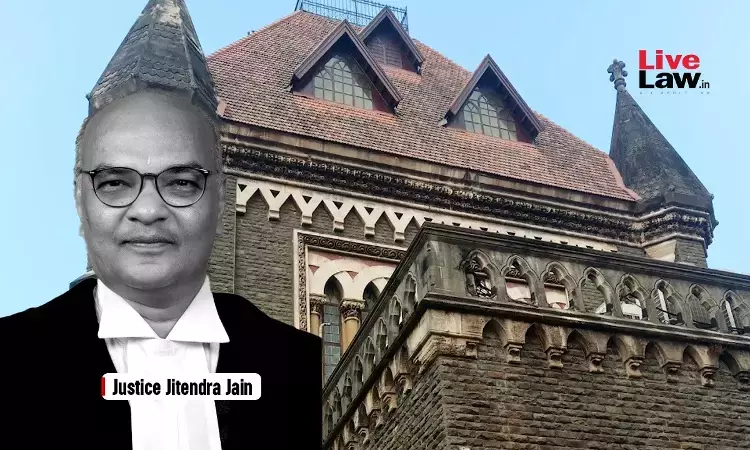
Creditors Need Not Obtain Decree To File Claims Under Presidency Towns Insolvency Act: Bombay High Court
The Bombay High Court on Thursday held that a creditor does not need to obtain a decree before lodging a claim with the Official Assignee after a debtor is declared insolvent under the Presidency Towns Insolvency Act, 1909. It ruled that the Official Assignee must independently examine every claim and decide whether to admit or reject it by recording reasons in writing. Justice Jitendra Jain delivered the ruling while answering a reference on whether a creditor's claim must be supported by a...

Calcutta High Court Bars WBSEDCL From Seeking Pre-CIRP Late Surcharge From SRA For New Electricity Connection
The Calcutta High Court has recently held that West Bengal State Electricity Distribution Company Limited (WBSEDCL) could not insist that Pinax Paper Mills Private Limited pay pre-CIRP Late Payment Surcharge (LPSC) before granting a fresh electricity connection after approval of the company's resolution plan. Justice Ravi Krishan Kapur held that the successful resolution applicant was entitled to the benefit of the "clean slate" principle and that claims not forming part of the approved...
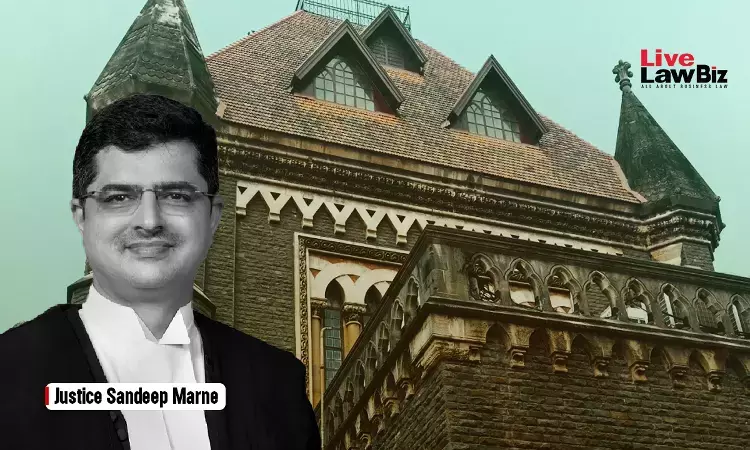
Developer's Insolvency Cannot Block Housing Society's Bid For Conveyance Of Land And Building: Bombay High Court
A housing society's application for deemed conveyance of land and building cannot be put on hold merely because insolvency proceedings are pending against a developer, the Bombay High Court has held. The court ruled that a moratorium under the Insolvency and Bankruptcy Code (IBC) does not prevent authorities from deciding such applications under the Maharashtra Ownership Flats Act (MOFA). Justice Sandeep V. Marne set aside an order that had rejected a deemed conveyance application filed by...
Orissa High Court Quashes Criminal Proceedings Against Ferro Alloys Over Pre-CIRP Environmental Law Violations
The Orissa High Court has recently quashed criminal proceedings against Ferro Alloys Corporation Ltd over alleged environmental law violations. It held that continuation of the prosecution was not sustainable as the violations happened before the insolvency resoulution. Justice Dr. Sanjeeb K. Panigrahi also noted that offences under Section 15 of the Environment (Protection) Act, 1986 have since been decriminalised. They have been replaced with a regime of civil penalties. “In the present...
Directions To NCLT For Urgent Listing Of Plea Cannot Be Issued In Writ Jurisdiction: Delhi High Court
The Delhi High Court has recently refused to issue directions to the National Company Law Tribunal (NCLT) for urgent listing of a homebuyer's transfer plea in an ongoing insolvency proceeding. The court observed that such directions cannot be issued in exercise of its writ jurisdiction. A vacation bench of Justice Tejas Karia dismissed a petition filed by homebuyer Anuj Goyal and imposed costs of ₹25,000, payable to the Delhi High Court Bar Clerks' Association within two weeks. “Such...
NCLT's Scrutiny Of Applicant's Standing To Invoke Personal Insolvency Process Is Not Adjudication: Karnataka HC
The Karnataka High Court has held that the National Company Law Tribunal (NCLT) is entitled to examine whether an applicant possesses the requisite locus standi to invoke the personal guarantor insolvency framework before permitting the process to proceed. The court held that such an exercise does not amount to an adjudication of the insolvency claim on merits. Justice Suraj Govindaraj observed: “Thus, when the National Company Law Tribunal examines whether an applicant possesses the...