
Telangana High Court Holds IBC Moratorium Cannot Defeat Arbitral Proceedings, Allows Kaizen Power Appeal
Sandhra Suresh
4 May 2026 2:52 PM IST
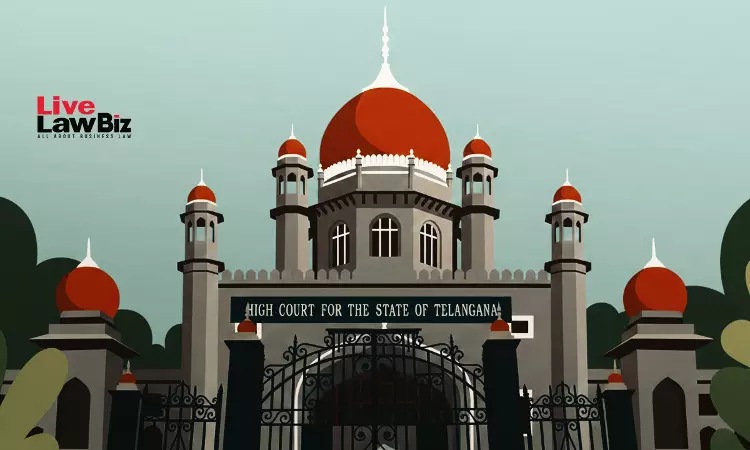
The Telangana High Court on 15 April set aside a Commercial Court order that had vacated interim protection granted to Kaizen Power Limited in relation to its lease dispute with the Andhra Pradesh Industrial Infrastructure Corporation (APIIC).
A Division Bench of Justices Moushumi Bhattacharya and Gadi Praveen Kumar held that the Commercial Court proceeded on an erroneous understanding of the effect of the IBC moratorium and allowed the appeal, directing that arbitration proceedings be resumed without further delay, while restoring the interim protection earlier granted. It held:
“...we are of the considered opinion that the parties should be directed to resume the arbitration without any further delay. The appellant No.1 cannot be permitted to cause the arbitral proceedings to be eclipsed on the pretext of the Moratorium after obtaining interim protection on 03.05.2019.”
Kaizen Power Limited had been allotted 153 acres of land in Andhra Pradesh under a lease deed dated 25 October 2010. In April 2019, APIIC issued a show cause notice proposing cancellation of the allotment on grounds of alleged non-implementation of the project.
Kaizen Power then filed a petition under Section 9 of the Arbitration and Conciliation Act, 1996 seeking protection against termination. The Commercial Court granted an ex parte interim injunction on 3 May 2019, which continued for several years.
Meanwhile, Kaizen Power invoked arbitration proceedings, and the High Court appointed former Supreme Court Judge Justice Madan B. Lokur as sole arbitrator on 2 January 2020.
However, corporate insolvency resolution proceedings were initiated against Kaizen Power on 13 December 2019, and the National Company Law Tribunal imposed a moratorium under Section 14 of the Insolvency and Bankruptcy Code. The arbitral proceedings were subsequently adjourned in May 2020.
In March 2025, the Commercial Court vacated the interim injunction and dismissed Kaizen Power's Section 9 petition, holding that the company had failed to pursue arbitration within the statutory framework under Section 9(2) of the Arbitration and Conciliation Act.
Kaizen Power and its Resolution Professional challenged the order, arguing that the Commercial Court's decision violated Section 14(1)(d) of the IBC, which bars recovery of property in the possession of the corporate debtor during moratorium.
APIIC, on the other hand, contended that Kaizen Power had enjoyed interim protection for nearly six years without effectively prosecuting arbitration. It further submitted that the Resolution Professional failed to discharge duties under Section 25(2)(b) of the IBC to pursue proceedings in the interest of the corporate debtor.
The High Court held that the Commercial Court erred in proceeding on the assumption that arbitration had not been effectively pursued. It noted that arbitral proceedings had in fact been initiated and an arbitrator appointed in January 2020.
The Bench further held that vacating interim protection during the moratorium contravened Section 14(1)(d) of the IBC, which prohibits recovery of assets in the possession of the corporate debtor. Relying on the Supreme Court's decision in P. Mohanraj v. Shah Bros. Ispat (2021), the Court reiterated that the moratorium extends to proceedings that may impact the debtor's rights over its assets.
At the same time, the Court criticised the Resolution Professional for failing to actively prosecute the arbitration, noting that Section 25(2)(b) imposes a statutory obligation to act in the interest of the corporate debtor. It clarified that while the moratorium protects the debtor, it cannot be used as a pretext to indefinitely stall arbitration proceedings.
Accordingly, the High Court set aside the Commercial Court's, restored the interim protection and directed that arbitration proceedings be resumed within three weeks. It further directed that no party shall delay or obstruct the arbitral process.
For Appellants: Senior Advocate Avinash Desai
For Respondents: Senior Advocate Sunil B Ganu