
Supreme Court

Supreme Court Appoints Justice L. Nageswara Rao To Mediate Kalyani Family Dispute
The Supreme Court on Monday appointed former Supreme Court judge Justice L. Nageswara Rao to explore the possibility of an amicable settlement in the long-running property dispute between industrialist Babasaheb Neelkanth Kalyani and his sister Sugandha Hiremath. It also directed that proceedings on Babasaheb Kalyani's application seeking rejection of the suit before the Bombay High Court shall remain deferred until the mediation process concludes. The order comes over two months after the...
Supreme Court Seeks Reply On SEBI's Appeal Against SAT Ruling In Bombay Dyeing-SCAL Services Case
The Supreme Court on Monday observed that the Securities Appellate Tribunal's 2:1 verdict setting aside SEBI's orders against Bombay Dyeing and SCAL Services shall not operate as a precedent in similar matters before the Tribunal, while hearing an appeal filed by the Securities and Exchange Board of India (SEBI).The majority judgment had, among other things, held that the Companies Act would prevail over the Accounting Standards in determining whether SCAL was an associate company, and...
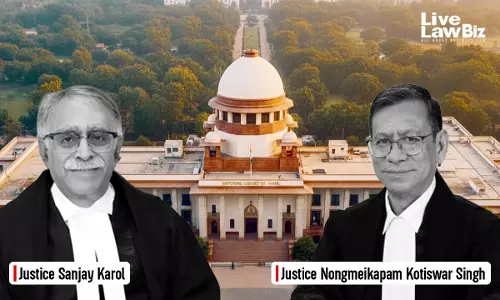
Commercial Litigants Cannot Produce Additional Documents In Piecemeal Manner: Supreme Court
The Supreme Court on Thursday ruled that parties to commercial disputes cannot repeatedly seek to place additional documents on record after leading evidence, ruling that such an approach is incompatible with the purpose of ensuring the speedy resolution of commercial disputes. "The plaintiff when leading evidence, is expected to not only produce all documents but also properly anticipate the questions that may be put to its witnesses by the other side. What cannot be countenanced is a stop and...
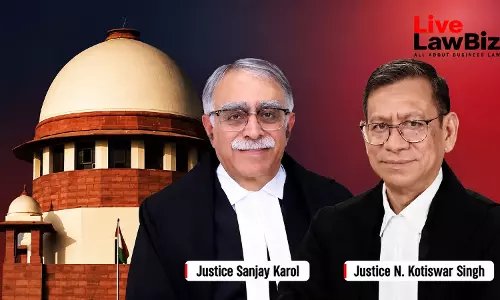
RBI's Bank Amalgamation Scheme Doesn't Override Landlord's Rights Under Delhi Rent Control Act: Supreme Court
The Supreme Court on Thursday held that a banking amalgamation carried out under a Reserve Bank of India scheme does not take away a landlord's right to seek eviction under the Delhi Rent Control Act where tenancy rights vest in another entity without the landlord's written consent. A bench of Justices Sanjay Karol and Nongmeikapam Kotiswar Singh held that the amalgamation of Hindustan Commercial Bank with Punjab National Bank did not prevent eviction after the tenancy rights vested in Punjab...

Supreme Court Sets Aside Delhi HC Ruling That PNB-HCB Bank Merger Did Not Amount To Unlawful Subletting
The Supreme Court on Thursday allowed the appeal filed by British Motor Car Company (1934) Ltd against the Delhi High Court's judgment which had held that the statutory amalgamation of Hindustan Commercial Bank (HCB) with Punjab National Bank (PNB) did not amount to unlawful subletting under the Delhi Rent Control Act.The High Court had set aside the eviction order passed by the Rent Control Tribunal, holding that the transfer of tenancy rights to PNB pursuant to the statutory amalgamation of...
CCI Moves Supreme Court Against NCLAT Order Setting Aside ₹301.61 Crore Penalty On Grasim Industries
The Competition Commission of India has moved the Supreme Court against the National Company Law Appellate Tribunal's (NCLAT) decision setting aside its order imposing a ₹301.61 crore penalty on Grasim Industries Ltd. The penalty had been imposed for the company's alleged abuse of its dominant position in the market for the supply of viscose staple fibre (VSF) to spinners in India.The appeal filed on July 3 is yet to be listed before the apex court. A Bench of Judicial Member Justice Yogesh...
Former Reliance Power CFO Moves Supreme Court Against Bail Denial In ₹68.20 Crore PMLA Case
Former Reliance Power Ltd Chief Financial Officer Ashok Kumar Pal has moved the Supreme Court challenging the Delhi High Court's refusal to grant him regular bail in the Enforcement Directorate's money laundering case.The case arises from the alleged submission of forged bank guarantees worth ₹68.20 crore for a Solar Energy Corporation of India battery energy storage project.The special leave petition filed on June 30, 2026 is yet to be listed before the apex court. The case arises from an...

NSEL Moves Supreme Court Against HC Order Refusing Joint Trial In CBI Cases Over Alleged Payment Crisis
National Spot Exchange Ltd (NSEL) has moved the Supreme Court challenging the Bombay High Court's March 27, 2026 judgment refusing to direct a joint trial in two CBI cases arising out of the alleged NSEL payment crisis.NSEL argues that the cases stem from the same alleged fraudulent paired contracts. It says they involve the common accused, witnesses, and documents. The special leave petition, filed on June 19, 2026, is yet to be listed. The dispute concerns two CBI Special Cases pending...
Supreme Court Orders Status Quo On HC Direction To OMCs To Consider Dedicated Ethanol Plant's Higher Allocation Plea
The Supreme Court on Monday ordered that status quo be maintained while issuing notice on Bharat Petroleum Corporation Limited's (BPCL) special leave petition challenging a Karnataka High Court judgment concerning ethanol allocation for the Ethanol Supply Year (ESY) 2025-26. The High Court had directed the Oil Marketing Companies (OMCs) to decide VINP Distilleries' representation seeking additional ethanol allocation before finalising the tender. The status quo order effectively keeps in...
Supreme Court Appoints Former Judge Justice Abhay Oka As Mediator In IIFL Finance-Paramvir Developers Dispute
The Supreme Court on Monday appointed former Supreme Court judge Justice Abhay S. Oka as mediator to facilitate a settlement in a dispute between IIFL Finance Ltd. and a real estate developer over a Framework Agreement concerning the settlement of loan facilities. The agreement relates to the La Maison, Signature Suites, and Celyn real estate projects. A vacation bench of Justices K.V. Viswanathan and Shree Chandrashekhar passed the order while hearing IIFL Finance's special leave petition...
Supreme Court Allows Shareholder To Approach NCLAT Chairperson After Split Verdict On Stay Of India Power's CIRP
The Supreme Court on Wednesday allowed India Power Corporation Ltd.'s shareholder Pragya Jhunjhunwala to approach the National Company Law Appellate Tribunal (NCLAT) Chairperson for consideration of a reference arising from a split verdict on applications seeking an interim stay of the company's admission into insolvency proceedings. A vacation bench of Justices B.V. Nagarathna and Joymalya Bagchi disposed of the special leave petition. It reserved liberty to Jhunjhunwala to request the NCLAT...