
Supreme Court
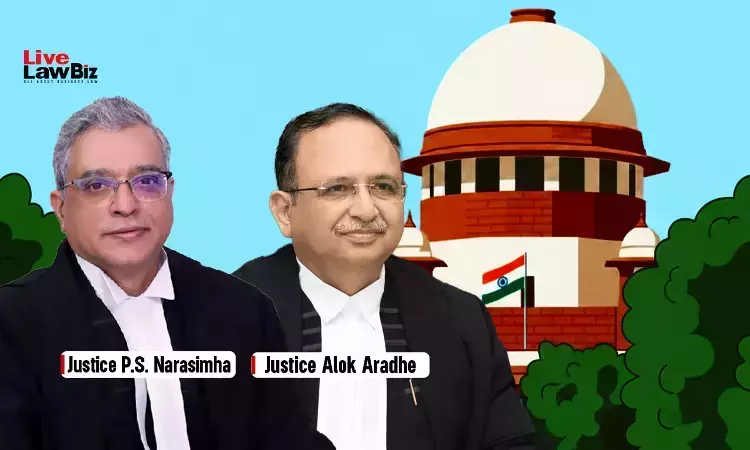
RBI Recovery Guidelines 'Exist Only On Paper': Supreme Court Directs Effective Compliance By Banks, NBFCs
The Supreme court on Wednesday directed the Reserve Bank of India (RBI) to take effective steps to ensure that NBFCs and Scheduled Commercial Banks actually comply with its recovery guidelines, observing that the Guidelines, Master Circulars and Clarifications issued over the years have “existed only on paper”. The direction came while allowing an appeal by Hari Dutta Sharma, whose commercial vehicle was repossessed by Cholamandalam Investment and Finance Company Limited after loan defaults. ...

Centre Challenges Punjab & Haryana HC Verdict Striking Down S.147A Income Tax
The Union Government has approached the Supreme Court challenging the Punjab and Haryana High Court judgment declaring Section 147A of the Income Tax Act, 1961, unconstitutional.The matter was mentioned before Chief Justice of India Surya Kant by Additional Solicitor General N. Venkataraman, appearing for the Union. The ASG sought urgent listing of the Special Leave Petition, stating that the High Court ruling had created a legal vacuum concerning income tax reassessment proceedings. The Chief...
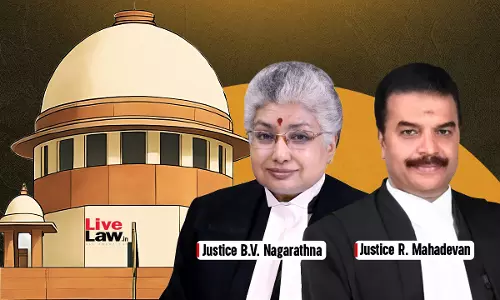
Supreme Court Dismisses Plea Claiming ARCs Are Not Banking Companies And Cannot Use SARFAESI, RDB Acts
The Supreme Court has recently dismissed a petition by a borrower challenging an Asset Reconstruction Company's (ARC) use of the SARFAESI Act to recover dues. The borrower argued that ARCs are not “banking companies” and therefore cannot invoke the recovery law.The court, however, did not examine that broader question.Instead, the court rejected the petitioner's separate contention that SARFAESI could not be invoked after the Debt Recovery Tribunal (DRT), Ernakulam, had passed a decree. A...
'You Harass Shareholders': Supreme Court Directs Mediation In 34-Year-Old ITC Share Dispute
The Supreme Court on Thursday directed the parties to attempt mediation in a dispute concerning 85 ITC shares purchased by Prakash Chand Baid in 1989.A bench comprising Justices Aravind Kumar and Vipul M. Pancholi issued limited notice for the purpose of exploring mediation and directed the matter to be listed after four weeks.During the hearing, the bench questioned why the dispute concerning the shares had continued for so many years and urged the parties to make another attempt at resolving...
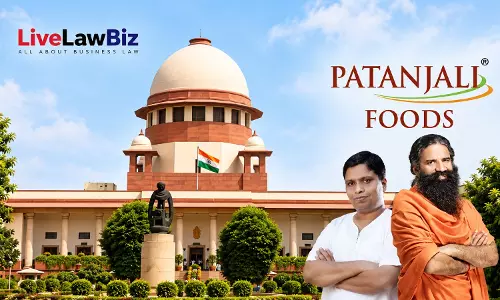
Patanjali Foods Withdraws Plea Against Telangana HC Order Upholding Cancellation Of Suryapet Oil Palm Factory Zone
The Supreme Court on Thursday allowed Patanjali Foods to withdraw its Special Leave Petition challenging the Telangana High Court Division Bench judgment upholding the Telangana Government's cancellation of its Suryapet oil palm factory zone.The Supreme Court was hearing Patanjali Foods' challenge to the Telangana High Court Division Bench judgment, which had dismissed the company's writ appeal against the single judge's order and upheld the cancellation of Patanjali's Suryapet oil palm factory...
Supreme Court Upholds Bombay HC Order Referring Kirloskar Family Dispute To Arbitration
The Supreme Court has upheld the Bombay High Court's decision to refer to arbitration a dispute between Kirloskar Brothers Limited and members of the Kirloskar family arising from a Deed of Family Settlement dated September 11, 2009 (DFS). The DFS sought to formalise the separation of businesses and group companies among different branches of the family with Clause 20 containing an arbitration agreement.A bench comprising Chief Justice Surya Kant and Justices Joymalya Bagchi and V....
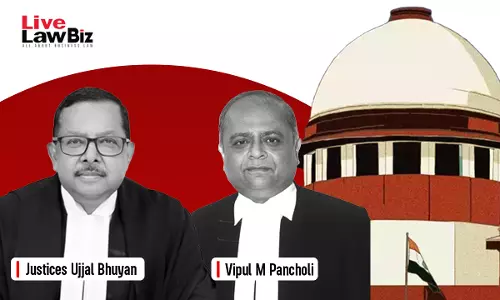
Reconstituted Partnership Cannot Use Dissolved Firm's Assets Without Settling Outgoing Partner: Supreme Court
The Supreme Court on Wednesday held that a reconstituted partnership has no right to use the assets of a dissolved firm unless the partners of the dissolved firm first agree to settle the accounts and pay the outgoing partner his share in the value of those assets.“With the dissolution of the partnership firm, all its assets have to be necessarily liquidated unless any one or more partners of the dissolved firm come forward to pay the market value of the share of the remaining partners/all...
Personal Guarantor Bound By Arbitration Clause In Loan Agreement Where Transaction Is Composite: Supreme Court
The Supreme Court on Tuesday ruled that an arbitration clause in a loan agreement can bind a personal guarantor even where the guarantee contains no separate arbitration clause. This applies where the guarantee is expressly integrated into the loan agreement as part of the same composite transaction.Allowing an appeal by the National Skill Development Corporation (NSDC) against Surya Wires Private Limited and others, the Court set aside the Delhi High Court's judgment upholding the deletion of...
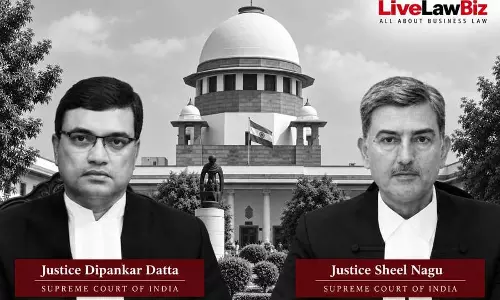
Is Fraud Necessary To Initiate Stamp Duty Undervaluation Proceedings? Supreme Court Refers Issue To Larger Bench
The Supreme Court on Monday referred to a larger Bench the question of whether stamp duty authorities must have material showing fraudulent intention before questioning the value of a property under Section 47-A of the Indian Stamp Act.A Bench of Justice Dipankar Datta and Justice Sheel Nagu expressed serious doubts about the three-Judge Bench ruling in V.N. Devadoss v. Chief Revenue Control Officer-cum-Inspector of Stamps.That judgment held that the power under Section 47-A is based on “wilful...
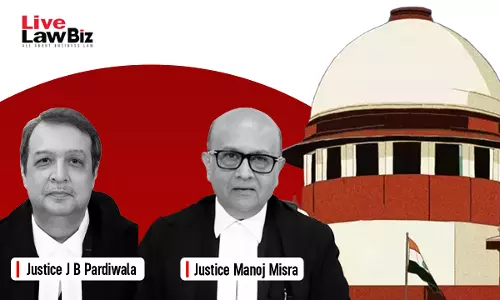
Company Can Be Prosecuted For Criminal Offences Without Identifying Guilty Natural Person: Supreme Court
The Supreme Court on Monday held that identification of a natural person is not a prerequisite, at the threshold stage, for prosecuting a corporate entity for an offence involving mens rea.A Division Bench comprising Justices J.B. Pardiwala and Manoj Misra made the observation while dismissing an appeal filed by Sanofi India Limited against the Karnataka High Court's refusal to quash criminal proceedings arising from a CBI chargesheet.“All that is required, at this stage, is that an offence be...
Supreme Court Upholds Order Allowing Energy Watchdog In JBVNL's ₹285 Crore Cross-Subsidy Surcharge Proceedings
The Supreme Court on Thursday declined to interfere with a Jharkhand High Court interim order allowing Energy Watchdog to participate in proceedings initiated by Jharkhand Bijli Vitran Nigam Limited (JBVNL) against Amalgam Steels and Power Limited and another company. JBVNL had raised cross-subsidy surcharge demands totalling about ₹285 crore against the two companies."While we decline to interfere with the interim order passed by the High Court, we make it clear that we have not expressed any...
RBI Can Supersede Multi-State Co-Operative Bank Board For Up To Five Years In Public Interest: Supreme Court
The Supreme Court has ruled that the Reserve Bank of India can supersede the Board of Directors of a multi-State co-operative bank and extend the period of supersession from time to time, subject to an overall limit of five years. This power can be exercised in public interest, to protect depositors and the bank from harmful management, or to ensure proper management of the bank."Thus, for reasons to be recorded, the power of supersession of a multi-State co-operative bank, can be exercised by...