
Karnataka High Court
When Can A Disqualified Company Director Continue In Office? Karnataka High Court Clarifies
The Karnataka High Court has clarified that a director disqualified because of a company's statutory defaults can continue to hold office in that defaulting company so that the director can undertake the statutory compliance required to rectify the defaults and authorities can pursue proceedings against the person responsible. It also held that such a director must vacate office in companies that are not in default. Justice Suraj Govindaraj passed the order while partly allowing a review...
Karnataka High Court Refuses To Quash DGGI Criminal Proceedings In Alleged Fake ITC Case
The Karnataka High Court has recently refused to quash criminal proceedings against a Mysuru scrap dealer accused of allegedly fraudulently availing and passing fake Input Tax Credit (ITC). It rejected his contention that the Directorate General of GST Intelligence (DGGI) could not investigate the case because the State GST authorities had already initiated action. Justice M. Nagaprasanna relied on the Supreme Court's decision in Armour Security (India) Ltd. v. Commissioner, CGST, Delhi East...
Karnataka High Court Rejects Ex-Director's Objection To Settlement With NHAI After Company's Liquidation
The Karnataka High Court has declined to entertain an objection by an erstwhile director of A.L. Sudershan Construction Co. Ltd. against a settlement with the National Highways Authority of India (NHAI) over an arbitral award The court observed that the company was under liquidation and was duly represented by the Resolution Professional, and that any objection would have been raised at an appropriate time before the National Company Law Tribunal. A Division Bench of Justices Anu Sivaraman and...
GST Reimbursement Tied To Contractual Terms, Cannot Override Statutory Scheme: Karnataka High Court
The Karnataka High Court on 25 June held that disputes concerning reimbursement of additional GST liability arise out of contractual arrangements between contractors and employers and cannot be used to alter or override the statutory framework governing GST levy, assessment and recovery. A Division Bench of Justices S.G. Pandit and Rajesh Rai K. modified a Single Judge's order that had directed reimbursement of GST amounts to a contractor, which was passed relying on Sri Chandrashekaraiah and...
Karnataka High Court Upholds Order Restraining MI Marbo Italia From Using 'MI Marbo Italia' Trade Name
The Karnataka High Court on 11 June dismissed an appeal filed by MI Marbo Italia and upheld a 2015 order of a Sessions Judge restraining it from using the trade name “MI Marbo Italia”, finding it deceptively similar to the registered trademark “M Marble Italia.” A Bench of Justice Hanchate Sanjeevkumar observed that “there is no perversity and there is no need to cause interference with the findings given by the trial Court in allowing the application.”M Marble Italia (Tile Italia Mosaics...
Sec.138 NI Act Not Maintainable On Cheque Issued After Company's Dissolution: Karnataka High Court
The Karnataka High Court on 1 July held that proceedings under Section 138 of the Negotiable Instruments Act, 1881 are not maintainable where a cheque is issued in the name of a company that had already been struck off and dissolved. A Bench of Justice M Nagaprasanna allowed the petition and quashed the complaint proceedings initiated against Giga Networks Private Limited and its former director. He observed: “On a blend of the judgments rendered by the Apex Court and that of the High Court of...
Karnataka High Court Dismisses Eternal, Formerly Zomato, Appeal Against Order Restraining Use Of 'Eternal' Mark
The Karnataka High Court recently dismissed an appeal filed by Eternal Limited, formerly known as Zomato Limited, against a trial court's ad-interim ex-parte injunction restraining it from using the trademark "Eternal" in relation to services similar to those offered by Bengaluru-based Eternl Resilienttech Private Limited. Justice Hanchate Sanjeevkumar held that the trial court had recorded reasons while granting the ex parte injunction. The court ruled that Eternal's remedy lay before the...

SARFAESI Security Interest Cannot Override Statutory First Charge Under AP Tax Laws: Karnataka High Court
The court also urged the legislature to clearly specify whether legislative amendments are prospective, retrospective, or retroactive to reduce interpretational disputes while dealing with amendments to the SARFAESI Act.

Contractor Must Prove Loss Of Profit On Unexecuted Work; No Automatic Damages: Karnataka High Court
The Karnataka High Court has held that a contractor claiming damages for loss of profit on unexecuted works is not barred from raising such a claim merely because the work remained unexecuted. However, the contractor must prove that it actually suffered the loss. "If a contractor is prevented from executing the contract on account of reasons attributable to the employer, the contractor is not precluded from raising a claim for loss of profits for the unexecuted works," the court observed. It...
EPF Dues Get Priority Over Establishment Assets, Not Partner's Personal Property: Karnataka High Court
The Karnataka High Court has recently held that while the statutory first charge under the Employees' Provident Funds and Miscellaneous Provisions Act, 1952 takes priority over competing claims against the assets of an establishment, it does not automatically extend to the separate property of a partner of a partnership firm. Justice Anant Ramanath Hegde said Section 11(2) of the EPF Act expressly creates a first charge only over the assets of the establishment and not over the separate assets...
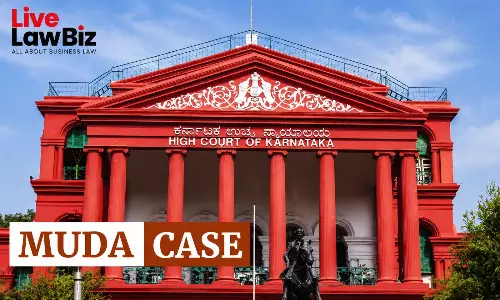
Karnataka High Court Grants Bail To Former MUDA Commissioner In Money Laundering Case
The Karnataka High Court on Wednesday granted bail to former Mysuru Urban Development Authority (MUDA) Commissioner G.T. Dinesh Kumar in a money laundering case linked to the alleged MUDA site allotment scam. The court held that while delay in trial by itself is not a ground for granting bail, the petitioner had shown several changed circumstances that justified the relief. Justice M. Nagaprasanna passed the order in proceedings initiated by the Enforcement Directorate (ED) under the...
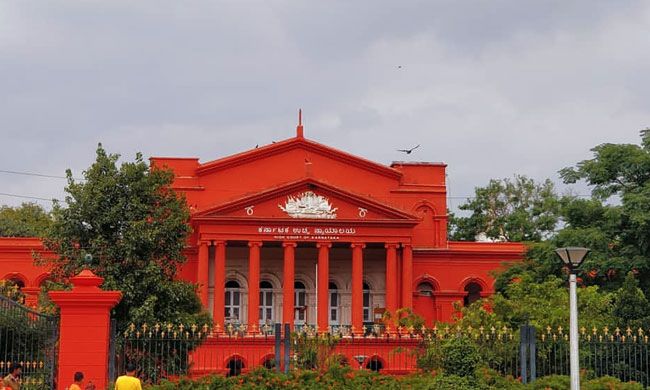
Karnataka High Court Upholds Constitutional Validity Of Premium FAR Scheme, Rejects Challenge Over TDR Value
The Karnataka High Court recently upheld the state's Premium Floor Area Ratio (Premium FAR) scheme, rejecting challenges that it unfairly allowed developers to buy additional building rights from the government at the cost of landowners holding Transferable Development Rights (TDRs). A Division Bench of Chief Justice Vibhu Bakhru and Justice C.M. Poonacha dismissed a writ appeal filed by a landowner who had opted for Transferable Development Rights (TDRs) in lieu of monetary compensation for...