
Cheque Return Memo Need Not Bear Bank Seal Or Signature To Prove Dishonour: Karnataka High Court
Shilpa Soman
23 April 2026 4:06 PM IST
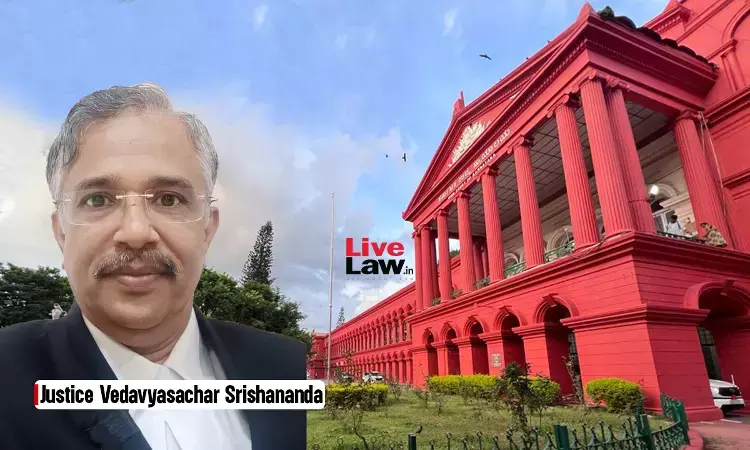
The Karnataka High Court has recently held that a cheque return memo need not carry a bank's seal or signature to establish dishonour under Section 138 of the Negotiable Instruments Act, 1881, particularly where the process is handled through electronic clearing systems.
“In view of the electronic clearance, the seal and signature is not mandatory and therefore, seal and signature, official mark etc., on Ex.P.2 cannot be a ground to reject the complaint,” a bench of Justice V Srishananda said.
The ruling came while the court was examining a challenge to the conviction of an accused in a cheque bounce case, where both the trial court and the appellate court had returned findings against him.
The dispute traces back to a private complaint filed by B.S. Ravi, who said he had known Jagadish for years. According to him, Jagadish had sought financial help and borrowed Rs. 3 lakh, agreeing to return the amount within two months with interest at 16 per cent per annum.
Repayment did not follow. After repeated requests, Jagadish issued a post-dated cheque for the same amount. When it was presented, the bank returned it unpaid, citing “funds insufficient.” A legal notice was sent, but the payment was not made.
The trial court went on to convict Jagadish, relying on the presumption available under Section 139 of the law. He was directed to pay a fine of Rs 4 lakh, with Rs 3.95 lakh to be paid to the complainant as compensation. The appellate court saw no reason to interfere and upheld the decision.
Before the High Court, the defence centred on a technical objection. It was argued that the cheque return memo could not be relied on because it did not bear a bank seal or signature, and therefore did not legally prove dishonour.
The court did not accept this. It pointed out that the memo contained all relevant details such as the cheque number, bank particulars, date of presentation, the amount involved, and the reason for return.
It also noted that once cheques are processed through electronic systems, the earlier requirement of manual endorsements with signatures no longer holds the same relevance. The absence of a seal or signature, by itself, does not undermine the validity of the memo.
If the cheque had in fact been wrongly dishonoured, the court observed, the accused had options. He could have approached the bank, produced evidence of sufficient funds, or even paid the amount after receiving notice or appearing before the court.
The court reiterated the settled position that once the cheque and the signature are admitted, the law presumes that it was issued towards a legally enforceable debt, unless the accused can show otherwise with credible evidence.
“Thus, on cumulative consideration of the material on record, in the light of the limited revisional jurisdiction, this Court having noted that the cheque belongs to accused and signature is not in dispute, the transaction between the complainant and accused is also established, the complainant has discharged the initial burden so as to invoke the presumption available to the complainant under Section 139 of the Negotiable Instruments Act, 1881.”, it said.
With no convincing material to dislodge that presumption, and no apparent flaw in how the lower courts assessed the case, the High Court declined to step in. The revision petition was dismissed.
For Petitioner: Advocate Rishi Pal Singh Varma
For Respondent: Advocate Chandrasekar P Patil