
High Court
Depositor's Apprehension Of Recovery Can't Justify Impleadment In Creditor's Writ: Madras High Court
The Madras High Court on 8 October held that a depositor's apprehension that proceedings concerning mortgaged properties may affect his eventual recovery cannot, by itself, justify his impleadment in a writ petition filed by a secured creditor. Justice K. Govindarajan Thilakavadi made the observation while dismissing K. Karunanithi's application to join a writ petition filed by Axis Bank challenging proceedings under the Tamil Nadu Protection of Interests of Depositors (in Financial...
DRT Sale Certificate Does Not Require Compulsory Registration: Madhya Pradesh High Court
The Madhya Pradesh High Court has held that a sale certificate issued in favour of a successful auction purchaser in proceedings before the Debt Recovery Tribunal (DRT) does not require compulsory registration. A Single-Judge Bench comprising Justice Sandeep N. Bhatt allowed Sukh Sagar Agro Industries' petition challenging the refusal to file/record its sale certificate in Book No. I. Sukh Sagar Agro had purchased the property in an auction conducted by the Recovery Officer, DRT-Jabalpur, who...
SARFAESI | Secured Creditor's Prior Charge Over Property Takes Precedence Over State VAT Charge: Gujarat High Court
The Gujarat High Court has reiterated that a secured creditor's charge over a property will take precedence over a subsequent charge created by the State VAT Department. The court applied the principle to a property purchased by auction purchasers in proceedings under the SARFAESI Act.The court relied on its earlier rulings, as well as the Supreme Court's judgment in Punjab National Bank v. Union of India.A division bench of Justice A.S. Supehia and Justice Vaibhavi D. Nanavati observed, “once...
Accused Must Be Heard Before Condoning Delay In Cheque Bounce Complaint: Allahabad High Court
The Allahabad High Court has recently held that an application seeking condonation of delay in filing a complaint under the Negotiable Instruments Act, 1881 (NI Act) cannot be decided without hearing the accused.The Court said Section 142(1)(a) governs cognizance, while Section 142(1)(b) prescribes the limitation for filing the complaint, hence, the proviso allowing delayed cognizance cannot be read separately and the accused must be heard on condonation.Justice Brij Raj Singh made the...
Cheque Number Discrepancy Must Be Examined At Trial, Not Quashing Stage: Karnataka High Court
The Karnataka High Court on 28 September held that a discrepancy in the cheque number mentioned in a Section 138 Negotiable Instruments Act complaint and the complainant's subsequent police statement is a factual issue that cannot be decided at the stage of quashing the prosecution. Justice Suraj Govindaraj dismissed Umesh K.G.'s petition seeking to quash the proceedings initiated by Bharathi H.N. over an alleged failure to honour a cheque for Rs. 40 lakh. The Bench observed: “The discrepancy...
DRT Registrar Can't Suo Motu Question Limitation, Maintainability Of SARFAESI Plea: Kerala High Court
The Kerala High Court has held that a Debts Recovery Tribunal (DRT) Registrar cannot suo motu refer a securitisation application filed under Section 17 of the SARFAESI Act to the DRT by examining questions of maintainability, limitation or locus standi. Justice P.V. Balakrishnan set aside the order of the Debt Recovery Tribunal-I, Ernakulam, rejecting an unnumbered securitisation application filed by Ramachandran P, and remitted the matter to the Registrar for consideration in accordance with...
SARFAESI Sale Notice Can't Reopen Issue Already Considered In Earlier Writ: Kerala High Court
The Kerala High Court has held that a SARFAESI sale notice cannot be used to reopen an issue already considered in earlier writ proceedings when the relief sought later is a continuation of the original cause of action.“We have also considered the implication of Order II Rule 2 of the CPC in proceedings under Article 226 of the Constitution of India and have categorically stated that, in the absence of any challenge to the proposed action of the Bank, the sale notice would not furnish another...
No Court Can Condon Delay In DRT Written Statements Beyond 45 Days: Delhi High Court
The Delhi High Court has ruled that delay beyond the maximum 45-day period for filing a written statement before a Debts Recovery Tribunal (DRT) under Section 19(5)(i) of the Recovery of Debts and Bankruptcy Act, 1993 (RDB Act) cannot be condoned.“The delay beyond the maximum period 45 days prescribed under Section 19(5)(i) of the RDBA Act cannot be condoned by any Court,” a Division Bench of Justice Subramonium Prasad and Justice Renu Bhatnagar observed while dismissing a petition filed by...
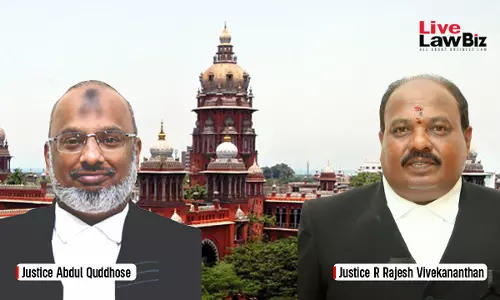
Secured Creditor Cannot Seek Removal Of Disclosed Encumbrances Without Settling Dues: Madras High Court
The Madras High Court has held that priority given to secured creditors over government dues under the SARFAESI Act does not allow a bank or auction purchaser to seek removal of known encumbrances without complying with Rules 9(6) to 9(10) of the Security Interest (Enforcement) Rules, 2002.Rule 9(6) deals with confirmation of the sale and issuance of the sale certificate, while Rule 9(10) prescribes the contents/ form of the sale certificate, including the details of known encumbrances.A coram...
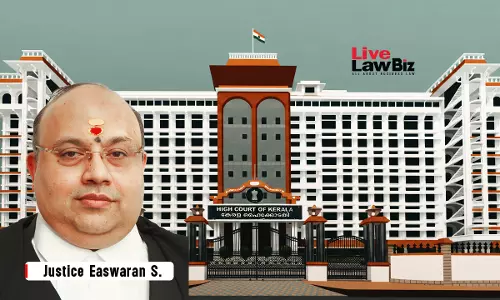
SARFAESI | Civil Court Must Lift Property Attachment If Mortgage Predates It: Kerala High Court
The Kerala High Court has ruled that a civil court cannot refuse to consider a secured creditor's request to lift an attachment over a mortgaged property merely because the attachment would otherwise be effaced after publication of a SARFAESI sale notice. The court held that where the mortgage predates the attachment, the attachment must be lifted. “Once the secured creditor approaches the Civil Court with an application for lifting the attachment in accordance with the principles laid down...
Karnataka High Court Refuses To Quash NI Case Over Cheque After Vijaya Bank Merger With Bank of Baroda
The Karnataka High Court on 17 September refused to quash proceedings against Bhadramma under Section 138 of the Negotiable Instruments Act, holding that the merger of Vijaya Bank with Bank of Baroda did not invalidate the cheque in question. Justice Suraj Govindaraj held that a cheque drawn on a bank that has merged with another bank cannot be treated as invalid merely because of the merger. The Bench observed: “….. a cheque which had been issued on a bank which has merged with another bank...
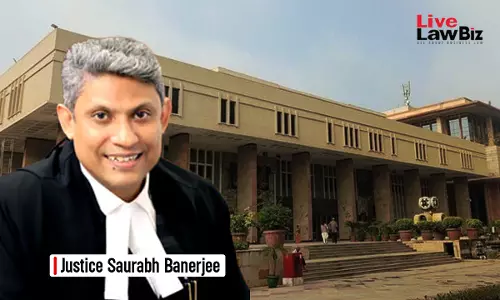
Delhi High Court Rejects Bank's Plea To Revive Cheque Case After Counsel Earlier Said Dues Were Fully Paid
The Delhi High Court has refused to revive a cheque dishonour complaint after Equitas Small Finance Bank Limited's counsel told a magistrate and the National Lok Adalat that the dispute had been settled and the bank had received full payment.The bank later claimed that its then counsel had misunderstood its instructions and erroneously represented that the dues had been settled and paid. It sought recall of the September 14, 2024 Lok Adalat award and restoration of the complaint.Justice Saurabh...