
Burden Shifts To Complainant Once Accused Proves Discharge In Cheque Bounce Case: Kerala High Court
Shilpa Soman
30 Jun 2026 2:58 PM IST
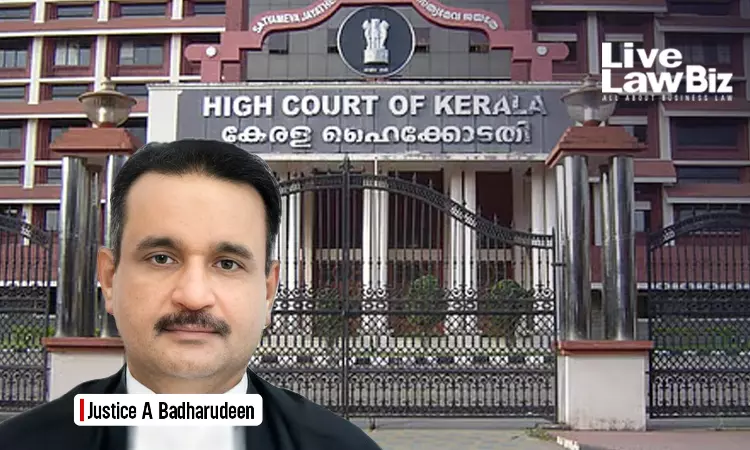
The Kerala High Court on 30 June held that in a prosecution under Section 138 of the Negotiable Instruments Act, once the accused proves discharge of the underlying debt, and the complainant asserts that such repayments relate to a different transaction, the burden shifts to the complainant to establish that assertion.
Justice A. Badharudeen dismissed an appeal filed by the complainant and upheld the acquittal of the accused passed by the Trial Court. He held:
“Once plea of discharge is proved and the complainant alleges the liability proved to be discharged is different from the transaction alleged in the complaint, the complainant shall prove the same.“
The complainant initiated proceedings under Section 138 of the Negotiable Instruments Act, alleging that the accused borrowed Rs. 3 lakh for business purposes and issued a cheque dated 26 December 2003 towards repayment. He further stated that the cheque got dishonoured for insufficiency of funds and that the accused failed to pay the amount despite receipt of statutory notice.
The accused, however, contended that he had availed the loan in 2000 and fully repaid it along with interest, totalling Rs. 3.63 lakh. He also stated that he issued the cheque only as security and that the complainant later misused it. To support this defence, he produced documentary evidence and receipts showing repayment of the debt.
The complainant argued that the payments relied upon by the accused related to peeling charges and not to the cheque transaction. The Trial Court accepted the defence and acquitted the accused, which led to the present appeal.
The High Court examined the evidence and noted that the accused established repayment through receipts and witness testimony, thereby discharging the burden of proving the plea of discharge.
It further held that where the complainant claims that the payments relied upon by the accused relate to a different transaction, the complainant must prove that assertion with cogent evidence. The Bench observed:
“In the absence of such proof, accepting the discharge which is proved, the accused is liable to be acquitted.”
Accordingly, the High Court refused to interfere with the acquittal and dismissed the appeal.
For Appellant: Advocates P.M Rafeek and P.M Rafiq
For Respondents: Advocate Vipin Narayanan, PP