
High Court
Unreasonable Delay In Taking SARFAESI Possession Defeats Act: Bombay High Court
The Bombay High Court has pulled up an Advocate Commissioner and the police for failing to secure physical possession of a property despite a May 2025 order under the SARFAESI Act, holding that the “unreasonable and unexplained delay” had “completely defeated” the law's provisions. A Division Bench of Justice Manish Pitale and Justice Shreeram V. Shirsat directed the Advocate Commissioner, with police assistance, to take physical possession of the secured property on September 17, 2026 and ...
'Abominable': Allahabad High Court Pulls Up SBI For Debiting Wife's FD For Husband's Loan
The Allahabad High Court at Lucknow has pulled up the State Bank of India for debiting ₹19.90 lakh from a woman's fixed deposit towards her deceased husband's loan dues, calling the process “abominable” and “clearly an anathema to banking practice”.A bench of Justice Shekhar B Saraf and Justice Abdhesh Kumar Chaudhary held that SBI had failed to show any legal basis for debiting the account of Neha Mishra, who had no privity of contract with the bank, towards her husband's dues.Mishra's husband,...
Partition Suit Challenging Mortgage, SARFAESI Enforcement Barred: Karnataka High Court
The Karnataka High Court has ruled that a partition suit can be barred under Section 34 of the SARFAESI Act when the reliefs sought, taken together, amount to a challenge to a mortgage and an attempt to stop a secured creditor from enforcing its security interest.Justice Sachin Shankar Magadum observed,“Therefore, a declaration by the Civil Court that the mortgage itself is illegal and null and void, coupled with a permanent injunction against the Bank, would directly undermine and nullify the...
Patna HC Quashes Sale Of Guarantor's Property As Bank Fails To Establish Liability After Loan Restructuring
The Patna High Court has quashed the sale of a guarantor's flat by Canara Bank under the SARFAESI Act.It held that the Bank failed to establish that the guarantor's liability continued to cover a subsequent financial facility sanctioned after the original loan was restructured.Justice G. Anupama Chakravarthy observed that the Bank could not rely merely on the fact that the guarantor had never formally sought a discharge from his earlier guarantee. It had to demonstrate that the guarantee also...
Borrower Can Directly Challenge Recovery Officer's Auction Sale Confirmation Before DRT: Allahabad High Court
The Allahabad High Court has held that a borrower can directly challenge an order of the Recovery Officer confirming an auction sale before the Debts Recovery Tribunal under Section 30(1) of the Recovery of Debts Due to Banks and Financial Institutions Act, 1993. The court clarified that the borrower need not first approach the Recovery Officer under Rule 60 or Rule 61 of the Second Schedule to the Income Tax Act, 1961. It also held that the borrower is not required to make the deposits...
State's Government Dues Cannot Override Secured Creditor's Priority By Mere Attachment: Bombay High Court
The Bombay High Court has ruled that merely attaching a property for recovery of government dues does not give the State priority over a secured creditor when the prescribed proclamation procedure has not been followed. The court also noted that the State's affidavit was silent on whether its claim had ever been registered with CERSAI.“By simply attaching the property and taking no steps towards proclamation in the manner as required, for recovery of dues, would not give priority to the said...
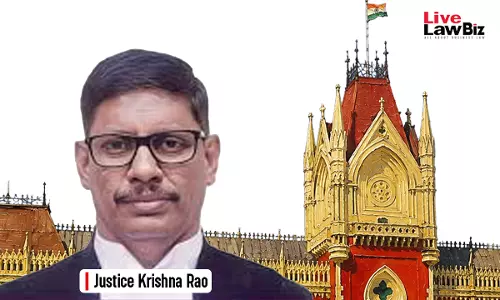
Calcutta High Court Says MSME Can't Seek Revival Benefit After SARFAESI Action, Rejects Debpara Claim
The Calcutta High Court on 2 September dismissed a writ petition filed by Debpara Tea Company Ltd against State Bank of India (SBI), which sought the benefit of the Framework for Revival and Rehabilitation of Micro, Small and Medium Enterprises (MSMEs) and challenged the classification of its account as a Non-Performing Asset (NPA). Justice Krishna Rao held that an MSME cannot seek the benefit of the Framework at a belated stage after the bank has issued a notice under Section 13(4) of the...
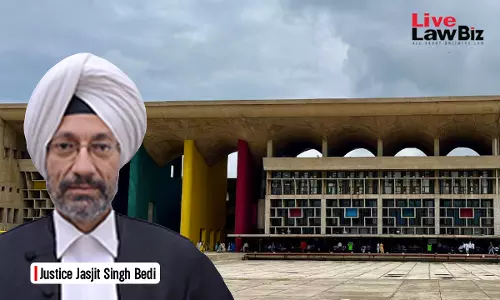
Punjab & Haryana High Court Mandates CIN, DIR-12 For Cheque-Bounce Complaints Against Companies
The Punjab and Haryana High Court has recently directed that, from now on, cheque-bounce complaints against companies must carry the company's Corporate Identification Number (CIN) and a certified copy of Form DIR-12. The documents must help establish that the persons being arraigned were actually responsible for the company's affairs when the cheque was issued or dishonoured.The CIN is the company's unique identification number. The court wants it to be taken from the Ministry of Corporate...
Borrower Cannot Demand Hearing Before Magistrate U/S 14 SARFAESI Act: Allahabad High Court
The Allahabad High Court on 25 August held that a borrower has no right to a hearing before the District Magistrate passes an order under Section 14 of the Securitisation and Reconstruction of Financial Assets and Enforcement of Security Interest Act, 2002 (SARFAESI Act), as the Magistrate does not adjudicate disputes between the borrower and secured creditor.Section 14 of the SARFAESI Act enables a secured creditor to approach the Chief Metropolitan Magistrate or District Magistrate having...

DRT Can Decide Legality Of SARFAESI Action Against MSME Companies: Calcutta High Court
The Calcutta High Court recently observed that the Debts Recovery Tribunal (DRT) can examine whether Indian Bank rightly initiated SARFAESI proceedings against two MSME companies.The Division Bench of Justice Shampa Sarkar and Justice Arjun Ray Mukherjee observed,"Thus, the question whether the SARFAESI proceeding had been rightly initiated by the Bank and whether the steps taken under the SARFAESI Act were legally permissible in view of the Framework of the RBI, in our, prima facie, view can be...
Absence Of Prior Decree Does Not By Itself Negate Cheque Liability: Delhi High Court
The Delhi High Court has ruled that the absence of a prior decree or adjudication quantifying damages does not, by itself, establish at the stage of issuance of process that a cheque was not issued towards a legally enforceable liability.“A settlement is, by its very nature, an agreement between parties to resolve their existing disputes and claims on mutually agreed terms. The legal effect of the settlement, including the consideration for the promise to pay the agreed amount, would have to be...
No Interim Stay From High Court If DRT Already Considered Relief Sought: Calcutta High Court
The Calcutta High Court on 28 August held that a petitioner who has already approached the Debts Recovery Tribunal (DRT) under the Securitisation and Reconstruction of Financial Assets and Enforcement of Security Interest (SARFAESI) Act cannot seek an interim stay from the High Court when the Tribunal has not granted such relief. Justice Om Narayan Rai dismissed a writ petition filed by Jayasri Acharya seeking to restrain a bank from taking possession of a property in which she claimed to be a...