
Cheque Not Legally Enforceable For Full Amount If Part Payment Not Endorsed: Kerala High Court
Shilpa Soman
4 April 2026 3:33 PM IST
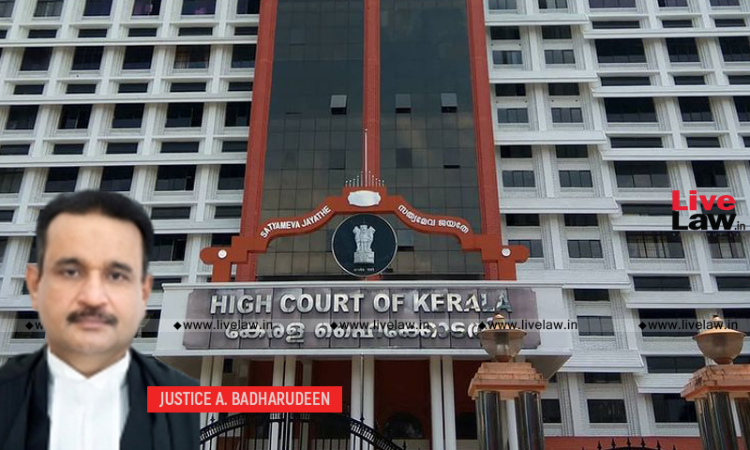
The Kerala High Court has held that a cheque presented for its full value despite prior part payments without endorsement does not represent a legally enforceable debt, while upholding an acquittal in a cheque dishonour case.
Justice A. Badharudeen, while dismissing an appeal filed by complainant Danikutti Philip, held, "However, when part payment(s) is/are made and the indorsement mandated under Section 56 of the NI Act failed to be recorded, presenting the cheque for the whole sum, of which a part payment has already been paid, does not represent the legally enforceable debt; thus no offence under the NI Act would lie in case of dishonour of such a cheque. The rationale is that, in order to attract an offence under Section 138 of the NI Act, the dishonoured cheque must represent a legally enforceable debt."
The appeal challenged the acquittal of Johnykutty in proceedings under Section 138 of the Negotiable Instruments Act.
Danikutti had alleged that Johnykutty issued a cheque dated October 31, 2017 for Rs 10,90,000 towards discharge of a loan, which was dishonoured for insufficiency of funds.
The Magistrate had acquitted the accused, relying on the Supreme Court's ruling in Dashrathbhai Trikambhai Patel v. Hitesh Mahendrabhai Patel, noting that after the cheque was first dishonored, the complainant had received part payments of Rs 1,94,000 and Rs 1,96,000 on November 14 and 15, 2017 respectively.
Despite receiving these amounts, Danikutty chose to present the cheque again for the full sum. This was without making any endorsement on the instrument to reflect the payments already made.
The magistrate noted that, by the time of this subsequent presentation, the amount shown on the cheque no longer matched the actual liability. On that basis, it was held that the cheque could not be said to represent a legally enforceable debt for the purposes of Section 138.
In appeal, the complainant maintained that the underlying liability had not been extinguished and argued that the acquittal called for interference.
The court was not persuaded. Referring to the scheme of the Negotiable Instruments Act and the position clarified by the Supreme Court, it emphasised that once part payments are made after a cheque is drawn but before it is presented, the enforceable debt cannot be equated with the original cheque amount.
It also pointed to Section 56, noting that any such payments must be reflected by way of endorsement on the cheque itself. Only then can the instrument be used to recover the remaining balance.
On the facts at hand, the cheque had been re-presented for the entire amount without accounting for the payments already received. In that situation, the Court found, the instrument did not correspond to a legally enforceable debt on the date of presentation.
With no infirmity found in the Magistrate's reasoning, the acquittal was left undisturbed and the appeal was dismissed.
For Appellant: Advocate Lalji P Thomas
For Respondents: Advocates Sarath Babu Kottakkal, Archana Vijayan, Sebastian and Vipin Narayan A, Senior Public Prosecutor