
Kerala High Court
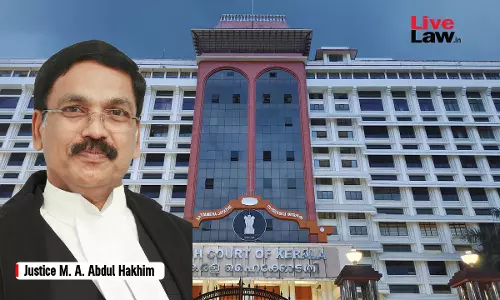
Commercial Courts Act's 120-Day Written Statement Limit Inapplicable To Admiralty Suits: Kerala High Court
The Kerala High Court has condoned a 135-day delay in filing a written statement in an Admiralty Suit. The Court held that the mandatory 120-day deadline prescribed for commercial disputes does not govern proceedings under the Admiralty Act, 2017. The Court reached this conclusion even though disputes relating to admiralty and maritime law are categorised as commercial disputes under the Commercial Courts Act. Justice M.A. Abdul Hakhim held that Admiralty Suits are governed by the original...
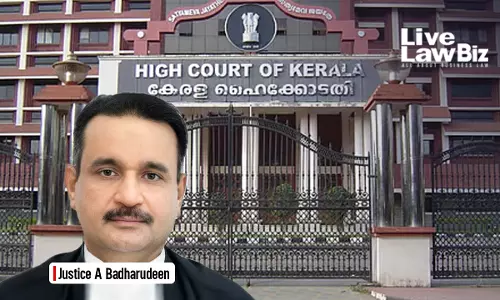
Notice Returned As 'Unclaimed' At Correct Address Suffices For Deemed Service: Kerala High Court
A cheque demand notice returned with the postal endorsement "unclaimed" is sufficient to satisfy the statutory requirement of notice in a cheque dishonour case, the Kerala High Court has held. Justice A Badharudeen, allowing an appeal against an acquittal recorded by a magistrate's court in Kozhikode, held that when a demand notice is issued to the drawer's correct address, its return with the endorsement "unclaimed" would amount to deemed acceptance unless the accused proves otherwise. The...
Kerala High Court Dismisses Appeal Seeking CBI, ED, NIA Probe Into Byju's Insolvency
The Kerala High Court on Friday dismissed an appeal against a single judge's order refusing to direct a Central Bureau of Investigation (CBI), Enforcement Directorate (ED), and National Investigation Agency (NIA) probe into alleged irregularities in the insolvency proceedings of Think and Learn Private Limited (Byju's). A division bench of Justice K Natarajan and Justice Johnson John held that the petitioners had already approached the Bengaluru police on the same allegations. The resulting...
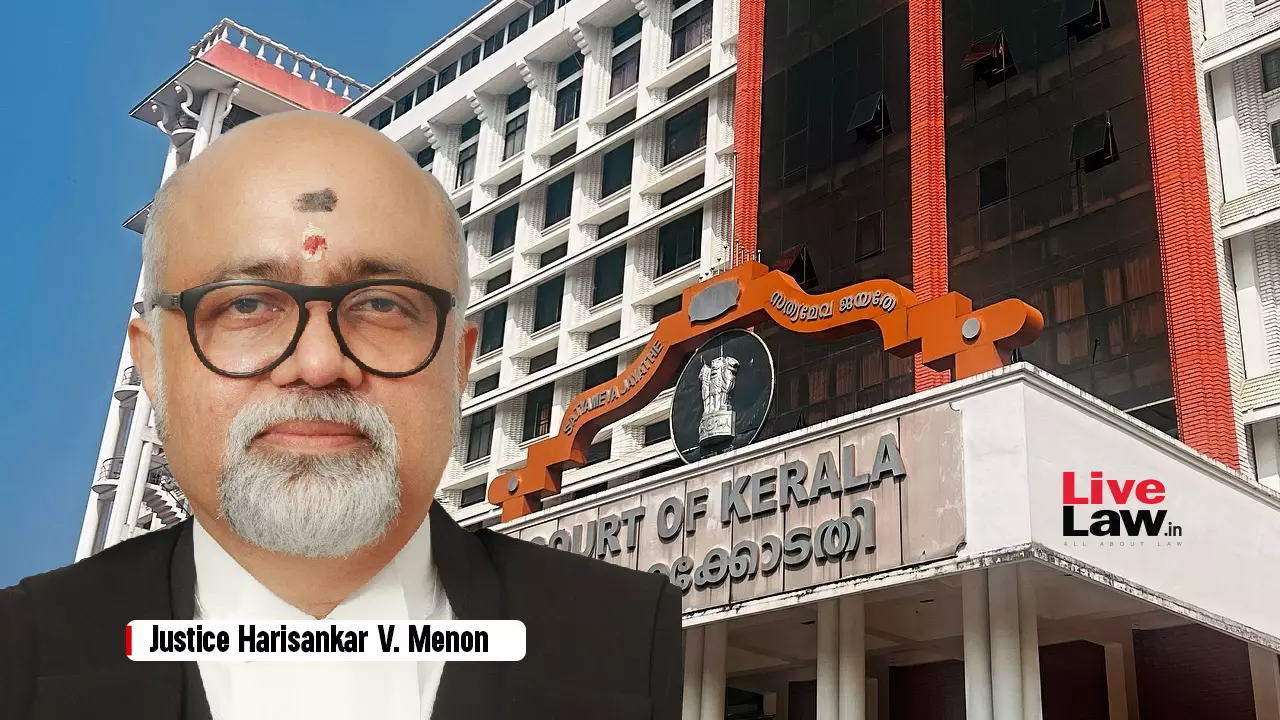
NCLT Cannot Refuse Additional Objections Solely For Want Of Express Provision In IBC: Kerala High Court
The Kerala High Court has held that the National Company Law Tribunal (NCLT) can permit additional objections in insolvency proceedings. It cannot reject such requests on the ground that there is no provision under the Insolvency and Bankruptcy Code or the NCLT Rules to entertain them. Justice Harisankar V. Menon made the observation while allowing a petition filed by BPL Limited. The Court set aside an order of the NCLT, Kochi Bench, which had refused to entertain the company's additional...

Kerala High Court Declines To Stay Lakshya IPO, Cites Alternate Remedy Before SAT
The Kerala High Court on Thursday declined to stay the proposed Initial Public Offering (IPO) of Learnfluence Education Limited, the company operating the Lakshya Indian Institute of Commerce coaching platform. The Court held that the former promoter challenging the issue has an alternative statutory remedy before the Securities Appellate Tribunal (SAT). Justice Harishankar V. Menon passed the order on a writ petition filed by Adheesh Damodaran, a co-founder of Lakshya CA Campus and...
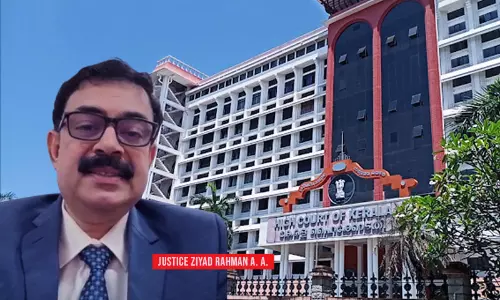
Kerala High Court Quashes GST Notice Issued For Multiple Assessment Years Through Single Proceeding
On 1 June, the Kerala High Court held that the GST Department cannot issue a composite show-cause notice covering more than one assessment year, as such a notice is legally unsustainable and cannot form the basis of adjudication. Justice Ziyad Rahman A.A. quashed the show-cause notice and the consequential Order-in-Original issued against Malabar Trade Links, while granting liberty to the GST Department to initiate fresh proceedings in accordance with law. He held: “The Division Bench has...
Evidence Of Person Without Direct Knowledge Insufficient In Cheque Bounce Case: Kerala High Court
The Kerala High Court has observed that a complainant in a cheque dishonour case cannot rely on evidence from a person who lacks direct knowledge of the transaction and execution of the cheque to prove those facts. “Indubitably such evidence shall be given by the person, who had direct knowledge regarding the transaction and execution of the cheque and the evidence of a person, who does not know the same is insufficient to prove the transaction and the execution of the cheque.” Justice A....
Kerala High Court Dismisses Writ Against NCLT New Delhi Insolvency Proceedings, Cites No Jurisdiction
On 25 May, the Kerala High Court held that it cannot entertain a writ petition challenging insolvency proceedings initiated before the National Company Law Tribunal (NCLT), New Delhi, against a personal guarantor merely because the underlying credit facilities were availed in Kerala, since territorial jurisdiction under the Insolvency and Bankruptcy Code depends on the location of the corporate debtor's registered office. Justice Harisankar V Menon dismissed a writ petition filed by a personal...
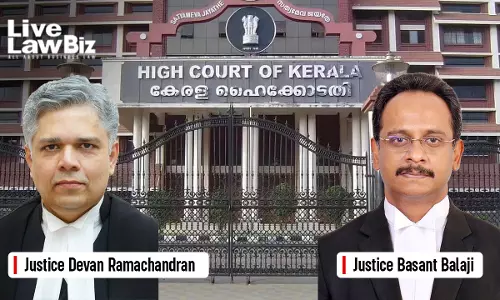
Kerala HC Directs CIT To Reconsider Registration Of Trust From 2021, Examines CBDT Circular 7/2024
On 4 June, the Kerala High Court directed the Commissioner of Income Tax (Exemptions) to reconsider a Atma Bodhodaya Sangham Sree Subhananda Trust's claim for registration under Section 12A of the Income Tax Act with effect from 1 April 2021, after examining the applicability of CBDT Circular No. 7/2024 on rectification of defective exemption applications. A Division Bench of Justices Devan Ramachandran and Basant Balaji set aside the orders of the Income Tax Appellate Tribunal (ITAT) and the...
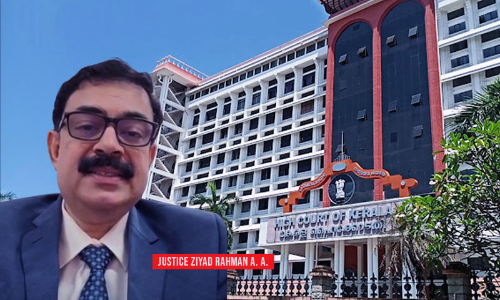
Kerala HC Holds ISD Optional Before 2024 Amendment; Quashes ₹1.31 Cr. GST Demand Against Intertek
On 8 June, the Kerala High Court held that, prior to the Finance Act, 2024 amendment to the Central Goods and Services Tax Act, companies were not required to distribute input tax credit (ITC) among distinct units through the Input Service Distributor (ISD) mechanism. Justice Ziyad Rahman A.A. allowed a writ petition filed by Intertek India Pvt. Ltd. and quashed an order passed under Section 74 of the CGST Act that demanded over Rs.1.31 crore in GST and penalty on allegations of fraud,...

Depositors Can Approach Consumer Fora Despite Co-operative Societies Act Remedies: Kerala High Court
The Kerala High Court on 2 June held that remedies under the Kerala Co-operative Societies Act, 1969 do not bar depositors of co-operative banks from approaching consumer fora under the Consumer Protection Act for redressal of their grievances. A Division Bench comprising Justices Dr. A.K. Jayasankaran Nambiar and Preeta A.K. dismissed an appeal filed by Puthur Service Co-operative Bank against orders of the consumer fora directing repayment of matured fixed deposits. The judges held: “...even...
![SARFAESI Sale Certificates Not Liable To Stamp Duty Upon Issuance: Kerala High Court [Full Bench]](https://www.livelawbiz.com/h-upload/2026/06/06/500x300_678387-kerala-high-court-justice-sathish-ninan-tr-ravi-ma-abdul-hakhim.webp "SARFAESI Sale Certificates Not Liable To Stamp Duty Upon Issuance: Kerala High Court [Full Bench]")
SARFAESI Sale Certificates Not Liable To Stamp Duty Upon Issuance: Kerala High Court [Full Bench]
The Kerala High Court has recently held that a sale certificate issued pursuant to an auction sale under the SARFAESI Act is not liable to stamp duty merely upon its issuance. The Court also held that a Registering Officer cannot refuse to file a copy of such certificate on the ground that it is unstamped. A Full Bench comprising Justices Sathish Ninan, T.R. Ravi and M.A. Abdul Hakhim answered a reference arising from conflicting Division Bench decisions on the issue. “It has been held that...