
GST Payable Separately On Municipal Works Contracts Unless Tender Includes It: Kerala High Court
Mehak Dhiman
3 March 2026 2:28 PM IST
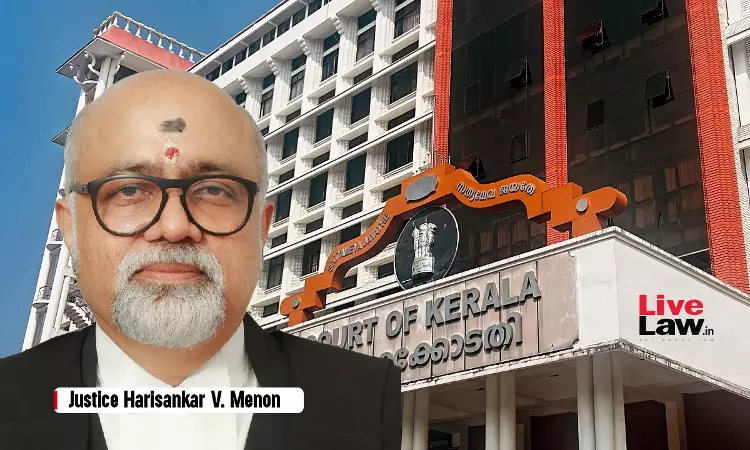
The Kerala High Court, on 12 February, held that contractors executing works for local self-government institutions are entitled to payment of GST over and above the contract value, and that such tax cannot be treated as included in the quoted rates unless the tender conditions expressly so provide.
Harisankar V. Menon stated that once government circulars categorically mandate that tendered rates for public works are to be quoted exclusive of GST, the municipality cannot subsequently treat GST as included in the quoted contract value or seek recovery of amounts already paid on that basis.
The Bench stated that:
"the circulars issued by the Government from time to time show that the contract is being finalised without taking into account the component of GST, and it is only upon the successful completion of work or with reference to the periodical presentation of bills that GST requires to be considered while making payments to the contractors concerned."
The petitioner, Ganga Constructions, is a contractor who secured a municipal works contract after the Irinjalakuda Municipality issued a Notice Inviting Tender dated 23 February 2019. Pursuant to the tender process, the contractor was issued a work order and entered into an agreement fixing the estimated contract value at approximately Rs. 2.53 crore.
According to the contractor, the rates quoted in the tender were exclusive of GST. This position was based on government circulars issued after the introduction of the Goods and Services Tax regime in 2017, which clarified that contractors were to quote rates excluding GST for public works.
During execution of the work, the Municipality initially paid GST over and above the contract value along with the contractor's running account bills. However, an audit objection was later raised, taking the view that GST was already included in the quoted rates. Acting on this objection, the Municipality initiated recovery proceedings to reclaim the GST amounts that had already been paid to the contractor.
Challenging the audit report and the consequential recovery proceedings, the petitioner approached the Kerala High Court, contending that government circulars issued by the Finance Department and the Local Self Government Department clearly mandated that tenders be quoted exclusive of GST and that GST be added at the stage of processing bills.
The Municipality, on the other hand, argued that since the petitioner had not separately indicated GST in the tender, it was not open to him to subsequently claim GST amounts. It further relied on internal communications suggesting that the cost index adopted for technical sanction already factored in GST.
The Court examined a series of government circulars issued between 2017 and 2019 and noted that they consistently required contractors to quote rates exclusive of GST, while mandating that government departments and local bodies pay the contract value plus applicable GST at the time of bill settlement.
The Court found that the use of the word “PLUS” in these circulars was deliberate and left no room for ambiguity. It also rejected the Municipality's reliance on cost indices, observing that GST came into force only on 1 July 2017 and could not have been embedded in earlier cost indices in the manner suggested.
Referring to Section 15 of the CGST Act, the Court further observed that the value of taxable supply does not include GST itself, thereby reinforcing the position that GST is payable in addition to the contract price. It stated:
“Under sub-section (2) of Section 15, the value of supply by a contractor/service provider would not include the tax payable under the CGST/SGST Act. Thus, the stipulations in the various circulars noticed earlier are also in tune with Section 15 of the CGST Act. Hence, the petitioner is justified in contending that it is entitled to be paid the GST component for the works carried out by it.”
Accordingly, the Court held that the audit objection and the consequential recovery proceedings were legally unsustainable, the Court allowed the writ petition.
For Petitioner: Advocates, M.R. Dhanil and Senitta P. Jojo
For Respondent: Advocates, S. Ambily, K.K. Chandran Pillai and V. Renju