
Setting Aside Of Arbitral Award Does Not Automatically Remand Matter To Arbitrator: Kerala High Court
Shivani PS
3 March 2026 3:00 PM IST
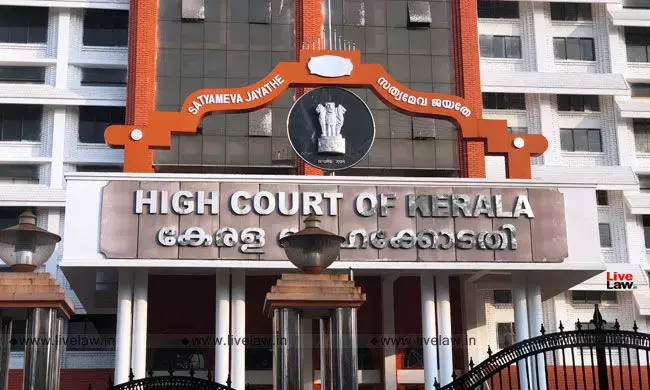
The Kerala High Court recently held that once an arbitral award is set aside under Section 34 of the Arbitration and Conciliation Act, 1996, the matter cannot be treated as remanded to the arbitrator unless a party had sought recourse to Section 34(4) during the pendency of the challenge proceedings.
Justice C. Jayachandran, rejected the National Highways Authority of India's (NHAI) plea of “implicit remand” finding that no such request had ever been made and that the District Court had merely set aside the award, and granted it 45 days to seek review.
The Bench observed:
“In the instant case, recourse to Section 34(4) has not been made by any of the parties. This Court takes stock of the fact that the learned District Judge has merely set aside the Award, without mentioning or referring anything about the remand or remit, presumably for the reason that there exists no such power.”
The dispute arose from the acquisition of 0.0316 hectares of land belonging to Raghavan V.T. in Kozhikode for widening National Highway-66 under the National Highways Act, 1956. The Competent Authority for Land Acquisition (CALA) issued a compensation award on 23 January 2020. Subsequently, the NHAI invoked arbitration before the District Collector under Section 3G(5) of the Act. By the award dated 10 August 2020, the District Collector, acting as arbitrator, reduced the compensation.
Raghavan challenged the arbitral award before the District Court, Kozhikode, under Section 34 of the Arbitration and Conciliation Act, 1996, which was set aside on 3 April 2024 on the ground that he had not been given an adequate opportunity to present his case. The High Court upheld this decision in the Arbitration Appeal by a judgment dated 23 July 2025.
Despite the arbitral award being set aside and the appellate judgment attaining finality, compensation under the original CALA award was not disbursed, prompting the present writ petition under Article 226 of the Constitution.
Before the High Court, NHAI relied on the Supreme Court's decision in Gayatri Balasamy v. M/s ISG Novasoft Technologies Limited, arguing that where an award is set aside on procedural grounds, the matter must be remitted to the arbitrator. Raghavan's counsel, however, contended that the law permits remand only when a party specifically requests it during the pendency of the proceedings. Since no such request was made, he submitted, the original, higher compensation award must be restored.
The Court rejected NHAI's argument. It observed that Section 34(4) of the Arbitration Act, 1996, which permits a court to adjourn proceedings to allow the arbitral tribunal to rectify defects in an award if a party so requests, was not invoked in this case. Since the award was merely set aside, no remand could be implied. It noted:
“In the instant case, recourse to Section 34(4) has not been made by any of the parties.”
Clarifying further, the Court held, “this judgment is hardly supporting the 6th respondent's [NHAI] case that it implies a remand. The argument is therefore repelled.”
Therefore, the Court concluded that there is no legal basis to treat the setting aside of the award as a remand, the Court held that Raghavan's request for disbursement could not be refused.
However, it granted NHAI a 45-day window from 6 February 2026 to seek review of the earlier orders. If no favourable order is obtained within that period, the Special Deputy Collector shall disburse the compensation as per the original award. In case the amount has not been deposited, NHAI must deposit it upon expiry of the 45-day period.
Accordingly, it disposed of the writ petition.
Appearances for petitioner (Raghavan V.T.): Advocates P. Sathisan, Shibu B.S., Biju P. Paul, Alvin Jewel S.S., Vidhya T.U., Antija James, Swaliha Selmi T.R., Leena Varghese, Razak M.
Appearances for respondents (Union of India & Ors.): N.J. Ashwin (Central Government Counsel); Ajith Viswanathan (Government Pleader).