
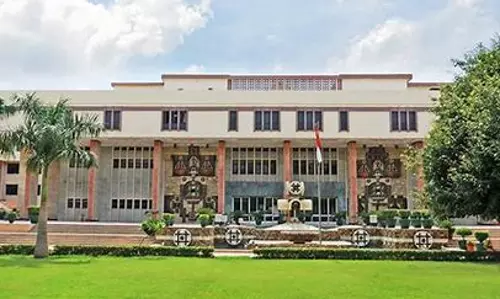
Delhi High Court
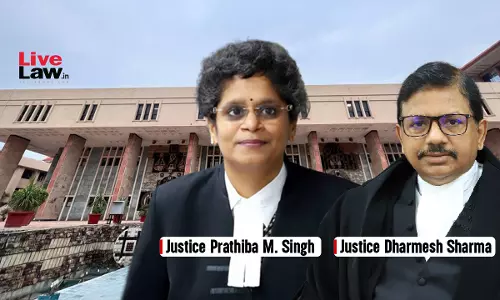
Imposition Of Conditions By Customs For Provisional Release Of Seized Goods 'Discretionary': Delhi HC Tunes Down 130% Bank Guarantee
The Delhi High Court has held that the imposition and severity of conditions imposed by the Customs Department for permitting provisional release of seized goods is “discretionary” in nature.In doing so, a division bench of Justices Prathiba M. Singh and Dharmesh Sharma scaled down the alleged onerous condition imposed on an importer, for executing a Bank Guarantee of 130% of the deferential duty.It observed, “The calculated amount for the bank guarantee would be substantial and may almost...
Not An Enabling Provision, Proscribes Reassessment Action Beyond Limitation: Delhi HC Explains Timelines U/S 149 Of Income Tax Act
The Delhi High Court has made it clear that Section 149 of the Income Tax Act, which prescribes a limitation period for initiating reassessment against an assessee, is not an enabling provision but rather a proscription on the Assessing Officer's powers.A division bench of Acting Chief Justice Vibhu Bakhru and Justice Tushar Rao Gedela observed,“The opening sentence of Section 149(1) of the Act clearly indicates that the time limit as prescribed under Section 149(1) of the Act is a hard stop....

Delhi High Court Upholds Validity Of S.132 Of Companies Act Establishing National Financial Reporting Authority, NFRA Rules
The Delhi High Court has upheld the constitutional validity of Section 132 of the Companies Act, 2013, and Rules 3, 8, 10 and 11 of the National Financial Reporting Authority Rules, 2018.Section 132 of the Companies Act states: (1) The Central Government may, by notification, constitute a National Financial Reporting Authority to provide for matters relating to accounting and auditing standards under this Act.A division bench comprising Justice Yashwant Varma and Justice Dharmesh Sharma...

Superannuation Fund | Limit On Deduction Of Employer's Contribution Applies To Initial/ Annual Contribution, Not Additional Payments: Delhi HC
The Delhi High Court has held that the limit prescribed under Section 36(1)(iv) of the Income Tax Act 1961, on deductions that an employer can seek for contributions made towards superannuation funds, applies only at the stage of setting up the fund or making ordinary annual payments.A division bench of Justices Yashwant Varma and Harish Vaidyanathan Shankar said any contribution made additionally in discharge of an overarching obligation would not be rendered as a disallowable expense.It thus...

Corporate Debtor Immune From Prosecution Under PMLA Post Approval Of Resolution Plan: Delhi High Court
The Delhi High Court bench of Justice Manmeet Pritam Singh Arora has held that in accordance with Section 32A(1) of the Insolvency and Bankruptcy Code, 2016 (IBC), a Corporate Debtor that has successfully undergone a resolution process under Section 31 of the IBC shall not be prosecuted for offences committed prior to the commencement of the CIRP. Brief Facts On 26.07.2017 the National Company Law Tribunal (NCLT) initiated corporate insolvency resolution process (CIRP) against...
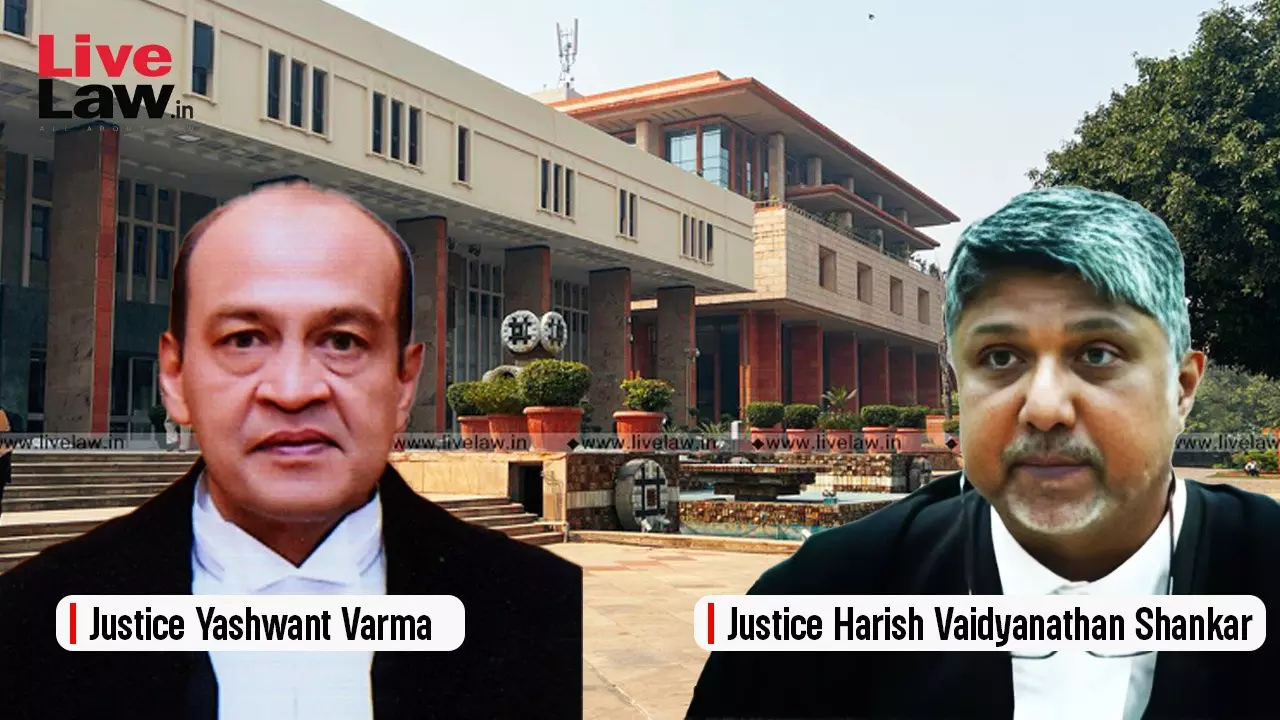
What Is The Time Period Surviving U/S 149 Of Income Tax Act For Issuing Reassessment Notices: Delhi High Court Explains
The Delhi High Court has interpreted the Supreme Court's decision in Union of India v. Rajeev Bansal to elucidate the time period surviving under Section 149 of the Income Tax Act, 1961 for issuing reassessment notices.A division bench of Justices Yashwant Varma and Harish Vaidyanathan Shankar concluded that the period between 20 March 2020 to 30 June 2021 would be excluded from limitation, in view of Section 3(1) of Taxation and Other Laws (Relaxation and Amendment of Certain Provisions) Act,...
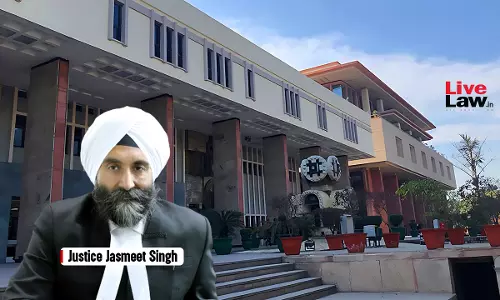
Award Passed By Improperly Appointed Arbitrator Is Non-Est In Law And Invalid: Delhi High Court
The Delhi High Court bench of Justice Jasmeet Singh has held that it is settled law that the Arbitrator is a creature of the contract and has to function within four corners of contract. If a particular mechanism is contemplated for his appointment, the same must be followed in its true letter, spirit and intent, failing which the Arbitrator is without jurisdiction and the appointment is non-est and invalid. Brief Facts: The petitioner was awarded the work of “Civil works for raising...
Adobe India Is Not Dependent Agent PE Of Adobe Ireland: Delhi High Court Negates Attribution Of Further Profits
The Delhi High Court has upheld an order of the Income Tax Appellate Tribunal to the effect that Adobe Systems India Pvt. Ltd is not a dependent agent permanent establishment (DAPE) of Adobe Systems Software Ireland Ltd.In doing so, a division bench of Justices Yashwant Varma and Harish Vaidyanathan Shankar affirmed that no further attribution of profit can be made as Adobe India was remunerated at arm's length.As per the AO, Adobe India was not a mere PE (Permanent Establishment) but a DAPE.PE...
Construction Of Terms Of Contract Must Be Primarily Decided By Arbitrator, Not Court U/S 34 Of Arbitration Act: Delhi High Court
The Delhi High Court bench of Justice Dinesh Kumar Sharma has held that Construction of the terms of the contract is primarily for the arbitrator to decide, unless it is found that such a construction is not at all possible. Brief Facts: After a competitive bidding process, a contract was entered into between the petitioner and the respondent. The contract required the supply of 8000 MT of rails within 3 months from the date of establishment of the letter of credit. There were...
Suo Moto Disallowance Made By Assessee Under Bonafide Belief Of Tax Liability Can Be Rectified U/S 264 Of Income Tax Act Without Amending ITR: Delhi HC
The Delhi High Court has held that an application for revision under Section 264 of the Income Tax Act, 1961 can be preferred by an assessee who makes suo motu disallowance in its Return of Income (RoI/ ITR), under a bonafide yet mistaken belief that the same was liable to be offered for taxation.A division bench of Justices Yashwant Varma and Harish Vaidyanathan Shankar added that the assessee cannot be denied relief merely on the ground that the application was moved without amending the...

Date Of Assessment Order Recommending Penalty For Accepting Cash Above ₹2 Lakh Not Relevant For Determining Limitation U/S 275 Of Income Tax Act: Delhi HC
The Delhi High Court has held that the date of the assessment order, wherein an Assessing Officer recommended separate penalty proceedings against the assessee under Section 271DA of the Income Tax Act, 1961 for accepting more than ₹2 lakh in cash, is not relevant for determining the limitation period under Section 275(1)(c).Section 275(1)(c) prescribes the period of limitation within which penalty proceedings are to be completed.A division bench of Acting Chief Justice Vibhu Bakhru and Justice...
Ensure Counsel Appearing On Advance Service Are Instructed Properly: Delhi HC Asks Customs, GST Department, DRI And DGGI To Frame SOP
The Delhi High Court has asked the Customs Department, the Central GST Department, the Directorate of Revenue Intelligence (DRI), Directorate of General GST Intelligence (DGGI) to make sure that counsel representing them on advance service are instructed properly.A bench of Justices Prathiba M. Singh and Dharmesh Sharma ordered the Commissioner of Customs to prepare an SOP as to the manner in which the Department shall ensure that instructions are given to the nominated Counsels in the matter...