
Delhi High Court

Subsequent Use By Junior Applicant Cannot Defeat Earlier 'Proposed to Be Used' Trademark Application: Delhi High Court
The Delhi High Court has dismissed an appeal filed by Parle Products Pvt Ltd in a trademark dispute over the mark “20-20”. The court held that when competing trademark applications are filed on a “proposed to be used” basis, subsequent commercial use by one applicant cannot defeat the earlier filing date of the other. Justice Tushar Rao Gedela upheld an order of the Registrar of Trade Marks dated April 29, 2025 rejecting Parle's opposition to a rival company's application to register the mark...

Delhi High Court Directs Removal Of 'Shree Sakshat' Copyright Registration For Copying Heineken's Tiger Beer Logo
The Delhi High Court on Tuesday directed the Registrar of Copyrights to remove from the Register a copyright registration obtained by Vijay Keshav Wagh for the artistic work titled “SHREE SAKSHAT,” holding that it copied in its entirety the TIGER beer logo owned by Heineken Asia Pacific Pte. Ltd. Justice Tushar Rao Gedela held that a comparison of the two logos showed that Wagh had reproduced Heineken's tiger device in its entirety, with only minor additions that did not alter the dominant...

Delhi High Court Holds Crocodile International Logo Infringes Not Just Lacoste's Trademark But Also Its Copyright
The Delhi High Court on Monday modified a single judge ruling in a long-running trademark dispute between Lacoste and Singapore based Crocodile International, holding that the latter's crocodile device infringed both the French fashion house's trademark and its copyright in the iconic saurian emblem. A Division Bench of Justice C. Hari Shankar and Justice Om Prakash Shukla, in a judgment pronounced on March 9, 2026, partly allowed cross appeals by the parties and modified the August 14, 2024...

Delhi High Court Restrains Oiltech Engineering From Using Pirated Bentley STAAD, SACS Software
The Delhi High Court on Tuesday granted a permanent injunction to infrastructure engineering software company Bentley Systems Inc., holding that Oiltech Engineering India Private Limited had used pirated versions of its software. The court restrained the company from copying, installing, or using unauthorized versions of Bentley's STAAD and SACS software programs.Justice Tushar Rao Gedela observed, “It appears that the defendants rather than procuring genuine licenses have used...

Delhi High Court Upholds Arbitral Award That Found Commission Was Not Automatic Under Representative Agreement
The Delhi High Court on Tuesday upheld an arbitral award in a commission dispute between a consultancy firm and an oil and gas pipeline services company. The court affirmed the arbitrator's view that a representative appointed under a commercial agreement does not automatically become entitled to commission every time the company secures a project from the same customer. A Division Bench of Justice Anil Kshetrapal and Justice Amit Mahajan dismissed an appeal and affirmed an earlier decision...
Reverse Passing Off Foreign To Indian Trademark Jurisprudence, Not Enforceable: Delhi High Court
The Delhi High Court on Monday ruled that the tort of “reverse passing off” is foreign to Indian trademark jurisprudence and does not create an enforceable cause of action under the Trade Marks Act. The court dismissed appeals filed by Western Digital and Seagate against refurbishers who remove original brand labels from used hard disk drives and sell them under new brands. A Division Bench of Justice C. Hari Shankar and Justice Om Prakash Shukla held that Indian trademark jurisprudence...

Delhi High Court Upholds Order Refusing Interim Relief To Novo Nordisk In Semaglutide Patent Dispute With Dr Reddy's
The Delhi High Court on Monday dismissed Danish Pharma Company Novo Nordisk's appeal seeking an interim injunction against Dr Reddy's Laboratories Ltd in a patent infringement dispute over the anti-diabetic drug Semaglutide. The drug is the active ingredient in Novo Nordisk's blockbuster diabetes medicine Ozempic, which has also gained global attention for its weight loss effects. A Division Bench of Justice C. Hari Shankar and Justice Om Prakash Shukla upheld a Single Judge's order refusing...
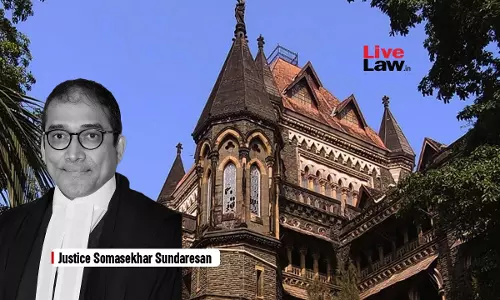
Courts Cannot Re-Examine Merits Of Foreign Arbitral Awards At Enforcement Stage: Bombay High Court Reiterates
The Bombay High Court has reiterated that courts considering enforcement of foreign arbitral awards under Section 48 of the Arbitration and Conciliation Act, 1996 cannot re-examine the merits of the award or undertake a fresh evaluation of the evidence. A single-judge bench of Justice Somasekhar Sundaresan observed that the jurisdiction of an enforcement court under Section 48 is limited and does not permit a review of the arbitral tribunal's findings. “The scope of jurisdiction of the Section...

Delhi High Court Sets Aside Refusal Of Jindal Steel's 'JSP' Trademark, Orders Fresh Consideration
The Delhi High Court has partially allowed an appeal filed by Jindal Steel Limited against an order of the Registrar of Trade Marks refusing registration of the trademark “JSP,” holding that the decision was a “non-speaking order” passed without considering the arguments and material placed on record. In a judgment delivered on February 17, 2026, Justice Jyoti Singh observed that the Registrar had failed to consider several issues raised by the company, including its reliance on Sections 34 and...

Delhi High Court Bars Ex-Franchisee From Using 'Moti Mahal' Trademark After Franchise Termination
The Delhi High Court has granted an ex-parte ad interim injunction in favour of Moti Mahal Legendary Hospitality, restraining Sant Foods, a former franchisee, from using the “MOTI MAHAL” trademark after the termination of their commercial agreement. The Court observed that once a franchise agreement is terminated, the former franchisee retains no legal right to operate a restaurant using the trademarked name.On February 25, 2026, Justice Jyoti Singh observed that the company had established...

Delhi High Court Refuses To Condone 1,000-Day Delay In Commercial Appeal, Cites Lack Of Diligence By Appellant
The Delhi High Court has recently refused to condone a 1,000-day delay in filing a commercial appeal, stressing that the Commercial Courts Act requires strict adherence to timelines to ensure the speedy disposal of disputes.The Division bench of Justice Nitin Wasudeo Sambre and Justice Ajay Digpaul observed that,“This is especially so due to the object of the Commercial Courts Act in ensuring strict adherence of timelines by parties to facilitate the speedy disposal of suits, coupled with the...

Delhi High Court Slams Cryptic Patent Refusal, Remands Fertin Pharma Application For Re-Consideration
The Delhi High Court on 18 February set aside an order by the Assistant Controller of Patents and Designs that had rejected a patent application from Fertin Pharma A/S, observing that the regulator failed to provide the requisite reasoning expected of a quasi-judicial authority. Justice Tushar Rao Gedela observed that the original refusal was “cryptic,” whereas reasoning is “the bedrock of all orders, including those passed by quasi-judicial authorities.” The Court was hearing an appeal under...