
Bombay High Court
Bombay High Court Cautions Income Tax Dept. Against Routine Appeals With Mechanically Drafted Questions Of Law
The Bombay High Court has cautioned the Income Tax Department against routinely challenging Income Tax Appellate Tribunal (ITAT) orders by mechanically framing substantial questions of law.A division bench of Justice Suman Shyam and Justice Gautam A. Ankhad observed,"we are constrained to observe here that this Bench has noticed that Appeals under Section 260A of the Act are filed by the Department in a routine manner whereby the suggested substantial questions of law(s) are drafted...
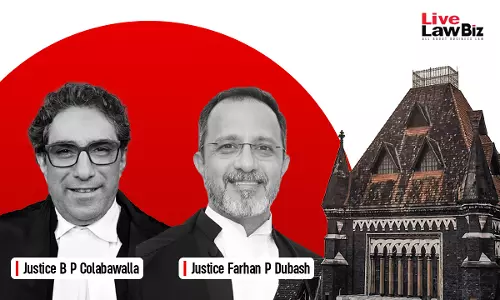
Bombay High Court Condones Trust's 30-Day Delay In Filing Tax Audit Form Despite Pending CBDT Plea
The Bombay High Court on 21 September condoned Vallabh Welfare Foundation's 30-day delay in filing Form 10B for Assessment Year 2020-21, despite the charitable trust having already approached the CBDT seeking condonation of the delay. A Division Bench of Justices B.P. Colabawalla and Farhan P. Dubash declined to relegate the Foundation to its pending application before the CBDT, finding that the peculiar facts warranted the High Court's intervention. The judges observed: “Though we are mindful...
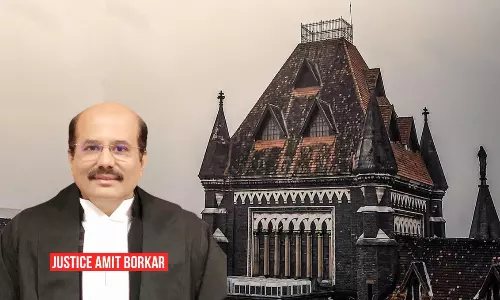
Bombay High Court Restrains Parle Agro's Franchisee From Selling SURE Water Competing With BAILLEY
The Bombay High Court has granted interim protection to Parle Agro Private Limited in its arbitration dispute with its franchisee Udayak Agro Products Pvt. Ltd. and Udayak's connected entity, K.L. Beverages LLP, over the manufacture and sale of competing packaged drinking water. Justice Amit Borkar found a prima facie case that the manufacture of SURE water by K.L. Beverages was covered by the indirect competition restrictions in Parle Agro's franchise agreement with Udayak. Under the...
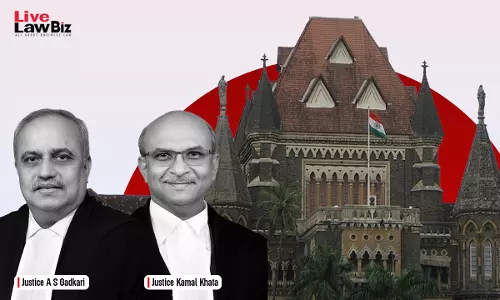
Foreign Arbitral Tribunal Interim Relief May Fail In India Without Direct Enforcement: Bombay High Court
On Tuesday, 22 September, the Bombay High Court held that interim relief granted by a foreign arbitral tribunal may be rendered ineffective in India where there is no direct mechanism to enforce such an order. A Division Bench of Justices A.S. Gadkari and Kamal Khata allowed an appeal by Singapore-based Sunfield Global Pte Limited against Liberty Investments Private Limited, set aside a Single Judge's order refusing interim protection and directed Liberty to secure Sunfield's admitted USD...
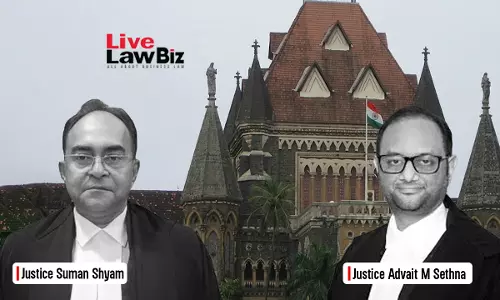
Crane Hiring Not Sale, No MVAT If Ownership And Control Remain With Owner: Bombay High Court
The Bombay High Court has ruled that hiring out cranes does not amount to a sale for levy of Maharashtra Value Added Tax (MVAT) when ownership and effective control of the cranes remain with the owner.A Division Bench of Justice Suman Shyam and Justice Advait M. Sethna allowed an appeal filed by Sharma Heavy Lifter. It quashed the Maharashtra Sales Tax Tribunal's order holding the crane-hiring transactions liable to VAT and imposing interest and penalty.“None of the attributes, characteristics...
Bombay High Court Quashes Former Lodha Developers Executive's PMLA Arrest For Lack Of Fresh Material
On 21 September, the Bombay High Court allowed former Lodha Developers executive Rajendra Narpatmal Lodha's writ petition and set aside the remand order dated 13 February 2026 passed in connection with the Enforcement Case Information Report registered by the ED. Justice Milind N. Jadhav held that the Enforcement Directorate cannot arrest a person on the basis of material on which it had earlier sought a Special Court's permission to record his statement, unless fresh incriminating material or...
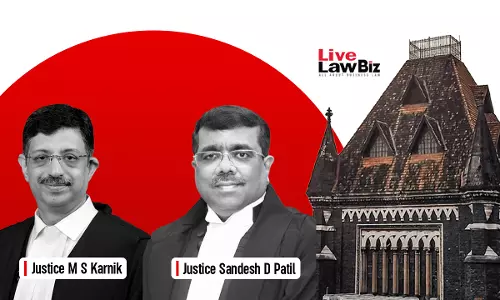
Tax Authorities Cannot Recover Pre-CIRP Dues Extinguished Under Resolution Plan: Bombay High Court
The Bombay High Court on 7 September held that tax authorities cannot continue recovery proceedings for pre-CIRP dues extinguished under an NCLT-approved Resolution Plan. A Division Bench of Justices M.S. Karnik and Sandesh D. Patil allowed a writ petition filed by Aarem Insights Pvt. Ltd., formerly known as Shop CJ Network Pvt. Ltd., and directed the State tax authorities to refund the statutory pre-deposit of Rs. 31,99,174 made by the company for pursuing its MVAT appeal, along with...

Digital Film Delivery Does Not Make It 'IT Software': Bombay HC Quashes GST Demand Against Dharma Productions
The Bombay High Court has quashed a ₹12.11 crore GST demand against Dharma Productions over licensing of copyright in cinematographic films, holding that electronic delivery of film content cannot by itself make the transaction one involving “Information Technology Software”. A bench of Justice M.S. Karnik and Justice Sandesh D. Patil was considering whether the manner in which the films were delivered, physically through encrypted hard disks or electronically, could determine their GST...
Venture Capital Funds Need No Separate SEBI Registration For Each Scheme For Income Tax Exemption: Bombay High Court
The Bombay High Court on Thursday held that a Venture Capital Fund (VCF) registered with SEBI does not need separate registration for each scheme it operates to claim exemption under Section 10(23FB) of the Income Tax Act.A Division Bench comprising Justice B.P. Colabawalla and Justice Farhan P. Dubash dismissed the Revenue's appeal against Milestone Real Estate Fund. The court upheld the Fund's eligibility for the exemption.Section 10(23FB) provides that income earned by a qualifying VCF from...
Income Tax Penalty On Reduced Expenditure Claim Under APA Contrary To Act, Unsustainable: Bombay High Court
The Bombay High Court has held that imposing an income tax penalty on account of a reduction in an expenditure claim pursuant to a position settled under an Advance Pricing Agreement (APA) is contrary to the scheme of the Income-tax Act and cannot be sustained.A division bench of Justice B.P. Colabawalla and Justice Farhan P. Dubash observed that the APA framework, introduced to reduce tax litigation, would be rendered ineffective if consequential penalties could be imposed after an expenditure...
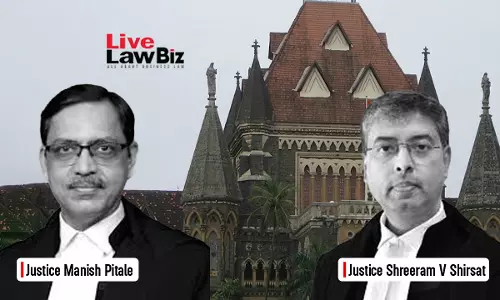
Unreasonable Delay In Taking SARFAESI Possession Defeats Act: Bombay High Court
The Bombay High Court has pulled up an Advocate Commissioner and the police for failing to secure physical possession of a property despite a May 2025 order under the SARFAESI Act, holding that the “unreasonable and unexplained delay” had “completely defeated” the law's provisions. A Division Bench of Justice Manish Pitale and Justice Shreeram V. Shirsat directed the Advocate Commissioner, with police assistance, to take physical possession of the secured property on September 17, 2026 and ...
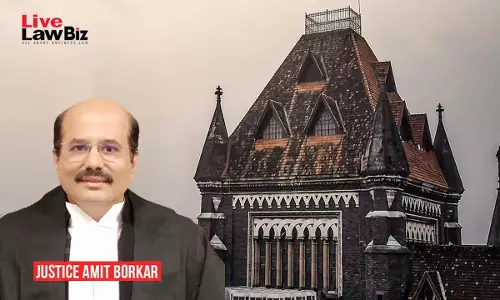
Forgery Allegation Alone No Ground To Reject Plea For Arbitrator Appointment: Bombay High Court
The Bombay High Court has held that an allegation that an arbitration agreement was forged does not automatically require rejection of an application for appointment of an arbitrator where independent documents provide a prima facie basis for the agreement's existence. Justice Amit Borkar appointed Advocate Ranjeev Carvalho as sole arbitrator to decide the Patkar House redevelopment dispute between developer Kiran Narendra Patkar and Milan Narendra Patkar. All objections concerning the...