
Allahabad High Court

Income Tax | Assessing Officer Can Complete Assessment If No Objections Before Dispute Resolution Panel: Allahabad HC
The Allahabad High Court at Lucknow has held that objections to a draft assessment order under Section 144C of the Income Tax Act, 1961, must be filed before the Dispute Resolution Panel as well as the Assessing Officer and that filing them before the Assessing Officer alone will not do. It held that where no objections are filed before the Dispute Resolution Panel, the Assessing Officer may finalise the assessment on the basis of the draft order itself. Section 144C of the Income...

CESTAT Must Issue Fresh Notice If Bench Does Not Sit On Fixed Hearing Date: Allahabad High Court
The Allahabad High Court has recently held that where no bench of the Customs, Excise and Service Tax Appellate Tribunal sits on the date fixed for hearing so that no judicial order comes to be passed fixing the next date, the Tribunal must issue a fresh notice to the party intimating the next date and place of hearing. It held that an appeal decided ex parte on such an unnotified date is decided without affording the appellant due opportunity of hearing. Rule 18(1) of the Customs,...
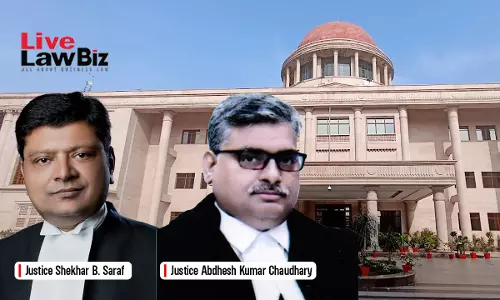
Income Tax Act | 18-Month Period To Decide Settlement Application Cannot Restart On Transfer Between Interim Boards: Allahabad High Court
The Allahabad High Court at Lucknow has recently held that the period of 18 months for deciding a settlement application under Section 245D(4A)(iii) of the Income Tax Act, 1961, begins to run when the application first stands allotted to an Interim Board for Settlement and does not begin afresh when the Central Board of Direct Taxes later transfers the application from one Interim Board to another. Section 245D(4A)(iii) of the Act requires an order under Section 245D(4) to be...
Builder Must Pay Delayed Possession Interest At Rate It Could Charge Allottee For Default: Allahabad High Court
The Allahabad High Court at Lucknow has recently held that the interest a builder must pay an allottee for delay in handing over possession under the Real Estate (Regulation and Development) Act, 2016, is the same rate that the builder could have charged the allottee had the allottee defaulted. Rejecting a builder's plea that its liability was confined to MCLR+1%, the Court upheld an award of interest at 24% per annum because the builder-buyer agreement itself provided for...
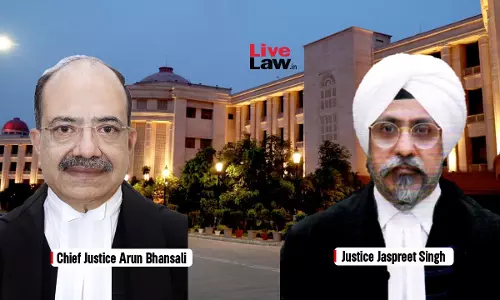
Arbitrators Can Decide Contractual Tax Disputes, Not Statutory Tax Issues: Allahabad High Court
The Allahabad High Court at Lucknow has recently held that tax disputes between contracting parties, where a party must bear or reimburse a tax, may be resolved through arbitration. However, questions involving statutory tax rates, classification, assessment or quantification remain within the exclusive domain of tax authorities. A Division Bench of Chief Justice Arun Bhansali and Justice Jaspreet Singh partly set aside the GST-related portions of an arbitral award granting over...
State Gets No Special Leeway In Delay Condonation Under Arbitration Act: Allahabad High Court
The Allahabad High Court on 30 July held that government bodies are not entitled to any special concession under Section 34(3) of the Arbitration and Conciliation Act, 1996 and that the State and private parties are subject to the same standard for proving “sufficient cause.” A Division Bench of Justices Rajan Roy and Abdhesh Kumar Chaudhary dismissed an appeal filed by the railway authorities against the Commercial Court's refusal to condone a 28 day delay in filing objections to an arbitral...

Allahabad High Court Seeks Centre's Response On GST Appellate Tribunal Vacancies In Uttar Pradesh
The Allahabad High Court has sought an affidavit from the Department of Revenue, Ministry of Finance, Government of India detailing the efforts being made to fill vacancies in the GST Appellate Tribunal benches in Uttar Pradesh. In a petition filed by S.S. Pharma, the issue of GST appellate tribunals not sitting was brought before the High Court. Justice Piyush Agrawal had directed the state counsels to seek instructions on the appointments, sittings, and disposal of cases by the Appellate...
Allahabad High Court Partly Sets Aside ₹157.57 Cr Arbitral Award Against U.P. State Highways Authority
The Allahabad High Court on 23 July held that a financial model based on assumptions cannot, by itself, quantify a claim for loss of profits in arbitration, and set aside the Rs. 157.57 crore loss of profits award against the U.P. State Highways Authority. A Division Bench of Chief Justice Arun Bhansali and Justice Jaspreet Singh partly allowed the Authority's appeal under Section 37 of the Arbitration and Conciliation Act, 1996, severed the loss of profits component of the arbitral award,...
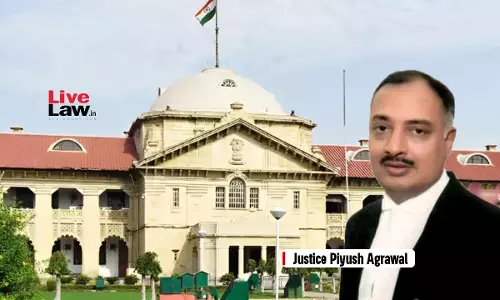
Foreign Award Enforcement Can't Be Refused For Ignoring Contract Or Proof Burden Shift: Allahabad HC
The Allahabad High Court on 13 July held that courts cannot refuse to enforce a foreign arbitral award under Section 48(2)(b) of the Arbitration and Conciliation Act, 1996 (which sets out the limited grounds for refusing enforcement of a foreign award) merely because they disagree with the arbitral tribunal's appreciation of evidence or findings or the burden of proof. A Bench of Justice Piyush Agrawal allowed the enforcement application filed by Fomento Commodities PTE. Ltd. and directed...
Allahabad High Court Upholds Setting Aside Of Arbitral Award For Lack Of Findings On Contentious Issues
The Allahabad High Court has upheld the setting aside of an arbitral award in an insurance dispute after finding that the arbitrator failed to record findings on key disputed issues, including the validity of the survey report and the basis for awarding the claimed amount, and instead "jumped to the conclusion" that the insured was entitled to the amount sought.A Division Bench of Chief Justice Arun Bhansali and Justice Kshitij Shailendra dismissed an appeal by Triveni Adhesive and Tapes against...
HSNS Cess Act | Allahabad High Court Sets Aside Arrest After Finding Authorisation Was Issued A Day Later
The Allahabad High Court has set aside the arrest, remand and detention of a man taken into custody under the Health Security Se National Security Cess Act, 2025, holding that the arrest could not be sustained when the written authorisation to arrest him was issued by the Commissioner only a day after he had been picked up.The HSNS Cess Act imposes a monthly cess on manufacturers of specified goods to fund national security and public health The court also held that the arrest memo did...
Allahabad High Court Flags Loophole In Income Tax Law On Reassessment After Taxpayer's Death
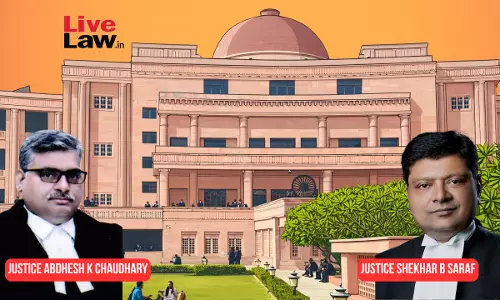
While holding that a reassessment notice under Section 148 of the Income Tax Act cannot be issued in the name of a dead assessee, the Allahabad High Court at Lucknow recently observed that the Act contains a legislative lacuna because it leaves the Revenue unable to initiate reassessment proceedings where an assessee dies before a valid reassessment notice is issued. Holding that the gap could result in escaped income going untaxed and prejudice the public exchequer, the court observed that...