
High Court

Works Contractors Liable To Pay Purchase Tax On Unregistered Dealer Purchases: Madras High Court
The Madras High Court on 9 July held that works contractors are liable to pay purchase tax on materials purchased from unregistered dealers, even when such materials are used in the execution of works contracts involving deemed sales. A Division Bench of Justices N. Anand Venkatesh and K.K. Ramakrishnan allowed the revision petitions filed by the State of Tamil Nadu, set aside the orders passed by the appellate authority and the Tamil Nadu Sales Tax Appellate Tribunal, and restored the...
IOCL Can't Retain Security Deposit For Alleged VAT Loss Without Contractual Basis: Karnataka High Court
The Karnataka High Court on 8 July held that a contractee cannot retain a contractor's security deposit indefinitely to recover an alleged VAT-related loss unless it proves a contractual breach, actual loss suffered, and its right under the contract to recover the amount. A Division Bench comprising Chief Justice Vibhu Bakhru and Justice K.S. Hemalekha allowed the appeal filed by BSR Infratech India, set aside the Commercial Court's judgment upholding Indian Oil Corporation's deduction, and...

Madras High Court Rules Omission Of 'Wilful Suppression' In Order Not Fatal, Upholds TNVAT Penalty
The Madras High Court on 27 July held that a penalty under the Tamil Nadu Value Added Tax (TNVAT) Act cannot be invalidated merely because the assessment order does not use the expression “wilful suppression” if the material on record establishes deliberate suppression of turnover. A Division Bench of Justices G. Jayachandran and N. Mala dismissed the tax case filed by Paharpur Cooling Towers Ltd. and upheld the Tamil Nadu Sales Tax Appellate Tribunal's order restoring the penalty imposed by...
DEPB Licences Not Eligible For ITC Under TNVAT Act Even If Classified As Goods: Madras High Court
The Madras High Court on 24 July held that dealers cannot claim Input Tax Credit (ITC) on purchase of Duty Entitlement Pass Book (DEPB) licences under the Tamil Nadu Value Added Tax (TNVAT) Act, as such licences, despite being classified as “goods”, do not meet the statutory conditions for availing credit. A Division Bench of Justices G. Jayachandran and N. Mala dismissed the writ appeals filed by P.I. Polymers and upheld the Single Judge's order denying ITC on DEPB licences, while reaffirming...

Bona Fide Classification Dispute Cannot Establish Tax Evasion Intent For Penalty: Punjab & Haryana HC
The Punjab and Haryana High Court on 20 July held that a bona fide classification dispute cannot, by itself, establish an intention to evade tax for imposing penalty under the Punjab Value Added Tax (PVAT) Act. A Division Bench comprising Acting Chief Justice Ashwani Kumar Mishra and Justice Rohit Kapoor allowed the appeal filed by Intex Technologies (India) Ltd. and set aside the penalty of Rs. 94,500 imposed under the PVAT Act for allegedly attempting to evade tax on mobile phone accessories....
Director Must Prove He Was Not Responsible For Company's Unpaid VAT: Kerala High Court
The Kerala High Court has recently held that when tax authorities seek to recover a company's tax dues from one of its directors under the Kerala Value Added Tax (KVAT) Act, the burden is on the director to prove that the non-recovery was not caused by his negligence, misfeasance or breach of duty.",,as per Section 39 of the KVAT Act, the onus to prove that the non-recovery was not on account of negligence, misfeasance or breach of duty attributable to the Director, is on the said person and not...
Delhi High Court Asks VAT Officer To Decide Voltas' ₹1.79 Crore Refund Claim Within Two Weeks
The Delhi High Court has recently disposed of a writ petition filed by Voltas Limited seeking a VAT refund of ₹1.79 crore pertaining to the first quarter of the financial year 2017-18, after the Delhi government assured the Court that the company's representation would be decided within two weeks.A division bench of Justices Anil Kshetrapal and Shail Jain was hearing Voltas' plea seeking a direction to the Commissioner of Trade and Taxes to refund ₹1,79,07,807.During the hearing, counsel...

Madras High Court Upholds 14.5% VAT On Vestige's Food Supplements, Rejects Ayurvedic Medicine Claim
The Madras High Court on 24 July held that products purchased and sold as food supplements cannot later be classified as proprietary Ayurvedic medicines merely to claim a concessional rate of Value Added Tax (VAT). A Division Bench of Justices G. Jayachandran and N. Mala dismissed the tax revision filed by Vestige Marketing Private Limited and upheld the levy of 14.5% VAT on the products, holding that the company had purchased the goods as food supplements under the Central Sales Tax (CST)...
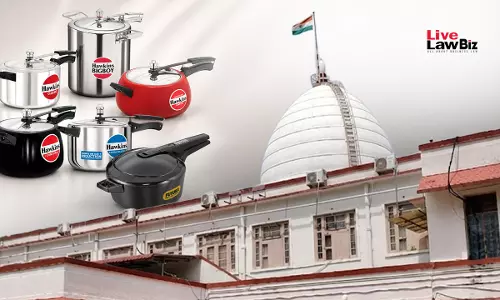
Gauhati High Court Rejects Hawkins Cookers' Plea To Compute VAT On Reduced Sale Price
The Gauhati High Court has held that Hawkins Cookers Ltd. must pay the balance 8.5% Value Added Tax (VAT) on the original sale price of pressure cookers after an earlier ruling held that the products attracted VAT at 12.5% before 2010 and not 4% as claimed by the company. Dismissing six revision petitions, the court rejected Hawkins' contention that the original sale consideration should be treated as inclusive of 12.5% VAT while computing the additional tax liabilityThe controversy was...

Transit Pass Surrender Not Conclusive Proof Of Goods Movement, Doesn't Bar KVAT Penalty: Karnataka HC
The Karnataka High Court on 15 July held that surrender of a transit pass under the Karnataka Value Added Tax (KVAT) Act does not conclusively establish genuine interstate movement of goods or prevent authorities from initiating penalty proceedings. A Division Bench of Justices S.G. Pandit and Dr. K. Manmadha Rao dismissed an appeal filed by Sri C. Girish, proprietor of Jai Gurudev Road Carriers, and upheld the penalty imposed under Section 53(12) of the KVAT Act (which provides for penalty...

Best Judgment Assessment Cannot Ignore VAT Composition Scheme Compliance By Contractor: Telangana HC
The Telangana High Court on 13 July held that a best judgment assessment cannot be sustained when the assessing authority fails to consider the statutory composition scheme opted by a works contractor and ignores the records maintained in accordance with the law. A Division Bench comprising Justices P. Sam Koshy and Nandikonda Narsing Rao set aside the assessment order passed against Chaitanya Enterprises, a proprietary concern engaged in electrical contracting works, which had challenged the...
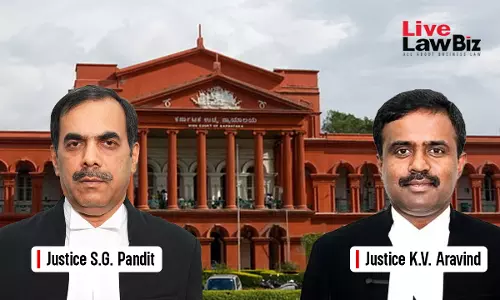
KVAT Revision Orders Must Be Passed Within Five Years Of Order Sought To Be Revised: Karnataka High Court
The Karnataka High Court has held that tax authorities cannot keep suo motu revision proceedings under the Karnataka Value Added Tax (KVAT) Act pending indefinitely after initiating them within the statutory four-year period. While the authority validly initiates revision by calling for records within four years of the order proposed to be revised, the final revisional order must also be passed within a reasonable time, the court ruled. A division bench of Justice S.G. Pandit and Justice K.V....