
Director Must Prove He Was Not Responsible For Company's Unpaid VAT: Kerala High Court
Mehak Dhiman
28 July 2026 7:28 PM IST
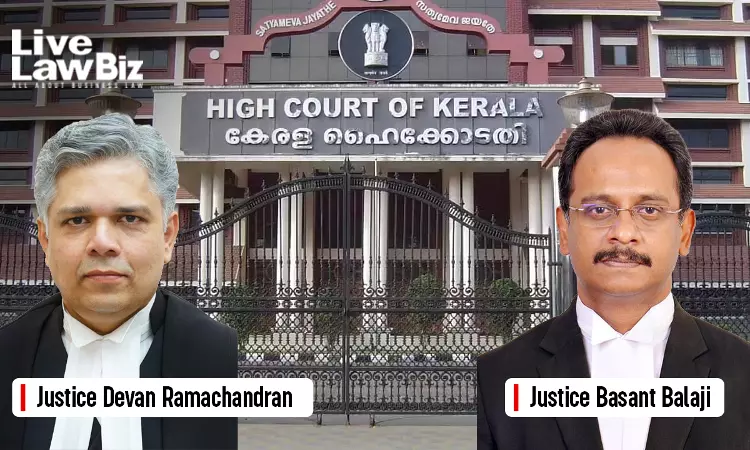
The Kerala High Court has recently held that when tax authorities seek to recover a company's tax dues from one of its directors under the Kerala Value Added Tax (KVAT) Act, the burden is on the director to prove that the non-recovery was not caused by his negligence, misfeasance or breach of duty.
",,as per Section 39 of the KVAT Act, the onus to prove that the non-recovery was not on account of negligence, misfeasance or breach of duty attributable to the Director, is on the said person and not the Revenue. " a Division Bench of Justice Devan Ramachandran and Justice Basant Balaji observed while partly allowing the State's appeal against a Single Judge's order.
The appeal arose from an order directing the Principal Secretary, Department of Taxes, to ascertain whether the assets of the assessee company could first be proceeded against.
The Single Judge had also directed the authority to examine the defence raised by its director that the tax could not be recovered due to reasons unconnected with his negligence, misfeasance or breach of duty before initiating recovery against his personal assets
The single judge had also directed the authority to examine the respondent's defence that the tax could not be recovered due to reasons unconnected with his negligence, misfeasance or breach of duty before initiating recovery against his personal assets.
The division bench agreed that the safeguards under Section 39 of the KVAT Act must be followed. However, it said the directions could be understood as requiring the Revenue to establish negligence or breach of duty. The court clarified that this was not what Section 39 contemplated. Under the provision, it is for the director to prove that the company's unpaid tax cannot be attributed to his negligence, misfeasance or breach of duty.
Recovery proceedings had been initiated against the respondent in his capacity as an alleged director of the company for its outstanding VAT dues. He maintained that he was not a director when the tax became due. The single judge had also found that the procedure prescribed under Section 39 had not been followed before the recovery notices were issued.
Before the division bench, the state argued that the statutory burden rested on the director and not on the Revenue. Accepting that contention, the court modified the Single Judge's directions only to clarify the position on the burden of proof. It left the remaining safeguards intact.
The court directed the Principal Secretary to hear the director on his contention that the company has assets against which recovery can first be pursued. The authority must also consider his claim that he was not a director when the tax became due and examine his defence that the non-recovery was not attributable to his negligence, misfeasance or breach of duty.
A reasoned order must be passed on these issues before any recovery is initiated against his personal assets. The Revenue remains free to proceed first against the company's assets in accordance with the statutory scheme
For the Appellants (Revenue): Shaij Raj T.K., Senior Government Pleader.
For the Respondent: S. Vinod Bhat.