
DEBT RECOVERY LAWS

DRT Can Decide Legality Of SARFAESI Action Against MSME Companies: Calcutta High Court
The Calcutta High Court recently observed that the Debts Recovery Tribunal (DRT) can examine whether Indian Bank rightly initiated SARFAESI proceedings against two MSME companies.The Division Bench of Justice Shampa Sarkar and Justice Arjun Ray Mukherjee observed,"Thus, the question whether the SARFAESI proceeding had been rightly initiated by the Bank and whether the steps taken under the SARFAESI Act were legally permissible in view of the Framework of the RBI, in our, prima facie, view can be...
Absence Of Prior Decree Does Not By Itself Negate Cheque Liability: Delhi High Court
The Delhi High Court has ruled that the absence of a prior decree or adjudication quantifying damages does not, by itself, establish at the stage of issuance of process that a cheque was not issued towards a legally enforceable liability.“A settlement is, by its very nature, an agreement between parties to resolve their existing disputes and claims on mutually agreed terms. The legal effect of the settlement, including the consideration for the promise to pay the agreed amount, would have to be...
No Interim Stay From High Court If DRT Already Considered Relief Sought: Calcutta High Court
The Calcutta High Court on 28 August held that a petitioner who has already approached the Debts Recovery Tribunal (DRT) under the Securitisation and Reconstruction of Financial Assets and Enforcement of Security Interest (SARFAESI) Act cannot seek an interim stay from the High Court when the Tribunal has not granted such relief. Justice Om Narayan Rai dismissed a writ petition filed by Jayasri Acharya seeking to restrain a bank from taking possession of a property in which she claimed to be a...
Pending Registration Of Sale Certificate Does Not Mean SARFAESI Sale Is Incomplete: Delhi High Court
On 3 September, the Delhi High Court held that the mere pendency of registration of a Sale Certificate does not by itself render a sale under the Securitisation and Reconstruction of Financial Assets and Enforcement of Security Interest Act, 2002 (SARFAESI Act) incomplete. A Division Bench comprising Chief Justice Devendra Kumar Upadhyaya and Justice Tejas Karia dismissed an appeal filed by Patil Constructions against the Single Judge's order dated 23 July 2026, which had dismissed its writ...
Banks Can Use SARFAESI To Recover Dues Under Loans Acquired From Non-Notified Institutions: Supreme Court
The Supreme Court has ruled that a bank can use the Securitisation and Reconstruction of Financial Assets and Enforcement of Security Interest Act, 2002, commonly known as the SARFAESI Act, to recover a secured loan it acquired from an entity not covered by the law. This applies even if the original lender was not covered by the Act when the loan was granted.Justices Sanjay Kumar and Sanjeev Sachdeva ruled,“When the institution is one to which the SARFAESI Act is already applicable, acquisition...
MSME Borrower Can't Raise Revival Framework Defence In Subsequent SARFAESI Case: Kerala High Court
The Kerala High Court on 1 September held that an MSME borrower cannot invoke the MSME revival and rehabilitation framework for the first time in subsequent litigation to challenge SARFAESI proceedings when the borrower failed to raise the issue in the first round of litigation. A Division Bench of Chief Justice Soumen Sen and Justice Syam Kumar V.M. upheld the dismissal of a writ petition filed by Soubhagye Road Builders and its proprietors against recovery proceedings initiated by Canara Bank...
Recovery Officer Cannot Attach SARFAESI Statutory Pre-Deposit U/S 28(4) RDB Act: Kerala High Court
The Kerala High Court on 31 August held that a Recovery Officer cannot attach a statutory pre-deposit made by a borrower under the second proviso to Section 18 of the Securitisation and Reconstruction of Financial Assets Enforcement of Security Interest Act, 2002 (SARFAESI Act), by invoking Section 28(4) of the Recovery of Debts and Bankruptcy Act, 1993. A Division Bench of Chief Justices Soumen Sen and Syam Kumar V.M. set aside the Recovery Officer's order attaching E.T. Firoz's Rs....
Bombay High Court Dismisses Contempt Plea Against Kotak Mahindra Bank Over 7-Day Possession Notice
On 21 August, the Bombay High Court dismissed a contempt petition alleging that Kotak Mahindra Bank and the Tahsildar, Mira-Bhayandar violated the Court's direction to give seven days' notice before taking physical possession of a secured flat. A Division Bench of Justices Manish Pitale and Shreeram V. Shirsat held that the failure to give the full seven-day notice did not amount to gross contempt or wilful disobedience, and found that the Tahsildar's office appeared to have miscalculated the...
Cheque Handover Date Discrepancy Does Not Defeat Liability When Signatures Are Admitted: Delhi High Court
The Delhi High Court on 10 August held that a discrepancy regarding the date on which a cheque bearing the defendant's admitted signatures was handed over, does not, by itself, undermine the underlying loan liability. Justice Neena Bansal Krishna dismissed Rakesh Srivastava's appeal and upheld the 30 April 2026 judgment of the District Judge, which had decreed Pradeep Yadav's recovery suit for Rs. 6 lakh with pendente lite and future interest at 9% per annum. She observed: "When the cheque...
ARC Can Be Substituted In Pending Cheque Bounce Case After Acquiring Loan From Bank: Bombay High Court
The Bombay High Court on 3 August held that an Asset Reconstruction Company (ARC) can seek substitution as the complainant in a pending cheque bounce prosecution under Section 138 of the Negotiable Instruments Act, 1881 (NI Act), after acquiring the underlying financial asset from a bank. Justice N.R. Borkar dismissed a petition filed by Avarsekar & Sons Pvt Ltd and its directors challenging the substitution of Assets Care and Reconstruction Enterprises Ltd. (ACRE) as complainant in place...
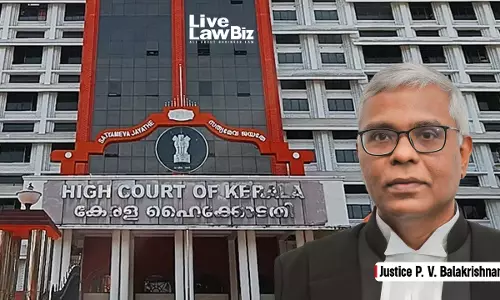
DRT Registrar Cannot Suo Motu Refer Applications To Presiding Officer: Kerala High Court
The Kerala High Court has held that the Registrar of a Debts Recovery Tribunal (DRT) cannot suo motu place an unnumbered securitisation application (SA) before the Presiding Officer to decide questions of maintainability or locus standi. The Registrar's role is limited to scrutinising applications for defects, giving applicants an opportunity to cure them and, where defects remain, declining registration through a reasoned order.“The Rule does not give any power to the Registrar to place the...
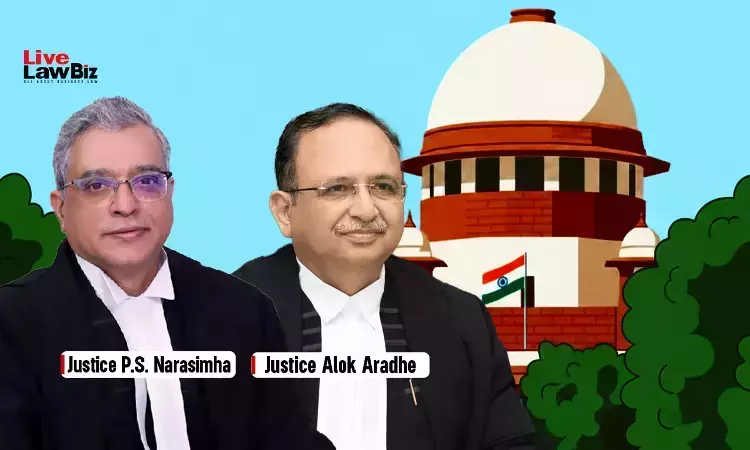
Failure To Serve CPC Notice On Legal Representatives Does Not Invalidate DRT Auction Sale: Supreme Court
The Supreme Court on Friday upheld an auction sale of a Delhi property in debt recovery proceedings. It held that the CPC notice requiring the legal representatives of a deceased judgment debtor to show cause why the decree should be executed against them did not govern the auction after the proceedings were transferred to the DRT.A bench of Justices Pamidighantam Sri Narasimha and Alok Aradhe noted that the execution proceedings were initially before the Morena court, where the issue of notice...