
Evidence Of Person Without Direct Knowledge Insufficient In Cheque Bounce Case: Kerala High Court
Shilpa Soman
9 Jun 2026 9:11 PM IST
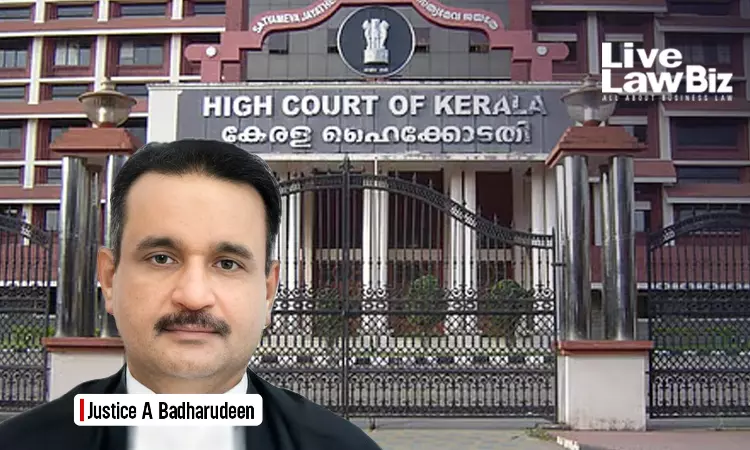
The Kerala High Court has observed that a complainant in a cheque dishonour case cannot rely on evidence from a person who lacks direct knowledge of the transaction and execution of the cheque to prove those facts.
“Indubitably such evidence shall be given by the person, who had direct knowledge regarding the transaction and execution of the cheque and the evidence of a person, who does not know the same is insufficient to prove the transaction and the execution of the cheque.”
Justice A. Badharudeen made the observation while dismissing an appeal against the acquittal of an accused in a cheque dishonour case involving a cheque for ₹4.5 lakh.
The appeal arose from a complaint alleging that the accused had borrowed ₹4.5 lakh from the complainant and had issued a cheque dated March 9, 2004. Following dishonour of the cheque, the complainant initiated prosecution alleging commission of an offence under the Negotiable Instruments Act.
The Judicial First Class Magistrate acquitted the accused. Challenging the acquittal, the complainant argued before the High Court that he had proved the transaction and execution of the cheque and was therefore entitled to the presumptions available under the law.
The accused argued that the complainant had no direct knowledge regarding the transaction which allegedly led to the execution of the cheque. During cross-examination, the complainant deposed that the money was given by his father in five instalments and that the details of the payments were recorded by his father in a notebook. The notebook was not produced in evidence.
The Court noted that the complainant had further deposed that he did not know whether the accused had agreed to repay the amount within any particular period. He also stated that although a stamp paper was available, he had not read the agreement.
Examining the evidence, the court observed that the complainant's own testimony showed that the money was given to the accused by his father and that the details of the payments were noted by his father. The court further observed that the complainant did not know the transaction or the execution of the cheque, including the passing of consideration.
The court found that the competent person to depose regarding the transaction and execution of the cheque was the complainant's father. However, the father was not examined.
“the complainant had miserably failed to discharge the initial burden cast upon him, to prove the transaction which led to the execution of the cheque, which would disentitle him the benefit of presumptions under Sections 118 and 139 of the NI Act in favour of him.”
Holding that the complainant had failed to prove the transaction that led to the execution of the cheque and was therefore not entitled to the benefit of the presumptions under the law, the court dismissed the appeal and confirmed the acquittal.
For Appellant: Advocates Rajeev V Kurup and Ajith Kathiranthara
For Respondents: Advocates S Nidheesh, Sabu S Kallaramoola and Vipin Narayan A, Senior Public Prosecutor