
High Courts
High-Value Bank Transactions Alone Cannot Justify Reassessment: Gujarat High Court
The Gujarat High Court recently held that high-value transactions reflected in bank accounts, without any material showing that income had escaped assessment, cannot by themselves justify reopening an assessment. The court consequently quashed reassessment proceedings initiated against O3 Developers Pvt. Ltd. A division bench of Justice A.S. Supehia and Justice Vaibhavi D. Nanavati set aside reassessment notices and consequential orders issued against the company for AY 2019-20 and AY 2021-22. ...
ITAT Delhi Upholds ₹18 Lakh Tax Deduction Claim On Ernst & Young's CSR Donations
Ernst & Young Services Private Limited has succeeded before the Delhi bench of the Income Tax Appellate Tribunal in a dispute over a tax deduction claimed on donations made as part of its Corporate Social Responsibility (CSR) spending. The tribunal dismissed the Income Tax Department's appeal and upheld the deduction. A bench of Judicial Member Yogesh Kumar U.S. and Accountant Member Manish Agarwal was considering the Department's challenge to relief granted to the company. The dispute...
Employee Secondment Payments To EY US Satisfy 'Make Available' Test, Taxable As FTS: Delhi High Court
The Delhi High Court on thursday held that payments made by Indian entities to a foreign company for the secondment of employees can be taxed as Fees for Technical Services (FTS) under the India-US Double Taxation Avoidance Agreement (DTAA) if the arrangement satisfies the "make available" test by transferring technical knowledge, skill, or experience to the Indian entity.A Division Bench of Justices V. Kameswar Rao and Vinod Kumar allowed appeals filed by the Revenue against Ernst & Young...
Cash Loan Given In Breach Of Income Tax Act Can Still Be Recovered: Madras High Court
The Madras High Court at Madurai has held that a cash loan advanced in breach of the Income Tax Act does not become illegal merely for that reason, and the lender can still seek recovery of the money. A bench of Justice G.R. Swaminathan and Justice R. Poornima was dealing with a case in which P. Palanikumar claimed to have lent ₹25 lakh in cash instead of through an instrument as contemplated under Section 269SS of the Income Tax Act. The bench held that while the Income Tax Department was...
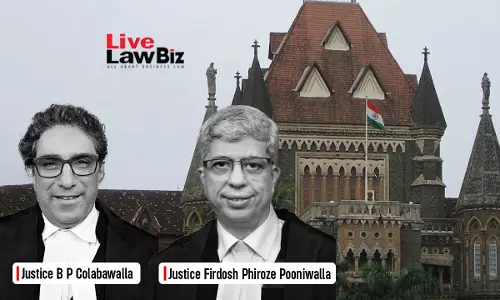
Tax Reassessment Beyond 4 Years Invalid Without Failure To Disclose Material Facts: Bombay High Court
On 16 June, the Bombay High Court held that the Income Tax Department cannot reopen an assessment after four years when the taxpayer has already disclosed all material facts fully and truly and allowed a writ petition filed by Chennai Container Terminal Private Limited.A Division Bench of Justices B.P. Colabawalla and Firdosh P. Pooniwalla set aside the notice issued under Section 148 of the Income Tax Act, the order rejecting objections, and the consequential show cause notice and draft...
Excess Royalty Refunded To Indian Subsidiary Under APA Cannot Be Taxed As Income Of GIA US: Bombay High Court
The Bombay High Court has upheld relief granted to Gemological Institute of America Inc. (GIA US) in a dispute over royalty payments received from its Indian subsidiary. The court ruled that royalty amounts bona fide refunded pursuant to a CBDT-approved Advance Pricing Agreement (APA) could not be brought to tax in the hands of the US entity because the amounts did not ultimately belong to it. A Division Bench of Justice B.P. Colabawalla and Justice Firdosh P. Pooniwalla dismissed a batch of...
Gujarat HC Quashes Reassessment, Holds No Escaped Income Exists Where MAT Liability Is Unchanged
The Gujarat High Court has quashed reassessment proceedings initiated against Pandesara Infrastructure Limited for Assessment Year 2020-21. The court found that the proposed recomputation of depreciation would not result in any income chargeable to tax escaping assessment. It also noted that the company's liability under the Minimum Alternate Tax (MAT) regime would remain unchanged. A Division Bench of Justice A.S. Supehia and Justice Vaibhavi D. Nanavati allowed the writ petition challenging...
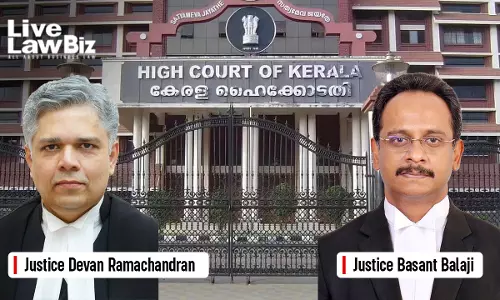
Kerala HC Directs CIT To Reconsider Registration Of Trust From 2021, Examines CBDT Circular 7/2024
On 4 June, the Kerala High Court directed the Commissioner of Income Tax (Exemptions) to reconsider a Atma Bodhodaya Sangham Sree Subhananda Trust's claim for registration under Section 12A of the Income Tax Act with effect from 1 April 2021, after examining the applicability of CBDT Circular No. 7/2024 on rectification of defective exemption applications. A Division Bench of Justices Devan Ramachandran and Basant Balaji set aside the orders of the Income Tax Appellate Tribunal (ITAT) and the...

No Relief For Reimbursement Claims Made To Foreign Parent Without Expense Break-Up: Madras High Court
The Madras High Court has recently dismissed appeals filed by Cairn India Limited, now Vedanta Limited, and upheld tax demands over its failure to deduct tax at source (TDS) on payments remitted to its Australian parent company. While dismissing Cairn's plea, the court made it clear that a taxpayer cannot obtain relief merely by describing a lump-sum payment as a reimbursement. If the claim is that the payment represents reimbursement of expenses, the taxpayer must disclose what those expenses...
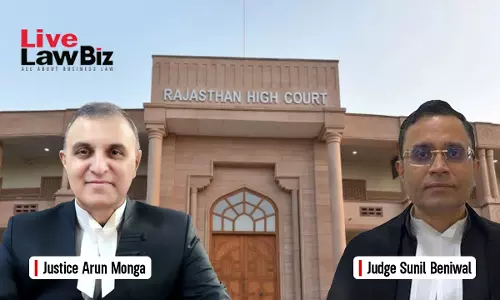
60% Tax Rate Under Section 115BBE Cannot Apply To Pre-1 April 2017 Income: Rajasthan High Court
The Rajasthan High Court on 27 May held that the enhanced tax rate of 60% introduced under Section 115BBE of the Income-tax Act through the Taxation Laws (Second Amendment) Act, 2016, cannot be applied retrospectively to income pertaining to Financial Year 2016–17, as the amendment was expressly made effective from 1 April 2017. The Division Bench of Justices Arun Monga and Sunil Beniwal held that the higher rate could operate only prospectively and could not govern income earned prior to its...
Partner Cannot Claim Deduction On Interest Paid For Capital Invested In Firm: Kerala High Court
The Kerala High Court on 20 May held that a partner cannot claim deduction under Section 36(1)(iii) of the Income Tax Act for interest paid on funds borrowed and contributed as capital to a partnership firm, since the borrowed capital was not used for the partner's own business. A Division Bench of Justices Devan Ramachandran and Basant Balaji dismissed the appeal filed by Alice Arun Thomas and upheld the order of the Income Tax Appellate Tribunal (ITAT), Cochin Bench. It held: "The provisions...

ITAT Ahmedabad Deletes ₹74.64 Lakh Addition After Waste Stock Discrepancy Was Adequately Explained
The Ahmedabad Bench of the Income Tax Appellate Tribunal (ITAT) deleted a ₹74.64 lakh addition made against Shakti Polyweave Private Limited towards estimated gross profit. The tribunal held that the company had adequately explained the alleged discrepancy in wastage stock reported in its tax audit report and that rejection of its books of account was unjustified. The bench of Judicial Member Siddhartha Nautiyal and Accountant Member Annapurna Gupta partly allowed the assessee's appeals for...