
High Courts
Earlier Reassessment Regime Applies To Non-Searched Taxpayers In 2021-24 Searches: Gujarat High Court
The Gujarat High Court has held that the earlier reassessment regime can apply even where the assessee was not the person searched, provided the reassessment is founded on incriminating material recovered during a search conducted within the statutory transition period. Applying that principle, the court quashed reassessment proceedings against a transporter after holding that the reopening notice had been issued beyond the applicable limitation period. A division bench of Justice A.S....
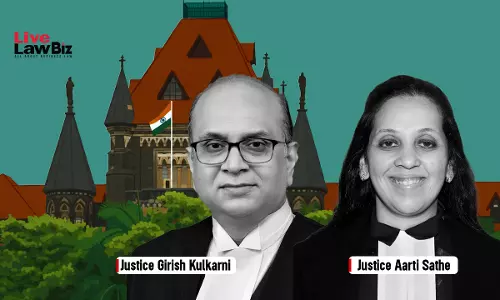
Bombay High Court Sets Aside ITAT Order For Failing To Decide Challenge To Faceless Assessment Procedure
The Bombay High Court has recently set aside an order of the Income Tax Appellate Tribunal (ITAT), holding that the tribunal failed to adjudicate a taxpayer's jurisdictional objection alleging non-compliance with the mandatory assessment procedure. The court ruled that the issue went to the root of the matter and required adjudication by the tribunal. A division bench of Justice G.S. Kulkarni and Justice Aarti Sathe observed,"Even otherwise, on merits, the ITAT was required to consider and...
Gujarat High Court Says It Cannot Tinker With CBDT's Informant Reward Calculation Unless Patently Arbitrary
The Gujarat High Court has recently refused to interfere with the Central Board of Direct Taxes' (CBDT) decision fixing the reward payable to an informant under the 2007 Reward Guidelines. It held that the reward is an ex gratia payment and that the court cannot re-evaluate the methodology adopted by the Full Board unless its determination suffers from manifest illegality or patent arbitrariness. A Division Bench of Justice A.S. Supehia and Justice Vaibhavi D. Nanavati dismissed the writ...
Gujarat High Court Quashes Reassessment Over AO Treating Warranty Provision As Unascertained Liability
The Gujarat High Court has quashed reassessment proceedings initiated against road construction equipment maker Ammann India Private Limited.It held that the Revenue reopened the assessment by treating the company's scientifically determined warranty provision as an unascertained liability without considering the principles laid down by the Supreme Court, the Income Computation and Disclosure Standards (ICDS), or the material already available with the Assessing Officer. A division bench of...
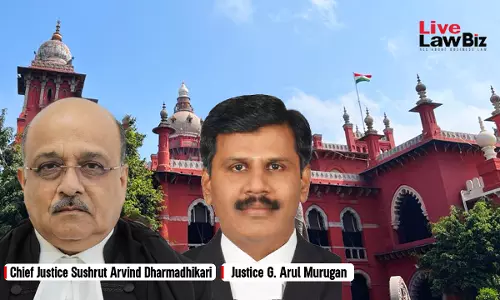
Why Madras High Court Refused To Order Probe Into Tamil Nadu CM's Financial Disclosures In Election Affidavit?
The Madras High Court has recently refused to direct the Income Tax Department to investigate the financial disclosures made by Tamil Nadu Chief Minister and Tamilaga Vettri Kazhagam chief C. Joseph Vijay in his election affidavit. It held that disputes over such disclosures can only be adjudicated through an election petition and not in writ proceedings. A Division Bench of Chief Justice Sushrut Arvind Dharmadhikari and Justice G. Arul Murugan dismissed a writ petition seeking directions to...
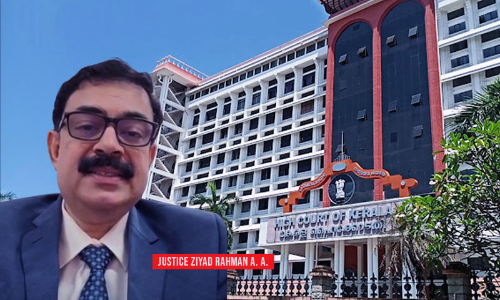
Draft Assessment Order Required Only For 'Eligible Assessees' Under Faceless Assessment: Kerala High Court
The Kerala High Court has held that tax authorities conducting faceless assessments are not required to issue a draft assessment order before finalising proceedings in the case of ordinary assessees. Justice Ziyad Rahman A.A., while dismissing writ petitions filed by a partnership firm engaged in the real estate business, observed that the requirement applies only to "eligible assessees" specifically defined under the Income Tax Act. "The requirement of issuing a draft assessment order before...
Property Investment Can't Be Taxed As Unexplained Income In Later Year If Paid Earlier: ITAT Ahmedabad
The Income Tax Appellate Tribunal (ITAT) in Ahmedabad has upheld the deletion of additions made against a taxpayer after finding that documentary evidence showed the disputed property investments were made in an earlier financial year and not during the assessment year under consideration. A bench of Vice President Dr. B.R.R. Kumar and Judicial Member Siddhartha Nautiyal dismissed the Income Tax Department's appeal against the relief granted by the Commissioner of Income Tax (Appeals). "It is...
Mere Client Code Modification Not Enough To Invoke S.68 On Entire Transaction Value: ITAT Ahmedabad
The Ahmedabad Bench of the Income Tax Appellate Tribunal (ITAT) has held that the Department cannot treat the entire value of commodity transactions routed through alleged client code modifications as unexplained cash credits under Section 68 of the Income Tax Act, 1961, in the absence of material showing that the taxpayer benefited from accommodation entries. Vice President Dr. B.R.R. Kumar and Judicial Member Siddhartha Nautiyal upheld relief granted to Dharmdeep Commodities Pvt. Ltd. and...
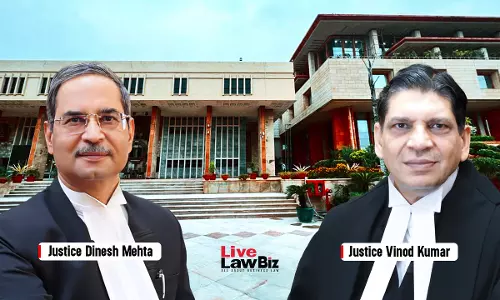
Reassessment Notice Not Invalid Merely Because Reply Period Extends Beyond Limitation: Delhi High Court
The Delhi High Court has held that a notice issued under Section 148A(b) of the Income Tax Act does not become invalid merely because the minimum seven-day period granted to an assessee for filing a reply extends beyond the limitation period prescribed for issuance of reassessment notices. A Division Bench of Justices Dinesh Mehta and Vinod Kumar observed that Parliament consciously provided for exclusion of the time granted to an assessee for filing a reply while computing limitation under...
Time Granted To Assessee For Reply Must Be Excluded While Computing Reassessment Limitation: Delhi High Court
The Delhi High Court has reiterated that while computing the limitation period for reassessment proceedings under the Income Tax Act, the time granted to an assessee to respond to a notice issued under Section 148A(b) must be excluded in terms of the fifth and sixth provisos to Section 149. Applying this principle, the Division Bench of Justices Dinesh Mehta and Vinod Kumar dismissed a writ petition challenging reassessment proceedings as time-barred, holding that the order passed under Section...
Gujarat High Court Quashes Reassessment After Escaped Income Falls Below ₹50 Lakh
The Gujarat High Court has quashed reassessment proceedings against Touch Comm Tech Private Limited after finding that the alleged escaped income fell below ₹50 lakh, making the reopening time-barred. A division bench of Justice A.S. Supehia and Justice Vaibhavi D. Nanavati allowed the company's writ petition and set aside the order passed under Section 148A(d) along with the consequential reassessment notice. “Thus, it appears that in order to bring the assessment within the ambit of...
Survey-Based Reassessment Not Excluded From Settlement Under Vivad Se Vishwas Scheme: Gujarat High Court
The Gujarat High Court has recently held that reassessment proceedings based on survey material are not excluded from the Direct Tax Vivad Se Vishwas Scheme, 2024. The court observed that the revenue cannot import a restriction that does not appear in the statute. The Direct Tax Vivad Se Vishwas Scheme, 2024, was introduced by the Centre to reduce pending income-tax litigation by allowing eligible taxpayers to settle disputes and bring appeals to an end. A division bench of Justice A.S....