
High Courts

'Left No Stone Unturned To Harass': Delhi HC On IT Dept's Delay In Releasing KVPs, IVPs
The Delhi High Court has pulled up the Income Tax Department for delaying the release of seized Kisan Vikas Patras (KVPs) and Indira Vikas Patras (IVPs) even after the assessee deposited the settlement amount, observing that the authorities had “left no stone unturned to harass” the petitioner.A division bench of Justices Dinesh Mehta and Om Prakash Shukla directed the tax authorities to compensate the petitioners for loss of interest caused due to wrongful retention of the instruments.The case...
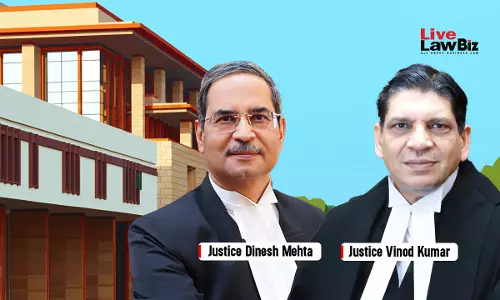
Company's Car, Telephone Costs Not 'Personal' Despite Being Separate Legal Entity: Delhi High Court
The Delhi High Court has held that telephone and car expenses incurred by a company cannot be disallowed as “personal” expenses merely because a company is treated as a separate legal person.A division bench of Justices Dinesh Mehta and Vinod Kumar allowed the company's appeal and set aside an order of the Income Tax Appellate Tribunal (ITAT), which had upheld disallowance of one-sixth of the company's telephone and car expenses on the ground of possible personal use.The company argued that...
Huge Turnover Difference Between Taxpayer, Comparable Warrants Exclusion In Transfer Pricing Analysis: Delhi HC
The Delhi High Court has held that a company with a vastly different turnover and scale of operations may not be a proper comparable for transfer pricing analysis.A division bench of Justices V. Kameswar Rao and Vinod Kumar observed that huge differences between the tested entity and the comparable would necessarily require the exclusion of the comparable.The court made the observation while dealing with an appeal filed by the Income Tax Department against an order of the Income Tax Appellate...
Delhi High Court Quashes IT Order After Dept. Failed To Intimate Decision On Taxpayer's Adjournment Request
The Delhi High Court has quashed an income tax assessment order and demand notice after finding that a taxpayer was denied a fair hearing. The tax department failed to communicate whether his adjournment request had been accepted or rejected. It also passed the order without considering the reply he had filed. A Bench of Justice Dinesh Mehta and Justice Vinod Kumar observed, “It is clear that the petitioner's right of being heard has been infracted and the violation of petitioner's Fundamental...
Father Of Deceased Taxpayer Can Be Treated As Legal Representative Despite Not Being Legal Heir: Delhi HC
The Delhi High Court has held that the father of a deceased assessee can be treated as a “legal representative” under the Income Tax Act even if he is not a Class-I heir under the Hindu Succession Act.A Division Bench of Justices Dinesh Mehta and Amit Mahajan observed,“A person need not be a legal heir, much less a Class I heir under the Hindu Succession Act to fall within this definition. The test is not one of inheritance; it is one of representation vis-à-vis the estate of the deceased.”The...
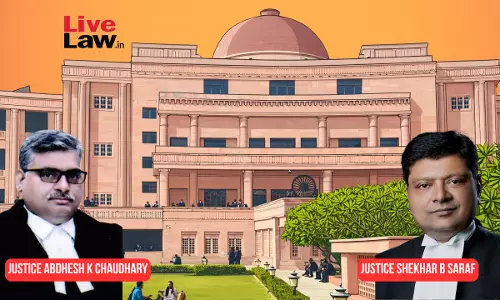
No Rectification For Debatable Points Under Section 254(2) Of Income Tax Act: Allahabad High Court
The Allahabad High Court on 6 May held that only mistakes apparent from the record can be rectified under Section 254(2) of the Income Tax Act, 1961, and that debatable issues fall outside its scope. A Division Bench of Justices Shekhar B. Saraf and Abdhesh Kumar Chaudhary dismissed the appeal filed by Abusaad Ahmad, upholding the Income Tax Appellate Tribunal's refusal to rectify its earlier order rejecting condonation of delay. It held: “In order to attract the power to rectify under...

Bombay HC Waives Re-Verification Of Amended Pleadings Challenging Section 147A IT Act After SC Ruling
The Bombay High Court has waived re-verification of amended pleadings in pending writ petitions challenging income tax reassessment notices, where assessees now seek to challenge the newly inserted Section 147A following the Supreme Court's ruling in Income Tax Officer, Ward 2(1), Chandigarh v. Tej Pratap Singh. A Division Bench of Justice G.S. Kulkarni and Justice Aarti Sathe said re-verification need not be insisted upon, noting that a large number of similar reassessment matters were pending...
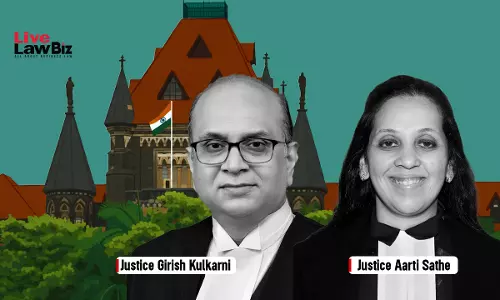
"Fishing Inquiry": Bombay High Court Upholds Quashing Of Income Tax Revision Against Impact Foundation
The Bombay High Court has dismissed the Income Tax Department's appeal against Impact Foundation (India), holding that revisionary proceedings under the Income Tax Act could not be sustained merely because the Commissioner believed the assessing officer should have conducted further enquiry. “The ITAT has therefore rightly come to the conclusion that the CIT (Exemptions), could not have initiated proceedings with a view to start de novo or a fishing inquiry in matters or orders which are...
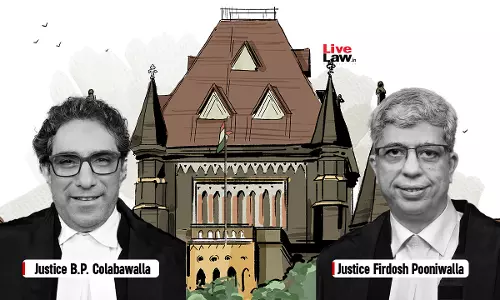
Bombay High Court Condones 430-Day Delay By Charitable Trust In Filing Declaration For Tax Exemption
The Bombay High Court has condoned a 430-day delay by Bombay Prathana Samaj, a charitable trust, in submitting a mandatory declaration required for claiming a tax exemption benefit, after finding that the trust had shown reasonable cause for the delay and would otherwise suffer genuine hardship. “The approach of the authority ought to be equitious, balancing and judicious and availing of exemption should not be denied merely on the bar of limitation,” the Court observed while referring to the...
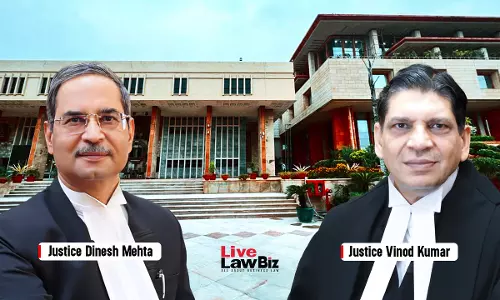
Delhi High Court Refuses To Condone Delay In Late Filing To Opt Lower Corporate Tax Regime
The Delhi High Court has recently refused to condone delay by a company in opting for a concessional corporate tax regime, holding that its application filed beyond the three-year limit prescribed under a CBDT circular was not maintainable.The division bench of Justices Dinesh Mehta and Vinod Kumar thus dismissed the writ petition filed by a company challenging the rejection of its application under Section 119(2)(b) of the Income Tax Act seeking condonation of delay in filing Form 10-IC for...
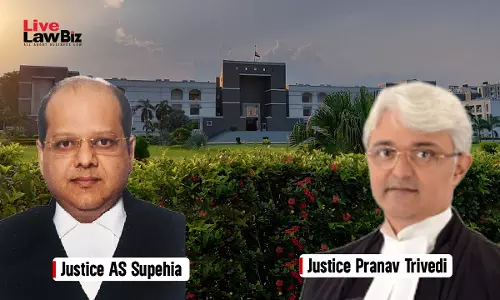
Gujarat HC Upholds Constitutionality Of CGST Provision Denying ITC To Buyers If Supplier Fails To Pay Tax
The Gujarat High Court has on Friday upheld the constitutional validity of a GST provision that denies input tax credit to a purchaser if the supplier has not deposited the tax with the government. The court upheld the validity of Section 16(2)(c) of the Central Goods and Services Tax Act, 2017, holding that entitlement to input tax credit is conditional upon actual payment of tax to the government. Emphasising that there was no constitutional infirmity in the provision, the court held, ...

In Faceless Assessment, Income Tax Revision Cannot Be Decided Without Inquiry: Gauhati High Court
The Gauhati High Court has held that the revisional authority cannot dispose of revision proceedings in a mechanical manner under the Income Tax Act (Section 264), which allows a taxpayer to seek revision of an order through a faceless process without making, or causing, an enquiry. This is especially so where the assessee claims difficulty in producing voluminous records and seeks verification at the place of business. The court referred to an earlier Division Bench ruling that held that...