
Single Judicial Member Of NCLT Can Pass Orders If Authorised By President: Kerala High Court
Rupali jain
5 March 2026 4:23 PM IST
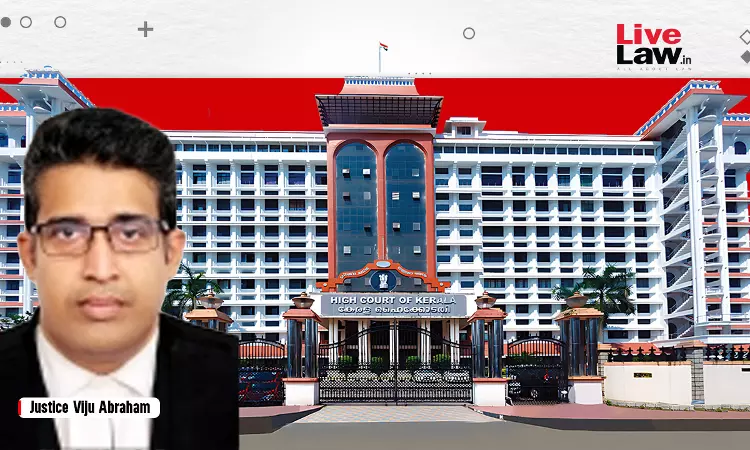
The Kerala High Court on 18 February, held that a Single Member of the National Company Law Tribunal (NCLT) can pass orders if the President of the Tribunal specifically authorises them under the proviso to Section 419(3) of the Companies Act, 2013.
A Bench of Justice Viju Abraham dismissed a writ petition challenging orders passed by a Single Judicial Member of the NCLT, Kochi Bench, upholding the validity of the directions.
The Court observed:
“It is also to be noted that though Section 419 of the Companies Act mandates that the powers of the Tribunal shall be exercisable by Benches consisting of two Members out of whom one shall be a Judicial Member and the other shall be a Technical Member, the proviso to Section 419(3) mandates that it shall be competent for the Members of the Tribunal authorised in this behalf to function as a Bench consisting of a single Judicial Member and exercise the powers of the Tribunal in respect of such class of cases or such matters pertaining to such class of cases, as the President may, by general or special order, specify. Therefore, going by the proviso to Section 419(3), a Single Member could function as a Bench and exercise the powers on specific authorisation by the President.”
The petitioner, a former director of Sree Bhadra Parks and Resorts Limited, had challenged orders directing him to disclose his movable and immovable assets and to pay costs of Rs. 2 lakhs in execution proceedings initiated by the liquidator. The liquidation had commenced after a Section 7 petition under the Insolvency and Bankruptcy Code, 2016 (IBC) was admitted by Sri Ramani Resorts and Hotels Pvt. Ltd, and no resolution plan was received.
During liquidation, the liquidator moved an application under Section 66 of the IBC alleging fraudulent transactions, involving a sum of Rs. 2,94,77,269/- found in the books of account of the Corporate Debtor. The Tribunal allowed the application and directed recovery. Subsequent execution proceedings were initiated to enforce the order.
The petitioner contended that since Section 419(3) of the Companies Act mandates that NCLT Benches consist of one Judicial and one Technical Member, the impugned orders passed by a Single Member were without jurisdiction. He also argued that he intended to challenge the orders before the National Company Law Appellate Tribunal (NCLAT), Chennai, and therefore the Single Member lacked authority to pass directions in execution proceedings.
The Court rejected these arguments, noting that the petitioner had previously approached the High Court, seeking time to comply with the NCLT's directions, and had been granted two weeks for compliance. Despite an extension, the directions were not complied with. The NCLT had set a series of deadlines (initially 15 days, then two working days, and finally a 72-hour "last chance") before imposing the cost of Rs. 2 lakhs.
In the Supreme Court, the petitioner had moved a civil appeal which was initially dismissed for not curing defects but later restored and posted for admission on 16 February 2026. No interim protection had been secured during this period.
Accordingly, the High Court dismissed the appeal, holding that Single Member Benches of the NCLT can validly exercise jurisdiction where duly authorised.
Appearance: By Advs. Shri V.R. Gopu, Shri J. Narayana Pillai, Smt. Urmila.M.G, Smt. Nandana P.