
IBC
NCLT Cannot Recall Order Passed On Merits Under Rule 11 Of NCLT Rules 2016: NCLAT Chennai
The National Company Law Appellate Tribunal (NCLAT), Chennai Bench, comprising Justice Sharad Kumar Sharma (Member-Judicial) and Jatindranath Swain (Member-Technical), has held that an order passed on merits cannot be recalled by the NCLT under rule 11 of the NCLT Rules, 2016. Background The CIRP of the corporate debtor was initiated, and the appellant turned out to be the successful resolution applicant (SRA). Six homebuyers filed applications before the NCLT seeking execution of...

Suspended Directors' Duty To Sign Balance Sheets Continues During CIRP, Any Acknowledgment Extends Limitation Against Personal Guarantor: NCLAT
The National Company Law Appellate Tribunal (NCLAT) New Delhi held that since the liability of the guarantor is co-extensive with that of the borrower, any acknowledgment of liability by the corporate debtor extends the limitation period against the guarantor also. The Tribunal also held that signing balance sheets is a statutory duty of the directors of a company from which they are not relieved even during the Corporate Insolvency Resolution Process (CIRP). Therefore, any acknowledgment...

Consumer Complaint Is Not Maintainable Against Corporate Debtor During Subsistence Of Moratorium: Bombay High Court
The Nagpur Bench of the Bombay High Court, comprising of Justice M.M. Nerkiar, has held that the consumer complaint before the District Consumer Dispute Redressal is not maintainable if the insolvency of the corporate debtor has been admitted during the continuance of the moratorium. The petition was filed against the order of the District Consumer Dispute Redressal. In the impugned order the commission had directed the petitioner to return the JCB machine to the respondent. ...
Can Multi-State Cooperative Societies Submit Resolution Plans Under IBC? Supreme Court To Consider
The Supreme Court recently directed that the Central Registrar of Multi-State Cooperative Societies be made a party to the appeal filed by a multi-state co-operative society against a National Company Law Appellate Tribunal (NCLAT) judgment that had held the society ineligible to submit a resolution plan for a company under the Insolvency and Bankruptcy Code, 2016.A bench of Justice JB Pardiwala and Justice KV Viswanathan sought a response from the Central Registrar on whether multi-state...

NCLT President Cannot Transfer Cases Beyond Territorial Jurisdiction Of Bench: Gujarat High Court In Essar Steel Insolvency Case
The Gujarat High Court has recently held that the President of the National Company Law Tribunal (NCLT) has no authority to transfer cases from one State to another through administrative orders.The ruling came in proceedings linked to the Essar Steel insolvency process, where the court also found that repeated recusals by NCLT Members in Ahmedabad were neither "legal" nor "justified."A single bench of Justice Niral R Mehta made the finding in a petition filed by Arcelormittal Nippon Steel India...
S.238 IBC Is Non-Obstante Clause, Overrides Provisions Of Electricity Act: Allahabad High Court
The Allahabad High Court has held that the Insolvency and Bankruptcy Code, 2016 overrides the provisions of Electricity Act, 2003 read with Electricity Supply Code, 2005.A bench of Justice Arindam Sinha and Justice Prashant Kumar held“Section 238 of Insolvency and Bankruptcy Code, 2016 is a non- obstante clause meaning it grants the IB Code a power of overriding effect on other laws, for the time being in force, or any instrument that is inconsistent with it. This is a Special Section, which...
Documents Not Filed Before NCLT Cannot Be Entertained As Evidence By NCLAT For Deciding Appeal: NCLAT Chennai
The NCLAT, Chennai Bench, comprising Justice Sharad Kumar Sharma (Member-Judicial) and Jatindranath Swain (Member-Technical), has held that any document available but not filed before the NCLT cannot be entertained as evidence by the NCLAT at the appellate stage. The CIRP of the corporate debtor was initiated, and due to the failure to receive the resolution plan, a liquidation order was passed by the NCLT Kochi. The liquidator was appointed, who discovered that certain transactions...
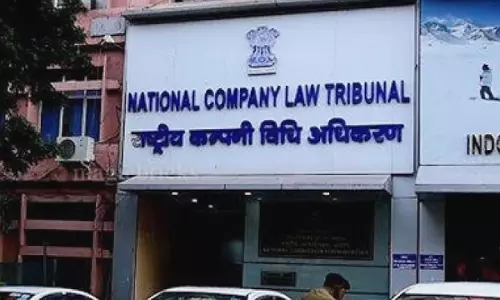
Corporate Debtor Cannot Escape Liability By Transferring Debt To Holding Company: NCLT New Delhi
The National Company Law Tribunal (NCLT), New Delhi Bench, comprising Shri Manni Sankariah Shanmugha Sundaram (Member-Judicial) and Shri Atul Chaturvedi (Member-Technical), has observed that merely the internal arrangements between the group companies cannot absolve the corporate debtor of its obligation towards third-party creditors. The appellant was engaged in the trade of Kraft paper reels, and it supplied material to the corporate debtor. Out of the total consideration amount of...
Resolution Professional Cannot Suo Moto Reject Claims Once They Have Been Admitted: NCLT Mumbai
The NCLT, Mumbai Bench, comprising Ms. Lakshmi Gurung (Member-Judicial) and Sh. Hariharan Neelakanta Iyer (Member-Technical), has ruled that once the claim of the creditor has been admitted by the resolution professional, it cannot on its own reject it later. The applicant advanced a loan of Rs. 212 Cr. to the corporate debtor, secured by the corporate guarantee and the mortgage deed. The CIRP of the corporate debtor was admitted, and claims were invited. The applicant submitted its...

NCLT Delhi Admits TDT Copper Into Insolvency Over ₹154 Crore Debt
The National Company Law Tribunal (NCLT) at Delhi recently admitted TDT Copper Limited to insolvency proceedings, acting on a plea filed by Bank of India under Section 7 of the Insolvency and Bankruptcy Code (IBC).The public sector lender had approached the Tribunal seeking recovery of dues amounting to Rs 153.98 crore.A coram comprising Judicial Member Mahendra Khandelwal and Technical Member Anu Jagmohan Singh in an order passed on October 16 appointed Shailesh Chandra Ojha as the Interim...
Non-Redemption Of Redeemable Preference Shares In Absence Of Distributable Profits Doesn't Amount To Financial Debt: NCLT New Delhi
The NCLT, New Delhi Bench, comprising Ashok Kumar Bhardwaj (Member-Judicial) and Reena Sinha Puri (Member-Technical), has held that the non-redemption of the redeemable preference shares in the absence of distributable profit doesn't amount to financial debt under section 7 of the IBC. The applicant is a financial institution and a member of a consortium of lenders. It filed the section 7 petition against the corporate debtor for alleged default in redemption of RPS amounting to Rs....
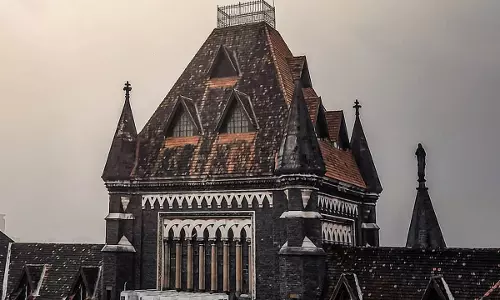
SARFAESI Act | Lending Banks Only Obligated To Consider Revival Scheme For NPA MSMEs If Borrower Claims Relief U/S 13(3A): Bombay High Court
The Bombay High Court bench, comprising Justice Suman Shyam and Justice Manjusha Deshpande, has held that the lending bank is obligated to consider the MSME revival scheme for classification of account as NPA only if it has been claimed by the MSME in response to the demand notice under Section 13(3A) of the SARFAESI Act. The petitioner's MSME unit took certain loans from ICICI Bank and the Technology Development Board (TBD). The ICICI Bank classified its account as NPA on February...