
RBI Ombudsman Cannot Reject Complaints Through Unsigned Emails, Must Give Reasons: Kerala High Court
Shilpa Soman
22 Jun 2026 12:51 PM IST
The Kerala High Court has held that the RBI Ombudsman cannot dismiss complaints through unsigned, system-generated communications that contain no reasons, observing that orders affecting the rights of parties must disclose the basis for the conclusions reached.
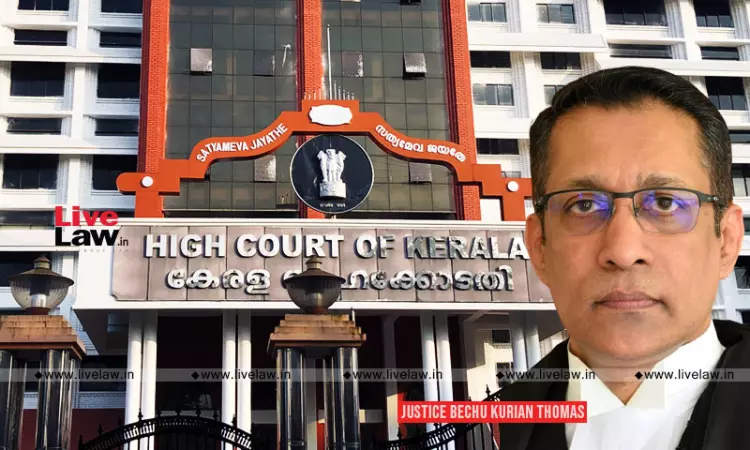
Justice Bechu Kurian Thomas delivered the judgment while setting aside a communication issued by the RBI Ombudsman rejecting a complaint filed by Unique Enterprises and its partner against Kotak Mahindra Bank.
“In the absence of reasons, the right of the aggrieved to challenge the Award or even the rejection of his complaint, will be affected. Therefore, every order that affects the right of a person must be substantiated by reasons which can indicate, to a higher authority, when a challenge is raised, the basis for the conclusion arrived at in the impugned order. The Ombudsman is also bound to provide reasons in its order,” the court held.
The dispute arose after the firm availed itself of three credit facilities from the bank and later decided to shift its banking arrangements to another financial institution. According to the petitioners, they cleared the outstanding dues and sought release of their title deeds. The bank, however, demanded foreclosure charges before releasing the documents.
After receiving no response from the bank's grievance cell, the petitioners approached the RBI Ombudsman. The complaint was rejected on the ground that there was no deficiency in service.
Before the High Court, Kotak Mahindra Bank contended that the foreclosure charges were in accordance with the terms governing the credit facilities. It also questioned the maintainability of the writ petition.
Rejecting that objection, the court held that the Ombudsman is an authority created under a statutory scheme and is amenable to writ jurisdiction.
“The said authority is conferred with the power to receive and consider complaints relating to the deficiencies in banking or other services. Even an appeal is provided against the orders of the Ombudsman. On a perusal of the Scheme, it is evident that it is an authority created under a statute and has all the trappings of 'other authority' under Article 12 of the Constitution of India, and is hence amenable to the writ jurisdiction of the Court,” the court observed.
Examining the communication in challenge, the court noted that it was issued as an auto-generated email, did not mention the name of the officer concerned, and carried no signature.
The court observed that the communication indicated that the complaint had been dealt with as an administrative issue. It noted that the Ombudsman could not dispose of the complaint at that stage without providing reasons for the decision.
“The necessity of giving reasons is specifically stipulated in Clause 15(2) of the Scheme and more importantly, as the Award is subject to appeal. Even when a complaint is rejected under Clause 16, reasons are to be given as the aggrieved has a right of appeal,” the court observed.
It further observed, “Reasons being the soul of every order, an aggrieved party, while challenging an adverse order, can agitate the rationale behind the reasons recorded therein.”
The court found that apart from reiterating the contentions of both sides, the Ombudsman had not provided any independent analysis explaining why it concluded that there was no deficiency in service.
It accordingly set aside the communication and directed the Ombudsman's office to reconsider the complaint afresh after granting both sides an opportunity of hearing.
For Petitioners: Advocates Anil S Raj, Shibu Jacob, Radhika Rajasekharan P, Anila Peter, K.N Rajani, Reshma Ramesh, Simi S Ali and Saritha K.S
For Respondents: Senior Advocate Sumathy Dandapani, Advocates Millu Dandapani, Philip T Varghese, Thomas T Varghese, Achu Subha Abraham, V.T Litha, K.R Monisha and Ashique Nazar