
Minor Admitted To Partnership Firm's Benefits Not Liable For Firm's Loan Default: Kerala High Court
Shilpa Soman
16 July 2026 3:00 PM IST
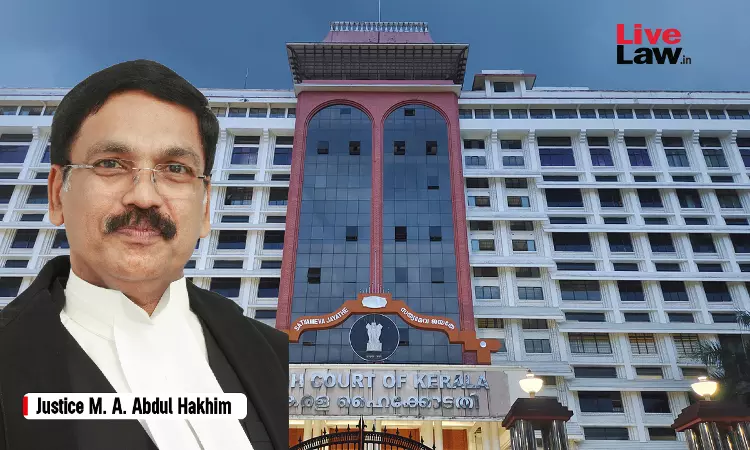
The Kerala High Court on 7 July held that a person admitted only to the benefits of a partnership firm as a minor cannot be treated as a defaulter for the firm's loan merely because the firm failed to repay its dues.
Justice M.A. Abdul Hakhim allowed a petition filed by Dhruv Hitesh Dattani challenging adverse remarks in his CIBIL report, observing that since the partnership firm had already dissolved before he attained majority, there was no occasion for him to exercise the option under Section 30(5) of the Indian Partnership Act, 1932. The allows a minor admitted to the benefits of a partnership to elect whether to become a partner upon attaining majority. He held:
“…there was no need for the Petitioner to make any declaration on his attaining majority as required under Section 30(5) of the Partnership Act, electing to become or not to become a partner, as the firm was not subsisting as on that date.”
Dattani had approached the High Court challenging the “Suit Filed” and “Willful Default” remarks reflected in his CIBIL report, contending that he was not liable for the loan obtained by the partnership firm Nanji Topanbai & Company.
He submitted that he was admitted only to the benefits of the firm as a minor and was never impleaded in recovery proceedings initiated by the Bank before the Debts Recovery Tribunal. However, the Bank reported him as a defaulter to TransUnion CIBIL, affecting his credit score.
Dattani argued that the firm had already dissolved under Section 42 of the Partnership Act (which provides for dissolution of a firm in specified circumstances, including the death of a partner) before he attained majority. Therefore, he contended that there was no question of him becoming a partner or being liable for the firm's debts.
The Bank, however, argued that since Dattani had not exercised the option under Section 30(5) after attaining majority, he continued as a partner and became liable for the firm's liabilities. TransUnion CIBIL submitted that it had only acted upon the information provided by the Bank.
The Court noted that Dattani was only two years old when he was admitted to the benefits of the partnership and attained majority in 2008. By then, the partnership had already dissolved following the death of two partners under Section 42 of the Partnership Act.
It further noted that the Bank failed to establish that the partnership deed contained any provision allowing the firm to continue despite the death of the partners. The Bench also observed that although the Bank had initiated proceedings before the Debts Recovery Tribunal, it did not implead Dattani as a partner even after he attained majority. It held that “the Petitioner could not be said to be a defaulter with respect to the debt of the firm.”
Referring to the Bank's communication to CIBIL, the Court observed:
“A minor admitted to the benefits of the firm could not be termed as a defaulter on account of the default in repayment of the loan by the firm in which he was admitted as a partner. The minor admitted to the benefits of the firm is not liable for the liabilities of the firm during his minority.”
Further, the Bench held that the Bank could not justify reporting Dattani as a defaulter to CIBIL solely based on a communication issued during his minority describing him as a willful defaulter.
Accordingly, the High Court directed the Bank to communicate with TransUnion CIBIL within one month to remove the adverse entries against Dattani. CIBIL was directed to rectify his credit report and credit score within one month of receiving the Bank's communication.
For Petitioner: Advocates Aype Joseph and Merin Jose
For Respondents: Advocates M. Gopikrishnan Nambiar, C. Ajith Kumar, K.V Rashmi, Varsha S.S, K. John Mathai, Joson Manavalan, Kuryan Thomas, Paulose C Abraham, Raja Kannan, Pranoy Harilal and Akhila Nambiar