
CJM Can Entertain Fresh SARFAESI Plea For Possession If Borrower Re-Enters Secured Asset: Kerala High Court
Shilpa Soman
5 Aug 2026 2:53 PM IST
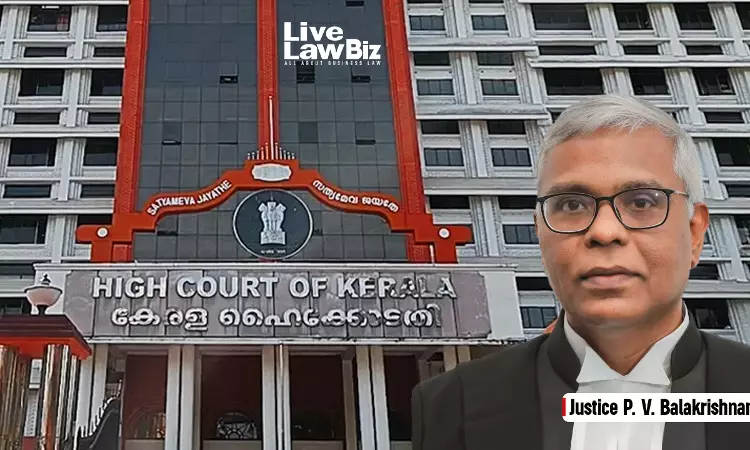
The Kerala High Court has ruled that a Chief Judicial Magistrate (CJM) exercising powers under Section 14 of the SARFAESI Act does not become functus officio after handing over possession of a secured asset to a secured creditor.
The court held that the Magistrate can entertain a fresh request for assistance if the secured creditor is later unlawfully dispossessed of the secured asset.
For context, Section 14 empowers a Chief Judicial Magistrate to assist a secured creditor in taking possession of a secured asset when it is unable to do so on its own. Validating its finding,
Justice P.V. Balakrishnan observed, "There is also nothing in Section 14 of the SARFAESI Act which would indicate that, once the Chief Judicial Magistrate has exercised jurisdiction and delivered possession of the secured asset to the secured creditor, he becomes functus officio."
The case arose after ICICI Bank took possession of a secured asset belonging to borrowers under the SARFAESI Act pursuant to orders passed by the Additional Chief Judicial Magistrate, Ernakulam.
The bank took possession with the assistance of an Advocate Commissioner. According to the bank, the borrowers later broke open the lock and seal, unlawfully re-entered the property, and took back possession of the secured asset.
After an FIR was registered on the bank's complaint, the bank moved the Additional Chief Judicial Magistrate seeking reopening of the proceedings and fresh assistance to regain possession. The magistrate dismissed the application, holding that it had become functus officio. Aggrieved by that order, the bank approached the high court.
Allowing the writ petition, the high court examined the scope of Section 14. It observed that the provision allows a secured creditor to approach the Chief Judicial Magistrate whenever possession of a secured asset is required to be taken.
The court noted that even if a secured creditor had earlier taken possession and was later unlawfully deprived of it by a borrower, that did not change the petitioner's status as a secured creditor. Nor did it alter the property's status as a secured asset.
The court further observed that nothing in Section 14 indicates that a Chief Judicial Magistrate becomes functus officio after exercising jurisdiction once.
It clarified that, while acting under Section 14, the Chief Judicial Magistrate performs a purely ministerial act. The function is neither adjudicatory nor quasi-judicial, and therefore, the magistrate is not required to adjudicate criminal disputes while exercising those powers.
Explaining why it disagreed with the Additional Chief Judicial Magistrate's interpretation, the court observed:
"Section 14 of the SARFAESI Act has been incorporated to meet contingencies where the secured creditor may not be able to take possession of the secured asset by itself. If the view taken by the learned ACJM in Ext. P8 order is accepted, the same would undoubtedly defeat the very purpose for which Section 14 has been incorporated in the statute. The same would also help unscrupulous borrowers or guarantors to take the law into their own hands and denude the secured creditor of possession forcibly and with impunity, resulting in a travesty of justice."
The court also noted that its view was supported by an earlier Kerala High Court decision in Federal Bank Limited, Vallithode Branch, Kozhikode v. Thahira and Others.
In that case, the high court had held that a Chief Judicial Magistrate acting under Section 14 has the power to restore possession of a secured asset after a borrower unlawfully trespasses into the property.
Holding that the Additional Chief Judicial Magistrate's order could not be sustained, the high court set it aside. It directed the Additional Chief Judicial Magistrate, Ernakulam, to reconsider the bank's application afresh and pass fresh orders in accordance with law within two months.
For Petitioner: Advocates P Sathisan, Shibu B.S, Razak M, Biju P Paul, Alvin Jewel S.S, Daniel A.J, Vidhya T.U, Abhirami S, Leena Varghese and Sreekarthik S Menon
For Respondents: Advocate Mufeed M.K, GP