
Official Liquidator Gets 3 Years From Winding Up Order To File Claim: Kerala High Court
Shilpa Soman
31 Aug 2026 3:30 PM IST
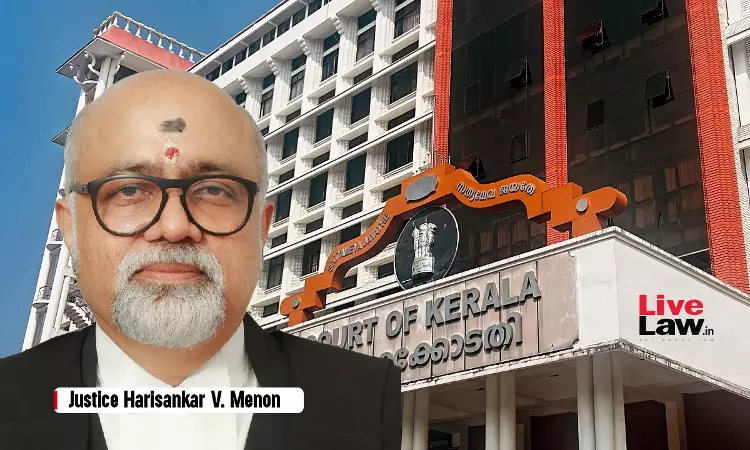
The Kerala High Court on 31 August held that a claim instituted by an Official Liquidator under Section 446 of the Companies Act, 1956, in respect of a legally enforceable claim is governed by the three year limitation period under Article 137 of the Limitation Act, 1963, reckoned from the date of the winding up order, with the benefit of the additional one year period under Section 458A of the Companies Act.
Justice Harisankar V Menon rejected the respondent, Miny Zachariah's objection that the Company Claim filed by the Official Liquidator of Appletree Chits India Private Limited seeking recovery of Rs. 62,548 including interest was barred by limitation. He held:
“it is only when the winding-up order has been made, or the Official Liquidator has been appointed as the provisional liquidator, that he can commence the proceedings with the leave of the Tribunal/Court. Therefore, it is only when the Tribunal/Court passes an order of winding up that the Official Liquidator can institute the claim.”
The alleged default occurred on 14 August 2013. The winding up proceedings commenced on 10 February 2014, and the winding up order was passed on 8 November 2019. The Official Liquidator filed the Company Claim on 5 September 2023.
The respondent contended that the claim was barred by limitation, arguing that even after excluding the period between commencement of the winding up proceedings and the winding up order, along with the additional one year period contemplated under Section 458A of the Companies Act, the limitation period had expired by 12 May 2023.
The Official Liquidator, however, argued that the right to institute the claim arose only upon the winding up order dated 8 November 2019, making the claim filed in September 2023 within the prescribed period.
The Court noted that Article 137 prescribes a three year limitation period from the date on which the “right to apply” accrues. Referring to Section 446 of the Companies Act, which governs the institution or continuation of certain legal proceedings after a winding up order, it held that an Official Liquidator can institute such proceedings only after the Court passes a winding up order or appoints the Official Liquidator as the provisional liquidator.
The Bench also referred to precedents holding that a claim by an Official Liquidator under Section 446(2), in respect of a legally enforceable claim, can be filed within three years from the winding up order, along with the additional one year period available under Section 458A of the Companies Act.
Applying these principles, Justice Menon held that since the winding up order was passed on 8 November 2019, the Official Liquidator was entitled to the three year period under Article 137 along with the additional one year period under Section 458A.
Accordingly, the Court rejected the preliminary objection that the Company Claim was barred by limitation. It posted the Company Claim for further consideration on 8 September 2026.
For Claimant: Advocate S Jasmine, Standing Counsel
For Respondent: Advocates Johnson Gomez, Arun Johny, Sanjith Johnson, Abin Jacob Mathew, Deebu R and Shimon Kuruvilla Thomas