
Can A Mere Signature On A Cheque Trigger Presumption Of A Legally Enforceable Debt? Kerala High Court Explains
Shilpa Soman
31 July 2026 2:50 PM IST
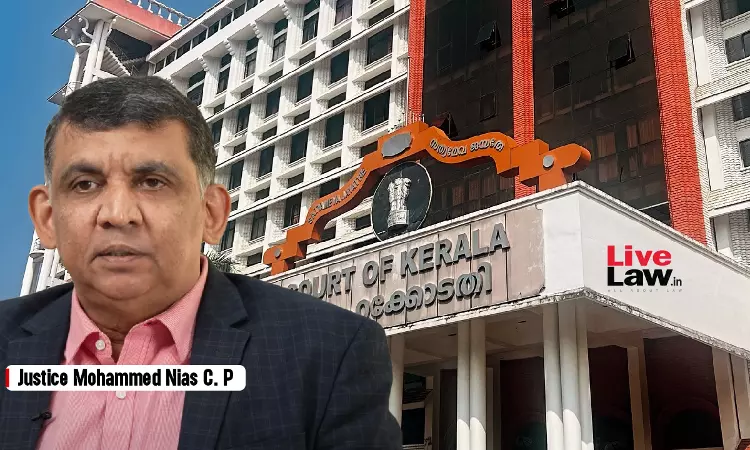
The Kerala High Court has recently held that signing, issuance and execution of a cheque are distinct legal concepts. It observed that the statutory presumptions under Sections 118(a) and 139 of the Negotiable Instruments Act, 1881 arise only when execution of the cheque is admitted or proved.
Justice Mohammed Nias C.P. made the observation while setting aside a trial court judgment dismissing a money recovery suit. The Court remanded the matter for fresh consideration.
“When courts say that execution of the cheque is admitted, they generally mean that the accused admits having signed and voluntarily delivered the cheque as his act, thereby making it an operative instrument. Once execution is admitted or proved, the presumptions under Section 118(a) and 139 ordinarily arise, leaving it to the accused to rebut them by showing a probable defence.”, the court ruled.
The appeal arose from the dismissal of a money recovery suit filed by a Chartered Accountant against the proprietor of Span Travels for recovery of ₹16.13 lakh.
Francis T. Chacko claimed that T.K. Sajeevan, a long-time friend and former client, had borrowed ₹14.15 lakh on different occasions in 2010 and 2011 to overcome financial difficulties and expand his business.
According to Chacko, Sajeevan later executed a promissory note acknowledging the debt and issued a cheque for ₹16.13 lakh. The cheque was dishonoured with the remark "payment stopped by drawer."
Sajeevan denied borrowing any money. He contended that while Chacko was acting as his Chartered Accountant, he had handed over signed blank cheques and papers for tax-related work. According to him, Chacko later misused them to fabricate the disputed documents.
The trial court held that Chacko had failed to prove the execution of the cheque, the promissory note and the underlying loan transaction. It accordingly dismissed the suit. Aggrieved by the decision, Chacko filed the present appeal.
Examining the issue, the High Court explained that signing is merely the act of affixing one's signature to a cheque. Issuance involves voluntarily delivering the cheque with the intention that it be acted upon. Execution is a broader concept that ordinarily includes both signing and issuance, making the cheque an operative legal instrument.
The court held that where the drawer denies the signature on the cheque, the complainant must first prove the signature before the statutory presumptions under Sections 118(a) and 139 can arise. Where the signature is admitted but execution is disputed, such as on the ground that the cheque was never voluntarily delivered, execution must first be established.
Once execution is admitted and only the existence of the debt is disputed, the statutory presumptions apply. The accused must then rebut them by raising a probable defence.
The court said the Supreme Court has consistently applied these principles in Rangappa v. Mohan, Basalingappa v. Mudibasappa and Bir Singh v. Mukesh Kumar. It observed that these decisions affirm that once the signature on the cheque is admitted, the statutory presumptions strongly favour the holder. The accused then bears the evidentiary burden of rebutting those presumptions.
Emphasising the distinction, the court observed,
“What is disputed is the existence or enforceability of the underlying obligation. When the accused says, I never signed the cheque, or although I signed it, I never voluntarily delivered it, or the cheque was stolen before it was issued, or someone filled it up and circulated it without my authority, here the accused is disputing the very coming into existence of the instrument as his act. Until execution is proved or admitted, the statutory presumptions do not ordinarily arise.”
Applying these principles, the court found that the trial court had failed to properly examine the issue of execution. Instead, it proceeded on the assumption that Sajeevan would have left signed blank papers and cheques with Chacko because he was his auditor. The High Court also found that the trial court had failed to consider the effect of Sajeevan's admitted signatures on the disputed documents.
“The entire approach of the trial court appears to be flawed. The principles of law stated above, in a case of this nature, were not adverted to while arriving at the findings.”, the court ruled.
The High Court held that it could not finally decide the dispute because the trial court had failed to determine the issue of execution based on the pleadings and evidence. It also noted that both parties had produced additional evidence in appeal, which the trial court had not had an opportunity to examine.
Noting that both parties had produced additional documents relevant to the dispute, the High Court permitted them to be taken on record.
Accordingly, the court set aside the trial court's judgment and decree. It remanded the suit for fresh consideration in the light of the entire evidence on record. The trial court was directed to dispose of the suit within five months from the date of the parties' first appearance.
For Appellant: Senior Advocate V.V Asokan, K.I Mayankutty Mather and Advocate P. Rahul
For Respondent: Advocates Dinesh R Shenoy and Sanil Jose