
Loan To Relative Despite Earlier Default Cannot Discredit Cheque Case Under NI Act: Kerala High Court
Shilpa Soman
17 July 2026 4:39 PM IST
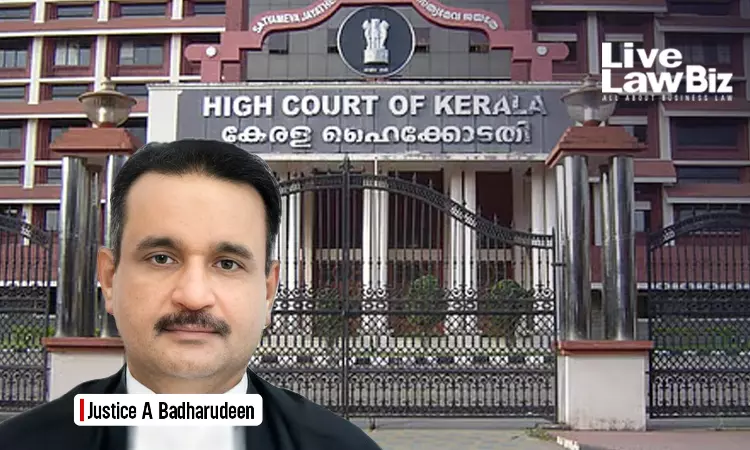
The Kerala High Court on 16 July held that a complainant's case under Section 138 of the Negotiable Instruments Act, 1881 (NI Act) cannot be disbelieved merely because she advanced a further loan to a relative despite an earlier loan remaining unpaid, or because the accused issued a typewritten cheque.
Justice A Badharudeen set aside the Magistrate's acquittal order and convicted Sreekala, the accused, for cheque dishonour under Section 138 of the NI Act, holding that Shiny Nair, the complainant, had proved the loan transaction and was entitled to the statutory presumptions under Sections 118 and 139 of the Act. He observed:
“Advancing a loan to a relative, even during subsistence of an earlier liability by itself is not a sufficient reason to disbelieve the complainant's case”
The appeal arose from the Magistrate's judgment acquitting Sreekala of an offence under Section 138 of the NI Act. Shiny Nair claimed that Sreekala, who was her relative, borrowed Rs. 1.75 lakh on 14 June 2012 and a further sum of Rs. 3 lakh on 12 November 2012.
She alleged that Sreekala issued a cheque towards repayment of the total liability of Rs. 4.75 lakh, but the bank dishonoured it with the endorsement, “Drawer's signature differs”. Despite receiving the statutory demand notice, Sreekala failed to make the payment.
The Magistrate acquitted Sreekala after holding that it was improbable for Nair to advance a further substantial loan when the earlier loan remained unpaid. Nair then challenged the acquittal before the High Court.
Before the High Court, the complainant argued that the Magistrate had erred in refusing to draw the statutory presumptions under Sections 118 and 139 of the NI Act in her favour. Sreekala defended the acquittal, contending that the complainant's version was improbable, particularly because the disputed cheque was typewritten.
The High Court noted that the parties were relatives and that Nair advanced the second loan around five months after the first loan. It also considered the cheque dishonour endorsement, “Drawer's signature differs”, and held that such dishonour attracts Section 138 of the NI Act when the drawer's account does not have sufficient funds and the complainant satisfies the other statutory requirements. It observed:
“It is now well settled that the dishonour of a cheque on the ground of “Drawer's signature differs” also attracts an offence of Section 138 of the NI Act, when there was no sufficient fund in the account of the drawer to honour the same, provided the other statutory requirements are satisfied.”
Rejecting the argument that a typewritten cheque created doubt about the transaction, the Bench held that the law does not prohibit the issuance of such cheques. It observed:
“Although it is contended by the learned counsel for the accused that issuance of a typewritten cheque when both parties were capable of writing the cheque would create a doubt as regards to the transaction and execution of the cheque, issuance of a typewritten cheque though not common, is not prohibited by law.”
The Bench held that the issuance of a typewritten cheque alone cannot discredit the complainant's case. After examining the evidence, it found that Shiny Nair had established the loan transaction and execution of the cheque, thereby attracting the presumptions under Sections 118 and 139 of the NI Act. It also noted that Sreekala had admitted liability arising from an earlier loan during the proceedings.
Accordingly, the High Court set aside the acquittal order, convicted Sreekala under Section 138 of the NI Act, and sentenced her to imprisonment till the rising of the Court. It also directed her to pay a fine of Rs. 4.75 lakh as compensation to Shiny Nair, with a default sentence of six months' simple imprisonment.
For Appellant: Senior Advocate Santhosh Mathew and Advocates Arun Thomas and Jennis Stephen
For Respondents: Advocates MA Shihab, Public Prosecutor and Asha Elizabeth Mathew