
Acquittal In Cheque Bounce Case Doesn't Bar Civil Recovery Suit On Same Cheque: Kerala High Court
Shilpa Soman
30 July 2026 2:52 PM IST
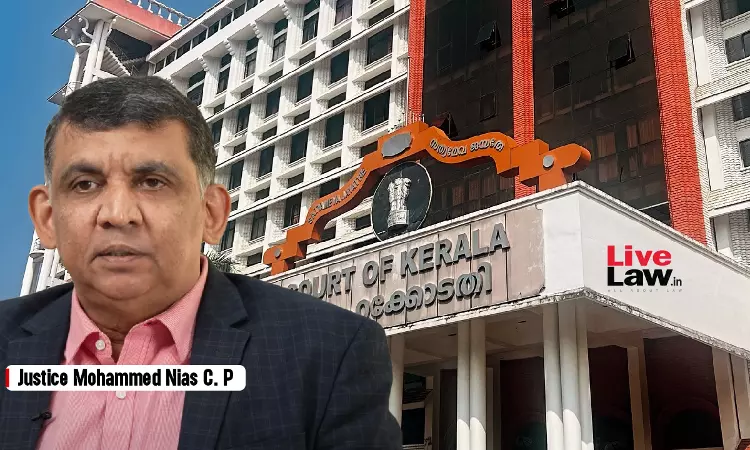
The Kerala High Court on 29 July held that an acquittal in proceedings under Section 138 of the Negotiable Instruments Act, 1881 (dishonour of cheque for insufficiency of funds) does not prevent a civil court from deciding a recovery suit based on the same cheque, as findings recorded in criminal proceedings do not bind civil courts.
A Bench comprising Justice Mohammed Nias C.P. allowed Prameela Varghese's appeal, set aside the Trial Court's decree directing her to pay the cheque amount with interest, and dismissed Abraham Samuel's suit for recovery of money. He observed:
“Even where the same documents are produced, and the very same witnesses are examined in both the prosecution under Section 138 of the Negotiable Instruments Act and the civil suit, the criminal court's judgment does not become binding on the civil court merely for that reason.”
Abraham had filed a suit seeking recovery of Rs. 3.31 lakh from Prameela Varghese and her husband. He claimed that they had borrowed Rs. 2.15 lakh for business purposes and that Prameela had issued a cheque towards repayment. The cheque was dishonoured when he presented it due to insufficiency of funds.
Although a criminal court acquitted Prameela in proceedings under Section 138 of the Negotiable Instruments Act, Abraham continued with the civil suit seeking recovery of the principal amount with interest. Prameela denied borrowing any money or issuing the cheque. She argued that her husband, whose whereabouts were unknown, might have handed over a cheque leaf from their joint account and disputed the signature on the cheque.
The Trial Court held that Prameela had issued the cheque and decreed Abraham's suit, directing her to pay the cheque amount with interest. Prameela challenged the decree before the High Court.
Before the High Court, she argued that the Magistrate had acquitted her after disbelieving both the alleged borrowing and execution of the cheque. She contended that the civil court could not reconsider the same issues.
Rejecting the contention, the Bench held that criminal and civil proceedings remain independent. It observed that a prosecution under Section 138 of the Negotiable Instruments Act requires proof of guilt beyond reasonable doubt, while a civil suit requires proof based on the preponderance of probabilities.
The Court also held that an acquittal in criminal proceedings does not operate as res judicata or issue estoppel in civil proceedings. It noted that criminal findings do not bind civil courts under Section 43 of the Indian Evidence Act, 1872 (which deals with the relevance of judgments other than those mentioned in Sections 40 to 42). It observed:
“Criminal and civil proceedings are independent. A prosecution under Section 138 is a criminal proceeding requiring proof of guilt beyond reasonable doubt, whereas a civil suit is decided on the preponderance of probabilities. Consequently, an acquittal in the criminal case does not operate as res judicata or issue estoppel in the civil proceedings.”
Moreover, the Court observed that civil courts must independently assess evidence and need not follow a Magistrate's finding that a cheque was not executed or that the underlying transaction was not proved. It added that an acquittal only shows that the prosecution failed to prove the offence beyond reasonable doubt and does not necessarily establish that no debt or liability existed.
While dealing with the disputed signature, it noted that Prameela had admitted using different signatures. It also observed that the bank dishonoured the cheque due to insufficiency of funds and not due to any mismatch in signature.
However, the Bench held that Abraham failed to prove the foundational fact of voluntary execution and delivery of the cheque. It observed that although the evidence established Prameela's signature on the cheque, inconsistencies in Abraham's evidence prevented the Court from concluding that she had consciously executed and voluntarily delivered the cheque.
It also held that Abraham failed to produce satisfactory evidence to establish voluntary delivery of the cheque. It observed that “at best, the evidence proves the signature; it does not prove execution.”
Accordingly, the High Court set aside the Trial Court's decree, dismissed the suit, and allowed Prameela's appeal.
For Appellant: Advocate G. Sreekumar (Chelur)
For Respondent: Advocates B.S Swathi Kumar, Harisankar N Unni and Anitha Ravindran