
Court-Recorded Compromise In Arbitration Dispute Can Be Executed: Kerala High Court
Shilpa Soman
25 July 2026 6:07 PM IST
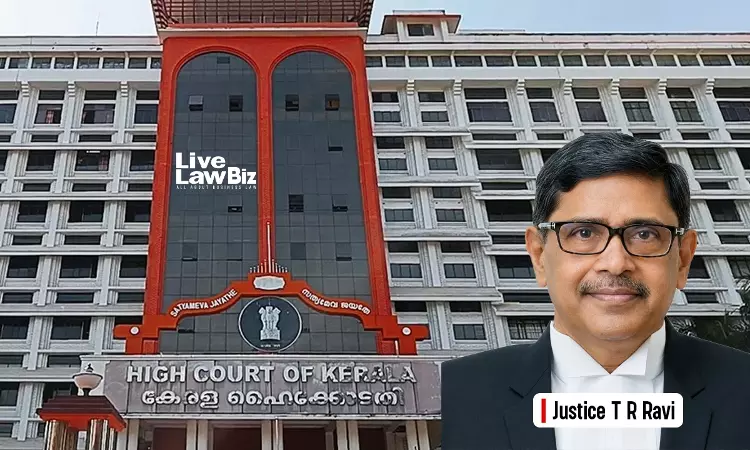
The Kerala High court has held that a compromise recorded while disposing of proceedings under Section 9 of the Arbitration and Conciliation Act, 1996 is executable.
It observed that a party which voluntarily enters into a settlement, secures its benefits and invites the court to pass an order in terms of the compromise cannot later contend that the order is unenforceable.
Justice T.R. Ravi said, "After having arrived at a settlement and having invited the court to pass an order in terms of the settlement, it is not open to the petitioner to claim at a later point of time, that the said order cannot be enforced. The claim itself is preposterous particularly since the benefit of the said settlement has already been earned by the petitioner by having procured the compliance of the obligations of the 1st respondent."
The judgment came while dismissing a petition filed by Invis Private Limited. The company had challenged an order of the Commercial Court holding that a compromise recorded in proceedings under Section 9 of the Arbitration Act was executable.
The dispute arose from an interim relief plea filed by Ajith M.R., a partner of Invis Multimedia and a shareholder and director of Invis Private Limited. The petition related to a consortium agreement executed between the firm and the company for a tourism department project. According to Ajith, the agreement had been signed on behalf of both entities without the consent of the other partners or shareholders.
While the interim proceedings were pending, the parties entered into a settlement. They jointly filed an application under Order XXIII Rule 3 of the Code of Civil Procedure (settlement). The Commercial Court recorded the compromise, directed that it would form part of the order, and disposed of the proceedings.
Ajith later withdrew a connected civil suit and resigned as a director of the company in terms of the settlement. He then initiated execution proceedings, alleging that the agreed payments had not been made. The Commercial Court rejected Invis' objection that the order could not be executed. It held the execution petition to be maintainable.
Before the high court, Invis argued that the settlement had not been arrived at through a reference under Section 89 of the Code of Civil Procedure or under Section 30 of the Arbitration Act. It contended that the compromise order was therefore not executable and could only be enforced through a separate civil suit.
Justice Ravi rejected the contention. The court observed that neither Section 89 CPC nor Section 30 of the Arbitration Act applied because the parties had voluntarily settled the dispute while the Section 9 proceedings were pending. It added that this did not mean such settlements had no value in the eye of law.
Examining the compromise agreement, the court noted that every party to the dispute had participated in the settlement and signed it. It also pointed out that the petitioner did not dispute the existence of the compromise agreement.
The court further noted that, after reaching the settlement, the parties consciously filed an application under Order XXIII Rule 3 CPC. It observed that the Commercial Court was satisfied about the legality of the compromise, accepted it and made the agreement part of its order before closing the proceedings.
Referring to the Supreme Court's decision in Pushpa Devi Bhagat v. Rajinder Singh, the court said a consent decree operates as an estoppel. It remains binding unless it is set aside by the court that passed it in accordance with law.
The court also relied on the Delhi High Court's ruling in Anand Gupta v. Almond Infrabuild Private Limited. In that case, an order passed in terms of a settlement during Section 9 proceedings was held to be executable.
Rejecting the petitioner's contention that the compromise order was incapable of execution, the court observed, "The contention that the order is not executable cannot be sustained in view of the law laid down in the decisions referred above. To hold otherwise will violate the sanctity of settlement arrived at, which is an alternate dispute resolution method." It accordingly dismissed the petition.
For Petitioner: Senior Advocate S Sreekumar and Advocate M Unnikrishnan
For Respondents: Advocates Vijay V Paul, T.K Ananda Krishnan, M Shimsma, Samah Abdul Majeed, Angela Elsa John, Shilpa Soman, Rojit Zachariah, Ashis A and Janaki Krishnan A