
Kerala High Court
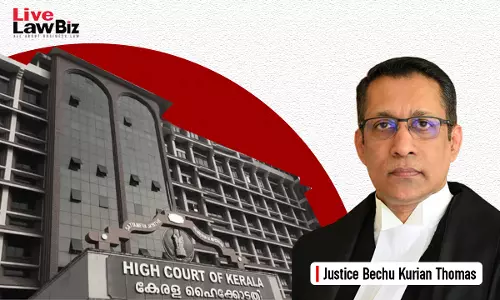
Trademark Owner As Director Of Applicant Company Not Enough To Seek Rival's Name Change: Kerala High Court
The Kerala High court has quashed two MCA orders directing companies run by Kandamkulathy Francis Paul to change their names after K. P. Pathrose Vaidyan's Kandamkulathy Vaidyasala Pvt. Ltd. sought rectification of their names under Section 16(1)(b) of the Companies Act.Justice Bechu Kurian Thomas held that the company seeking the name changes did not itself hold the registered “Kandamkulathy” trademark. It therefore could not maintain the applications under Section 16(1)(b) of the Companies...

Kerala High Court Directs Numbering Of Suit Over Anonymous Review Of Antony Varghese's Kattalan
The Kerala High Court has directed the Principal Munsiff court in Ernakulam to number a suit seeking removal of a review of the malayalam film Kattalan posted on BookMyShow.Justice Easwaran S. held that insisting on the physical address of an unidentified reviewer defeats the purpose of “John Doe” proceedings. “The insistence on the part of the Principal Munsiff Court, Ernakulam, to correct the physical address of 'John Doe-2nd defendant' under Order VI Rule 14A of CPC creates a procedural...
Trademark Suits Cannot Be Tried By Courts Below District Court: Kerala High Court
The Kerala High Court has ruled that a trademark infringement suit cannot be tried by a court below the District Court merely because its pecuniary value falls within the jurisdiction of a Munsiff Court.Justice Mohammed Nias C.P. held that “Given the above, the District Court, for the purposes of Section 134, has to be regarded as the lowest grade competent court to try a trade mark suit, under Section 15 CPC. To hold otherwise would result in a court inferior to the District Court ultimately...
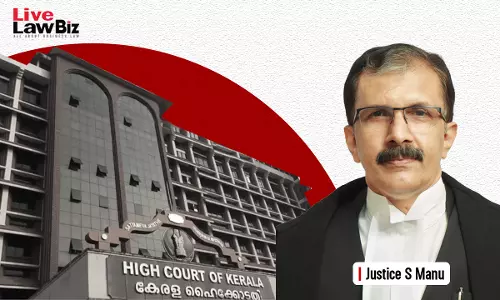
Execution Court's Finding That Arbitral Award Is Unenforceable Does Not Extend Limitation: Kerala High Court
The Kerala High Court has ruled that the time spent in an earlier arbitration cannot be excluded from the limitation period merely because an execution court later finds that the resulting arbitral award is unenforceable or a nullity.Section 43(4) of the Arbitration and Conciliation Act, 1996, provides for exclusion of the period between the commencement of an arbitration and the date on which a court sets aside the arbitral award while calculating the limitation period for subsequent...
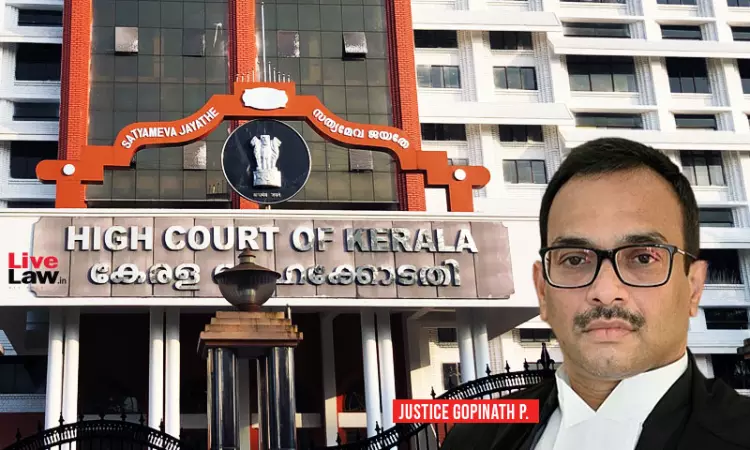
Co-operative Bank Can Initiate Arbitration Without Specific Managing Committee Authorisation: Kerala High Court
The Kerala High Court has held that a co-operative society's failure to produce a Managing Committee resolution before the Arbitrator does not invalidate arbitration proceedings initiated by the society. The court ruled that the requirement under Rule 67(2) of the Kerala Co-operative Societies Rules, 1969, is directory and not mandatory“However, I am of the opinion that, though the word 'shall' is used in Rule 67(2) of the 1969 Rules, the provision cannot be construed as mandatory, and it can...
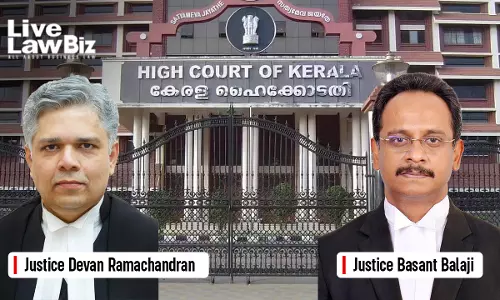
Kerala High Court Sets Aside Income Tax Assessment Treating PG Student's Stipend As Salary
The Kerala High Court on 17 August set aside an income tax assessment order treating the stipend received by a postgraduate medical student as salary, holding that the Assessing Officer failed to consider his claim that stipend paid to a student is exempt from income tax. A Division Bench comprising Justices Devan Ramachandran and Basant Balaji allowed the appeal filed by Nahas Kakkattummal and set aside both the Single Judge's judgment and the assessment order, directing the Assessing Officer...
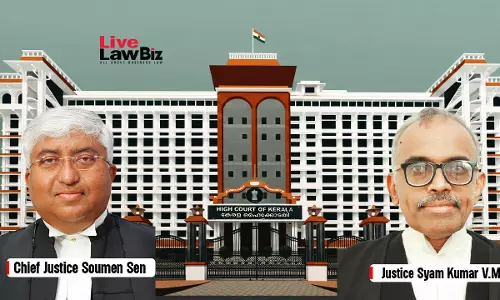
MSME Borrower Can't Raise Revival Framework Defence In Subsequent SARFAESI Case: Kerala High Court
The Kerala High Court on 1 September held that an MSME borrower cannot invoke the MSME revival and rehabilitation framework for the first time in subsequent litigation to challenge SARFAESI proceedings when the borrower failed to raise the issue in the first round of litigation. A Division Bench of Chief Justice Soumen Sen and Justice Syam Kumar V.M. upheld the dismissal of a writ petition filed by Soubhagye Road Builders and its proprietors against recovery proceedings initiated by Canara Bank...
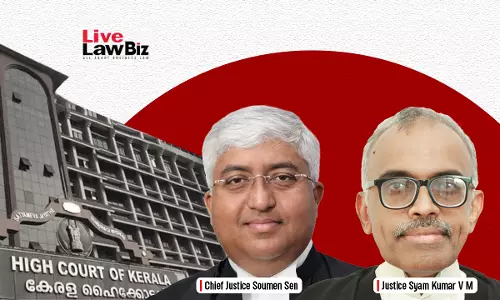
Recovery Officer Cannot Attach SARFAESI Statutory Pre-Deposit U/S 28(4) RDB Act: Kerala High Court
The Kerala High Court on 31 August held that a Recovery Officer cannot attach a statutory pre-deposit made by a borrower under the second proviso to Section 18 of the Securitisation and Reconstruction of Financial Assets Enforcement of Security Interest Act, 2002 (SARFAESI Act), by invoking Section 28(4) of the Recovery of Debts and Bankruptcy Act, 1993. A Division Bench of Chief Justices Soumen Sen and Syam Kumar V.M. set aside the Recovery Officer's order attaching E.T. Firoz's Rs....
Executing Court Cannot Reject Award Where Parties Mutually Nominated Arbitrator: Kerala High Court
The Kerala High Court on 4 August held that an executing court cannot refuse to enforce an arbitral award on the ground of unilateral appointment of the arbitrator when the parties themselves had mutually nominated the arbitrator in their agreement. Justice Easwaran set aside an order of the Additional District Court, Kozhikode, which had dismissed an execution petition filed by Hedge Finance Limited to enforce an arbitral award for Rs. 3.47 lakh with 18% interest against Sangeetha A.V. The...
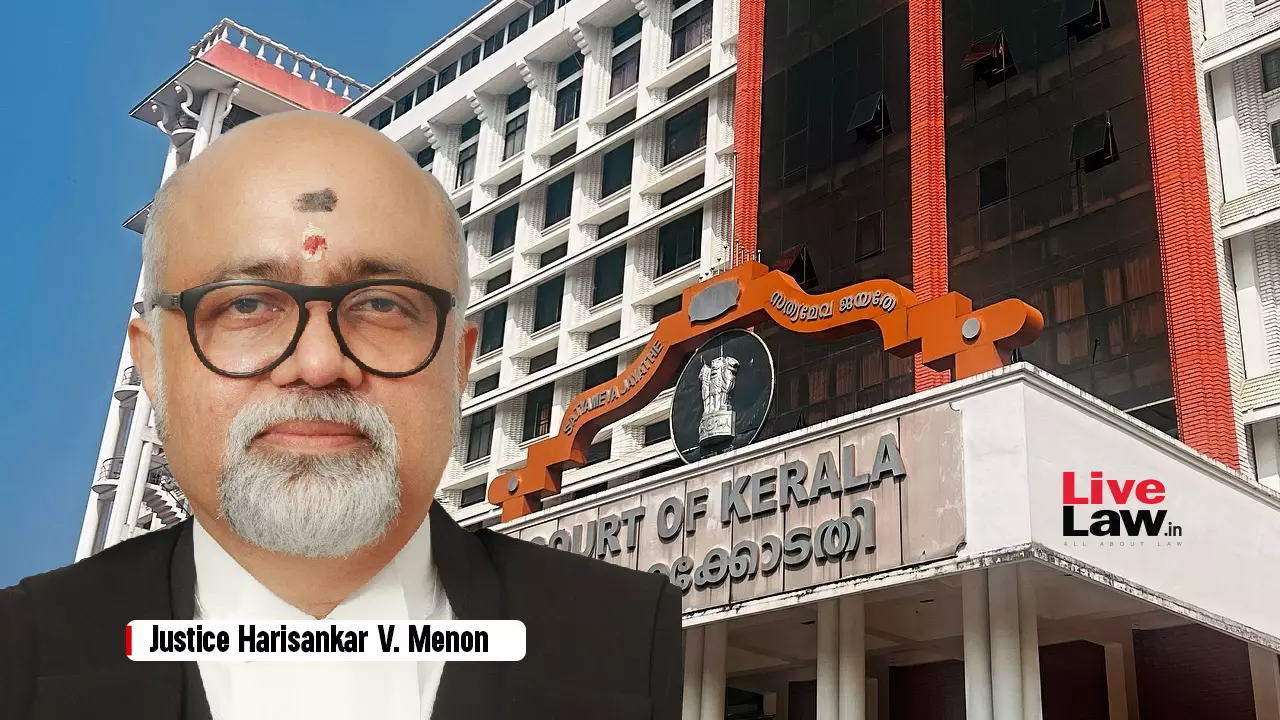
Official Liquidator Gets 3 Years From Winding Up Order To File Claim: Kerala High Court
The Kerala High Court on 31 August held that a claim instituted by an Official Liquidator under Section 446 of the Companies Act, 1956, in respect of a legally enforceable claim is governed by the three year limitation period under Article 137 of the Limitation Act, 1963, reckoned from the date of the winding up order, with the benefit of the additional one year period under Section 458A of the Companies Act. Justice Harisankar V Menon rejected the respondent, Miny Zachariah's objection that...
Kerala High Court Sets Aside Rejection Of Regional Sports Centre's Building Tax Exemption Claim
The Kerala High Court on 18 August set aside the Kerala Government's rejection of the Regional Sports Centre, Kochi's claim for exemption from building tax and directed it to reconsider the claim afresh. Justice Harisankar V. Menon passed the order after finding that the Government had failed to properly consider material showing that the Centre provided free sports coaching to several students and trainees. He held: "The Government to reconsider the claim for exemption raised by the...

Kerala High Court Holds MRF Eligible For Tax Exemption On 'Compound Rubber'
The Kerala High Court on 14 August held that MRF Limited is entitled to tax exemption under S.R.O. No. 1729/1993 for “compound rubber” manufactured by the company. It stated exemption cannot be denied by treating the product as covered by the negative list introduced through S.R.O. No. 38/1998 Justice Harisankar V. Menon allowed MRF's petition challenging the State Level Committee on Sales Tax Exemption's decision, which had denied the company exemption in respect of compound rubber. He held: ...