
Exercise Of Writ Jurisdiction Against Interlocutory Arbitral Orders Only In Exceptional Cases: J&K And Ladakh High Court
LiveLawBiz News Desk
17 Aug 2026 6:20 PM IST
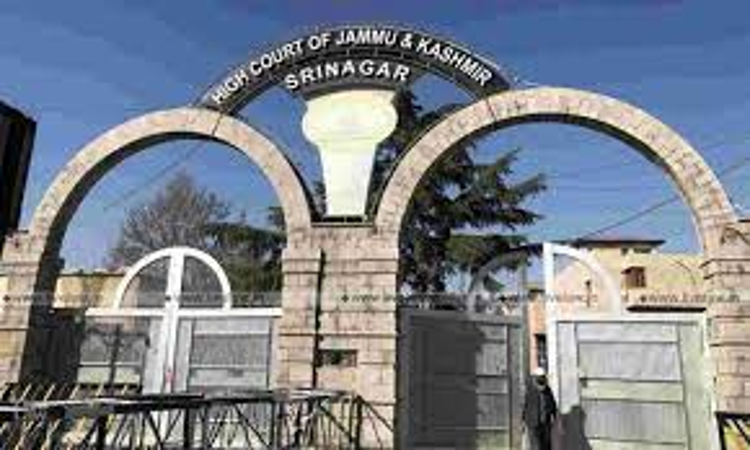
The High Court of Jammu & Kashmir and Ladakh has ruled that its writ jurisdiction should be exercised with exceptional restraint against interlocutory orders passed by an Arbitrator during ongoing proceedings.
Explaining the limits on judicial intervention, Justice Sanjay Parihar observed, “The jurisdiction of this Court under Articles 226 and 227 undoubtedly survives, but its exercise against interlocutory arbitral orders is subject to exceptional restraint. Mere error of fact or law, or the possibility that another view could have been taken, does not justify supervisory interference. The Court is therefore not required, at an intermediate stage of arbitration, to examine the correctness of the arbitrator's procedural determination as though exercising appellate jurisdiction.”
The ruling came on Tata Power Renewable Energy Limited's challenge to an Arbitrator's order constituting a Technical Committee to inspect 1,013 solar project sites across 20 districts of Jammu and Kashmir.
According to Tata Power, it completed installation and commissioning at all the sites. The company maintained that the installations were physically verified and certified by the Jammu and Kashmir Energy Development Agency.
Tata Power claimed that approximately Rs. 38.66 crore in contractual dues remained unpaid. It maintained that it had completed its obligations before terminating the contract on June 8, 2023.
During the arbitration, the State Procurement and Supplies Agency sought an Expert Committee to inspect the project sites. The Arbitrator initially declined a wholesale post-closure inspection but preserved the power to appoint an expert later if the need arose.
The agency renewed its request in March 2026, relying on field-verification material collected that month and a communication attributed to Junior Assistant Fayaz Ahmad Bhat, who stated that he had not been associated with verification relating to Kashmir Division sites.
Tata Power opposed the request, arguing that it sought to reopen an issue already decided and introduce a new factual defence after evidence had closed. The company also questioned reliance on material generated nearly three years after termination of the contract.
The Arbitrator constituted the Technical Committee on March 28, 2026.
The court found that the Arbitrator's earlier order had not finally ruled out expert assistance. It had expressly preserved the power to appoint an expert on a renewed request if the circumstances warranted it.
Tata Power also argued that an inspection conducted in 2026 could not establish the condition of the installations when the contract was performed or terminated in 2023.
Addressing this objection,the court observed, “A physical condition found in 2026 cannot automatically be treated as proof of the condition prevailing in 2023. The causal and temporal connection, if any, between the Committee's observations and the petitioner's contractual performance would have to be independently established and evaluated by the Arbitrator after hearing both sides.”
The court held that the objection concerned the relevance and evidentiary weight of the Committee's eventual findings. It did not establish that the Arbitrator lacked the power to obtain expert assistance.
The court also clarified that constituting the Committee did not amount to an adjudication that the installations were defective, incomplete or non-existent. The eventual report would remain material before the Arbitrator and would not itself determine the parties' rights and liabilities.
Tata Power would have an opportunity to challenge the report's methodology, factual assumptions, temporal relevance and conclusions and, where permissible, place rebuttal material or evidence before the Arbitrator.
The court also considered Tata Power's argument that the renewed application went beyond the pleadings. It held that questions about whether the Committee's findings could properly be relied upon, and whether doing so would prejudice the company or enlarge the dispute, could be raised before the Arbitrator.
Relying on Supreme Court decisions including SBP & Co. v. Patel Engineering Ltd., Deep Industries Limited v. Oil and Natural Gas Corporation Limited and Manish Kamal Bezboruah v. Bokahola Tea Company Private Limited, the court reiterated the principle of minimal judicial intervention in ongoing arbitrations.
On the facts, no patent lack of inherent jurisdiction had been demonstrated. Nor did the impugned order disclose manifest perversity of the exceptional degree necessary to justify interference.
The writ petition was accordingly dismissed. The court directed that the Expert Committee's report should not be acted upon adversely without giving the affected party an opportunity to challenge its methodology, relevance, and conclusions and, where permissible, lead rebuttal evidence.
The court further clarified that the condition of an installation found during a 2026 inspection cannot, merely by reason of that condition, be treated as determinative of its condition at the time of installation, commissioning, or termination.
The relevance and evidentiary weight of such findings, including their temporal and causal connection with Tata Power's contractual performance, must be independently considered by the Arbitrator.
For Petitioner: Senior Advocate Abhinav Sharma; Advocate Abhirash Sharma; Advocate Siddhant Gupta; Advocate Akash Lamba; Advocate Shreyesh Ramesh Sharma; Senior Advocate Syed Faisal Qadri; Advocate Manik Dutt
For Respondents: Senior Additional Advocate General Abdul Rashid Malik