
Delhi High Court

Payments Made To AWS For Cloud Computing Services Not Taxable: Delhi High Court
The Delhi High Court has held that payments made to Amazon Web Services (AWS) for cloud computing services do not qualify as “royalty.” The bench, comprising Justice Vibhu Bakhru and Justice Tejas Karia, upheld the Income Tax Appellate Tribunal's (ITAT) decision which held that such payments are not taxable as royalties or fees for technical services (FTS). The Court referred to earlier judgments to emphasize the difference between transferring intellectual property rights and simply...

WhatsApp, Email Communications Between Parties Can Constitute Valid Arbitration Agreement: Delhi High Court
The Delhi High Court has ruled that communications between the parties through WhatsApp and emails can constitute a valid arbitration agreement. Justice Jasmeet Singh perused Section 7(4)(b) of the Arbitration Act and said that it is not necessary for a concluded contract to be in existence for a valid arbitration agreement to be existing between the parties.The Court was dealing with a plea filed by a UAE based company, Belvedere Resources DMCC, seeking monetary security of approximately...
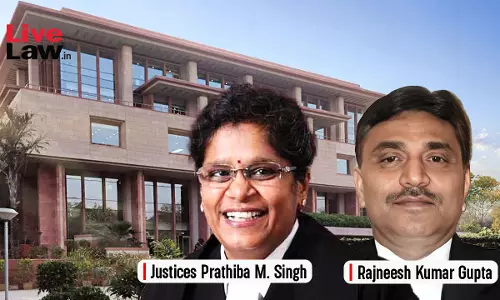
GST | Alleging Denial Of Hearing Insufficient If Assessee Itself Wasn't Diligent In Responding To SCN Or Attending Hearing: Delhi High Court
The Delhi High Court has refused to interfere with a demand order passed by the GST Department without hearing the assessee, after noting that the assessee itself was not diligent in responding to the show cause notice or attending the personal hearing despite notice.A division bench of Justices Prathiba M. Singh and Rajneesh Kumar Gupta observed,“Considering the fact that (i) The Department has given the show cause notice and the personal hearing notices to the Petitioner; (ii) The Petitioner...
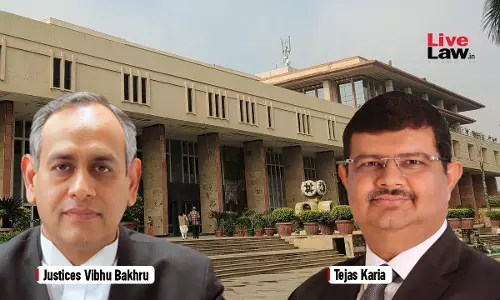
Party That Unilaterally Appointed Arbitrator Not Barred From Challenging Appointment U/S 12(5) Of Arbitration Act: Delhi High Court
The Delhi High Court bench of Justice Tejas Karia and Justice Vibhu Bakhru has held that a party that unilaterally appoints an arbitrator is not prohibited from challenging the award on the ground that it violates Section 12(5) read with the Seventh Schedule of the Arbitration Act. Mere exercise of the power to make such an appointment does not constitute an express written waiver as required under the proviso to Section 12(5) of the Arbitration Act. Brief Facts: The present appeal...
Plaint Can't Be Rejected Under O.VII R.11 Of CPC Due To Arbitration Clause Unless Application U/S 8 Of A&C Act Is Filed: Delhi High Court
The Delhi High Court bench of Justice Ravinder Dudeja has held that if a proper application is filed under Section 8 of the Arbitration and Conciliation Act, 1996, the Court must refer the parties to arbitration and may reject the plaint under Order VII Rule 11(d) of the Civil Procedure Code, 1908 (CPC) as barred by law. However, if no such application is filed and no prayer is made for reference to arbitration, the mere existence of an arbitration clause is not sufficient to reject the...
S.75(5) Of CGST Act Contemplates A Maximum Of Three Adjournments, Cannot Be Construed As A Minimum Of Three Hearings: Delhi High Court
The Delhi High Court has held that the provision of maximum three adjournments that can be granted to a taxpayer during the course of adjudication proceedings, cannot be construed to mean that the taxpayer must be given a minimum of three hearings.A division bench of Justices Prathiba M. Singh and Rajneesh Kumar Gupta observed,“A perusal of Section 75(5) of the Central Goods and Service Tax Act, 2017 would show that the said provision merely contemplates that the maximum adjournments shall be...

Taxpayers Must Be Vigilant About Communications On GST Portal, Department Can't Be Blamed: Delhi High Court
The Delhi High Court has made it clear that if an assessee fails to respond to a show cause notice duly communicated to it on the GST portal, the Department cannot be blamed for passing an order raising demand, without hearing the assessee.A division bench of Justices Prathiba M. Singh and Rajneesh Kumar Gupta observed,“Since the Petitioner has not been diligent in checking the portal, no reply to the Show Cause Notice has been filed by the Petitioner. Thus the department cannot be...
Once AO Scrutinises Identity & Creditworthiness Of Shareholders, No Reassessment Action Without 'Additional Info' About Income Escapement: Delhi HC
The Delhi High Court recently rejected Revenue's appeal against deletion of additions made to the income of an assessee-company alleged to have evaded tax, observing that the AO had already scrutinised the identity and creditworthiness of the shareholders and in the absence of any additional material coming to light, reassessment action could not have been initiated.A division bench of Justices Vibhu Bakhru and Tejas Karia observed,“During the original proceedings, the AO had issued a...
Reassessment Notice Can't Be Based On 'General Information' From Investigation Wing Of Income Tax Dept: Delhi High Court
The Delhi High Court has made it clear that the Income Tax Department cannot issue reassessment notice to an assessee based on general information shared by its Investigation Wing, until the Assessing Officer forms definite 'reason to believe' escapement of income.A division bench of Justices Vibhu Bakhru and Tejas Karia observed,“It is clear from the information received from the Investigation Wing…that the same was general in nature and did not point towards the involvement of the Petitioner...
Valuation Of Company's Unquoted Equity Shares By 'Discounted Cash Flow' Method Permissible Under Income Tax Rules: Delhi High Court
The Delhi High Court recently rejected the appeal preferred by the Income Tax Department against an ITAT order allowing the valuation of a software company's unquoted equity shares by discounted cash flow [DCF] method.In doing so, a division bench of Justices Vibhu Bakhru and Tejas Karia held that DCF method “is one of the methods that can be adopted by the Assessee under Rule 11UA(2)(b) of the [Income Tax] Rules for determining the FMV of unquoted equity shares in a company in which public are...
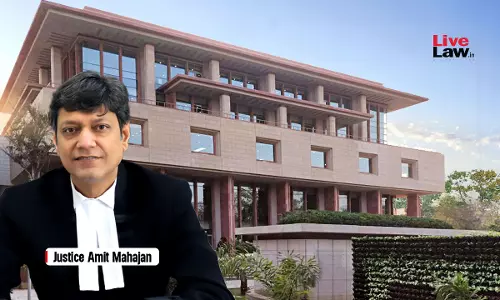
Jurisdiction Of Arbitral Tribunal Continues Despite Provisional Attachment Of Assets Under PMLA Or Parallel Proceedings: Delhi High Court
The Delhi High Court bench of Justice Amit Mahajan has held that the mere reference to certain assets in a provisional attachment order does not, by itself, oust the jurisdiction of the arbitral tribunal. Similarly, the pendency of parallel investigations by the CBI or ED into allegations of fraud does not bar the arbitrator from adjudicating the dispute. Arbitration proceedings can continue independently, even when some aspects of the subject matter are under criminal investigation. ...
'File Movement' & 'Change In Counsel' Not Sufficient Cause For Condonation Of Delay In Filing S.37 Arbitral Appeals: Delhi High Court
The Delhi High Court bench comprising Justice Prathiba M. Singh and Justice Rajneesh Kumar Gupta has held that mere movement of file and change in counsel due to administrative issues does not constitute “sufficient cause” to condone inordinate delay in filing an appeal under Section 37 of the Arbitration and Conciliation Act, 1996.The court reiterated that for appeals under Section 37 that are governed by Articles 116 and 117 of the Limitation Act or Section 13(1-A) of the Commercial Courts...