
Delhi High Court
Delhi High Court Slams Customs-CONCOR Standoff Over Container, Says Dispute Driven By 'Ego' Not 'Law'
The Delhi High Court recently observed that a dispute between the Customs Department and the Container Corporation of India (CONCOR) over the release of a shipping container appeared to be "driven more on account of ego than on any question of law," after the container remained stranded for more than three years.A Division Bench of Justices Anil Kshetrapal and Shail Jain made the observation while hearing a plea filed by Ukraine-based freight forwarding company, seeking release of its container...

Delhi High Court Restrains Use Of PHENSERYL Mark In Opella Healthcare's Trademark Suit
The Delhi High Court has restrained a pharmaceutical company from selling a syrup under the mark PHENSERYL, holding that its name and packaging were deceptively similar to another company's long-registered PHENSEDYL trademark and were likely to confuse consumers.Justice Jyoti Singh observed that the rival marks and packaging were deceptively similar, noting: "The rival marks are visually and phonetically similar; dark blue colour in the trade dress/packaging and white font to depict the names...

Delhi High Court Flags Misuse Of Meta's Copyright Strike System, Calls It 'Platform For Extortion By Bad Actors'
The Delhi High Court has recorded Meta Platforms' assurance that it will ensure user accounts are not blocked due to fraudulent copyright strikes, while observing that the platform's current enforcement mechanism has become a tool for "blackmail" and "extortion." Justice Anup Jairam Bhambhani made the observations while hearing two separate suits filed by content creators Mohammed Nawaz Shaikh and Prateek Sahni. The matters reached the Court after the plaintiffs' accounts or videos were taken...
Delhi High Court Refuses Disclosure Of MCA Orders In SFIO Probe Into Anil Ambani Group Companies
The Delhi High Court has recently refused to direct the Ministry of Corporate Affairs (MCA) and the Serious Fraud Investigation Office (SFIO) to disclose orders directing an investigation into the affairs of Reliance Home Finance Limited, Reliance Communications Limited, and other Anil Ambani companies under Section 212 of the Companies Act, 2013. The court held that the Mandke Foundation had no enforceable right to seek disclosure of those orders or the material forming their basis while the...
Why Should Delay Interest Not Be Recovered From Your Salary? : Delhi High Court To AO Over 4-Year Delay In Tax Refund
The Delhi High Court on Tuesday (July 28) directed an Assessing Officer to personally explain the four-year delay in taking steps to release over ₹15 crore due to Clix Capital Services Pvt. Ltd. A Division Bench of Justices Dinesh Mehta and Rajneesh Kumar Gupta directed the officer involved to personally appear before the Court and show cause why the interest payable for the delay should not be recovered from his salary.Petitioner-company submitted that the Assessing Officer had passed an...
Revenue's Appeal Against CESTAT's Service Taxability Ruling Lies Before Supreme Court: Delhi High Court
The Delhi High Court has held that an appeal against a CESTAT order determining the taxability of a particular service is not maintainable before the High Court and must instead be filed before the Supreme Court under Section 35L of the Central Excise Act, 1944.A Division Bench of Justices Anil Kshetarpal and Shail Jain relied on Commissioner of CGST and Central Excise, Delhi South v. M/s Spicejet Ltd., SERTA 2/2024 to conclude,“where the CESTAT determines the taxability of a particular service,...
'Something Seriously Amiss': Delhi High Court Flags Delays In Direct Tax Vivad Se Vishwas Refunds
The Delhi High Court on Tuesday (July 28) expressed concern over recurring delays by the Income Tax Department in processing refunds under the Direct Tax Vivad Se Vishwas Scheme, 2024, observing that there was "something seriously amiss" in the system as assessees were routinely approaching the High Court for release of refunds. The Division Bench of Justices Dinesh Mehta and Rajneesh Kumar Gupta directed the Chairman of the Central Board of Direct Taxes (CBDT) to ascertain whether the...

Delhi High Court Restrains Unknown Entities From Impersonating Aditya Birla Sun Life AMC, Officials
The court also ordered WhatsApp to remove the fraudulent groups and suspend the identified profiles within 36 hours of receiving the order.
Delhi High Court Temporarily Restrains Aurore Life Sciences From Manufacturing, Selling Ruxolitinib In Patent Suit
The Delhi High Court has temporarily restrained Aurore Life Sciences Pvt Ltd from using, manufacturing, stockpiling, importing, offering for sale, selling, or exporting pharmaceutical products containing Ruxolitinib, a prescription drug used to treat myelofibrosis, a form of bone marrow cancer, in a patent infringement suit filed by Incyte Holdings Corporation and two others.Justice Jyoti Singh passed the ex-parte ad interim injunction after holding that the patent holders had made out a prima...

Delhi High Court To Order Takedown Of Content Infringing Yuvraj Singh's Personality Rights
The Delhi High Court has indicated it will pass an interim order directing takedown of content infringing cricketer Yuvraj Singh's personality rights, while giving uploaders 48 hours to remove the material before intermediaries are asked to step in.Justice Jyoti Singh was hearing a suit filed by Yuvraj Singh on Wednesday seeking protection of his personality rights.Counsel for the cricketer took the Court through a list of infringing links as they stood the previous day, stating that two of them...
S.107 CGST Act | GST Appellate Authority Can Conduct Further Inquiry, Permit Cross-Examination: Delhi High Court
The Delhi High Court has held that the appellate authority under Section 107 of the Central Goods and Services Tax (CGST) Act, 2017 is empowered to conduct such further inquiry as may be necessary while deciding an appeal and, in an appropriate case, can permit cross-examination of witnesses, notwithstanding the statutory bar on remanding matters to the adjudicating authority.The Division Bench of Justices Anil Kshetarpal and Shail Jain made the observation while refusing to entertain a writ...
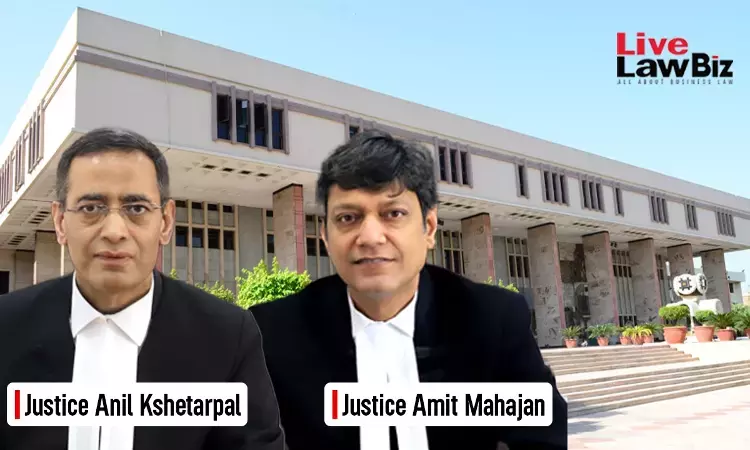
Delhi High Court Declines Writ Against Ex Parte GST Order, Cites Statutory Appeal
The Delhi High Court has declined to entertain a writ petition challenging an ex parte GST adjudication order. It observed that disputed questions of fact relating to the validity and sufficiency of service of notices under Section 169 of the Central Goods and Services Tax Act, 2017, are more appropriately examined by the statutory appellate authority. A division bench of Justices Anil Kshetarpal and Amit Mahajan was hearing a challenge to an order that imposed a penalty of over ₹2.39 crore on...