
Bombay High Court
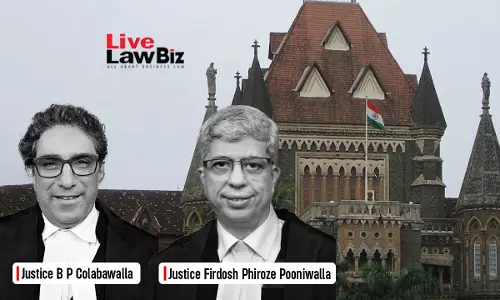
Tax Reassessment Beyond 4 Years Invalid Without Failure To Disclose Material Facts: Bombay High Court
On 16 June, the Bombay High Court held that the Income Tax Department cannot reopen an assessment after four years when the taxpayer has already disclosed all material facts fully and truly and allowed a writ petition filed by Chennai Container Terminal Private Limited.A Division Bench of Justices B.P. Colabawalla and Firdosh P. Pooniwalla set aside the notice issued under Section 148 of the Income Tax Act, the order rejecting objections, and the consequential show cause notice and draft...
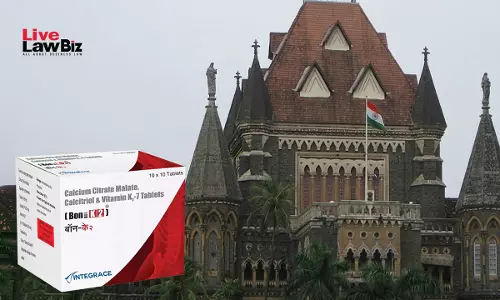
Bombay High Court Restraints Mas Pharmachem's 'BON K2 FORTE', Protects Integrace 'BON-K2' Mark
The Bombay High Court on 15 June granted a permanent injunction restraining Mas Pharmachem from using the mark 'BON K2 FORTE', holding it to be deceptively similar to Integrace Private Limited's registered mark 'BON-K2'.Justice Arif S. Doctor found the defendants' adoption of the mark to be “plainly dishonest, malafide and with a clear intent to deceive” and directed them to pay costs of Rs.1,00,000 each to the Plaintiff within eight weeks, with interest at 8% per annum in case of default....
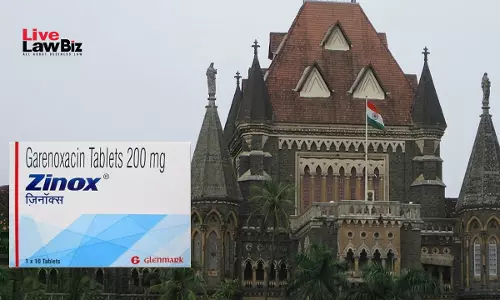
Bombay High Court Bars Use Of 'ZENOX' Mark, Holds It Infringes Glenmark's Registered 'ZINOX' Trademark
The Bombay High Court has permanently restrained Zenlabs India from using the trademark "ZENOX" for medicinal and pharmaceutical products after finding that it was deceptively similar to Glenmark Pharmaceuticals' registered mark "ZINOX". The court held that use of the rival mark was likely to cause confusion among consumers and members of the trade. Justice Arif S. Doctor, while decreeing Glenmark's trademark infringement and passing off suit on June 15, held that the competing marks were...
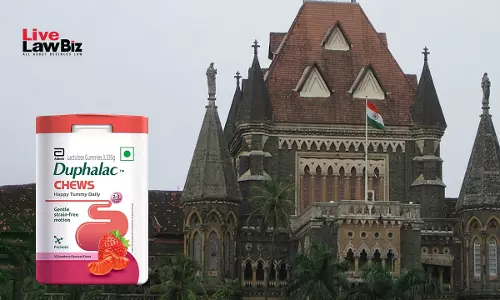
Bombay High Court Cancels DUPHACHRIT Trademark, Finds It Similar To Abbott's DUPHA Marks
The Bombay High Court has ordered the cancellation of the trademark "DUPHACHRIT", holding that it was deceptively similar to Abbott Product Operations AG's family of "DUPHA" marks used for pharmaceutical products. Justice Arif S. Doctor passed the order on June 15, 2026, while allowing a rectification petition filed by Abbott seeking removal of the mark from the Register of Trade Marks. "I don't have the slightest hesitation in holding that the rival marks are deceptively similar and that a...
Patent Office Cannot Raise New Objections Beyond Scope Of Remand: Bombay High Court
The Bombay High Court has held that a patent matter remanded solely to cure a breach of natural justice cannot be treated as a fresh examination proceeding, and the Patent Office cannot use such a remand to introduce entirely new prior art references or fresh grounds of objection. Justice Arif S. Doctor passed the ruling while allowing an application filed by Qualyst Transporter Solutions LLC, a United States-based company whose patent application has been under prosecution in India for nearly...
Financial Hardship Alone Cannot Justify Payment Of Disputed Claim: Bombay High Court
The Bombay High Court on Tuesday held that financial hardship by itself cannot justify directing payment of a disputed claim at an interim stage. Refusing to order Ullu Digital Ltd. to secure or deposit about ₹2.58 crore claimed by the producer of the web series 'KINK 2', the Court observed that treating financial pressure as a sufficient reason for payment would blur the distinction between admitted and contested claims. Justice Amit Borkar held that the material on record did not warrant...
Excess Royalty Refunded To Indian Subsidiary Under APA Cannot Be Taxed As Income Of GIA US: Bombay High Court
The Bombay High Court has upheld relief granted to Gemological Institute of America Inc. (GIA US) in a dispute over royalty payments received from its Indian subsidiary. The court ruled that royalty amounts bona fide refunded pursuant to a CBDT-approved Advance Pricing Agreement (APA) could not be brought to tax in the hands of the US entity because the amounts did not ultimately belong to it. A Division Bench of Justice B.P. Colabawalla and Justice Firdosh P. Pooniwalla dismissed a batch of...
Developer Cannot Postpone Conveyance Until Completion Of Entire Layout Development: Bombay High Court
Conveyance of land in favour of a co-operative housing society cannot be postponed until completion of an entire layout development, the Bombay High Court has reiterated while setting aside an order that rejected a society's deemed conveyance application as premature. Justice Sandeep V. Marne observed, “This Court has already held that conveyance cannot be postponed till completion of entire layout development and that land can be conveyed in favour of the Petitioner-Society even before...
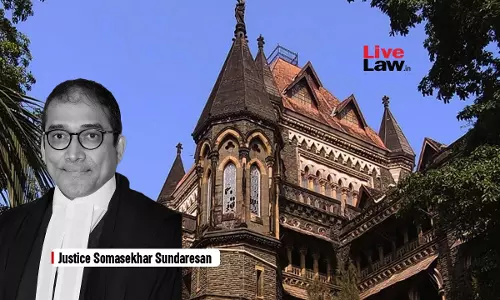
Arbitral Tribunals Must Respect Contract Terms While Ensuring Business Efficacy: Bombay High Court
The Bombay High Court on 12 June held that Section 28(3) of the Arbitration and Conciliation Act, 1996 does not permit arbitral tribunals to ignore contractual terms but requires them to interpret the contract in a manner that gives effect to business efficacy. A Bench of Justice Somasekhar Sundaresan partly allowed petitions filed by the Maharashtra Public Works Department (PWD) and upheld the arbitral award dated 14 April 2023 in favour of Khare and Tarkunde Infrastructure Pvt Ltd (KTIPL) on...
Stock Exchange Bye-Laws Cannot Compel Arbitration Of Fraud Disputes: Bombay High Court
The Bombay High Court on 9 June held that although stock exchange bye-laws carry statutory force, they cannot compel arbitration of every shareholder dispute, particularly where serious allegations of fraud arise and the dispute falls outside the scope of arbitrability. Justice Somasekhar Sundaresan allowed the challenge and quashed an arbitral award dated 6 August 2024, which had directed ABB India Ltd to restore 1,550 ABB shares and 310 Hitachi Energy India shares to shareholder Sunil Hariram...
Bombay HC Quashes GST Demand Raised Through Single Notice Covering Multiple Financial Years
The Bombay High Court has recently set aside a GST demand of about ₹2.54 crore raised through a single show cause notice spanning more than four years. The Court held that the proceedings were without jurisdiction. A Division Bench of Justice Nitin B. Suryawanshi and Justice Vaishali Patil-Jadhav allowed a petition filed by Rithwik Projects Private Limited. The Bench observed that the controversy was already covered by earlier decisions of the Court, particularly Milroc Good Earth Developers v....

Interim Relief Under Arbitration Act Cannot Extend Rights Beyond Parties' Agreement: Bombay High Court
The Bombay High Court recently reiterated that interim protection in arbitration matters is not meant to extend rights beyond what parties have agreed between themselves. The court made the observation while refusing Oil and Natural Gas Corporation Ltd.'s request to continue a USD 14.82 million bank guarantee furnished by Swiber Offshore Construction Pte. Ltd. The request came after an arbitral tribunal rejected ONGC's liquidated damages claim and directed return of the security. A...