
GST
GST Appellate Tribunal Can Grant Interim Relief, Including Stay On Recovery: Bombay High Court
The Bombay High Court has recently held that the GST Appellate Tribunal possesses inherent and incidental powers to grant interim relief. This includes protection against recovery pending disposal of appeals. The Court said that any interpretation to the contrary would render the appellate remedy “illusory” and defeat legislative intent. A Division Bench of Justices G.S. Kulkarni and Aarti Sathe was hearing a writ petition filed by The Hongkong and Shanghai Banking Corporation Ltd. The bank...
Bombay High Court Reaffirms Year-Wise Assessment In GST, Limits Scope of Section 74 Notices
The Bombay High Court (Nagpur Bench) recently, quashed a show cause notice issued against Rainbow Greeners Nagpur, under Section 74 of the CGST Act on the ground that it unlawfully clubbed five financial years in a single composite proceeding. A Division Bench of Justice Anil L. Pansare and Justice Nivedita P. Mehta wrote: “In the light of the statutory scheme, we find that there is no scope for consolidating various financial years/tax period which is attempted by the impugned Show Cause...
Bombay High Court Sets Aside ₹32 Crore GST Demand On Pidilite For Non-Supply Of Verification Reports
The Bombay High Court on 20 February set aside a GST demand exceeding Rs. 32 crore against Pidilite, holding that non-furnishing of verification reports relied upon in adjudication amounted to a clear breach of natural justice. The Division Bench of Justices G.S. Kulkarni and Aarti Sathe quashed the Order-in-Original and remanded the matter for fresh consideration. The Bench observed: “Non furnishing of verification reports and no opportunity of a fair hearing on the same, in our opinion,...

Expired E-Way Bill Does Not Justify Harsh Penalty Under GST Law: Gujarat High Court Orders ₹18 Lakh Refund
The Gujarat High Court has ordered refund of Rs. 18,00,140 collected as penalty from Balkrishna Industries Limited, holding that imposition of penalty merely because an e-way bill expired during transit was unsustainable in the facts of the case. A Division Bench of Justice A.S. Supehia and Justice Pranav Trivedi held that “In wake of such undisputed fact, the imposition of harsh penalty under Section 129(3) of the CGST Act was uncalled for and is also beyond the scope of Section 129(1)(a) of...

Supreme Court Issues Notice In Zoomcar Plea Over Denial Of Appeal Against GST Order By Rajasthan High Court
The Supreme Court on Wednesday issued notice on a special leave petition filed by Zoomcar India Pvt. Ltd., a self-drive car rental platform, challenging a Rajasthan High Court order that disposed of its writ petition without granting liberty to pursue a statutory appeal under the GST law. A bench of Justice J.B. Pardiwala and Justice K.V. Viswanathan heard the matter and directed the issuance of notice. Zoomcar had approached the High Court of Judicature for Rajasthan challenging...

GSTAT Delhi Orders Panchsheel Buildtech To Return ₹98 Lakh To Homebuyers In Anti-Profiteering Case
The Delhi Bench of the Goods and Services Tax Appellate Tribunal (GSTAT) on 20 February upheld an anti-profiteering charge against Panchsheel Buildtech Pvt. Ltd. and directed it to return Rs. 98 lakh to homebuyers of its three Noida-based residential projects. Technical Member A. Venu Prasad found the company liable for profiteering for non-passing of the benefit of additional Input Tax Credit to homebuyers as required under Section 171 of the CGST Act, 2017. The Tribunal held that Section...
Bombay High Court Quashes ₹133.60 Crore GST Penalty Each On Shemaroo Executives
The Bombay High Court has recently quashed penalties of Rs.133.60 crore each imposed on the Chief Financial Officer, Chief Executive Officer and Joint Managing Director of Shemaroo Entertainment Ltd., holding that the statutory requirements necessary to fasten personal GST liability were not satisfied. The Court found that the penalty provision invoked by the department could not be applied in the absence of proof that the officers had retained the benefit of the impugned transactions and that...
Order Passed In Fraud Proceedings Cannot Be Reclassified To Avail Amnesty Scheme: Gujarat High Court
The Gujarat High Court held that an order passed under Section 74 of the CGST Act, 2017 involving allegations of fraud, misstatement or suppression of facts cannot be converted into a non-fraud order under Section 73 merely to enable the taxpayer to claim relief under the GST Amnesty Scheme, in the absence of documentary evidence disproving such allegations. A Bench comprising Justice A.S. Supehia and Justice Pranav Trivedi, by its order dated 13 February 2026, rejected the plea of R.B. Pandey...
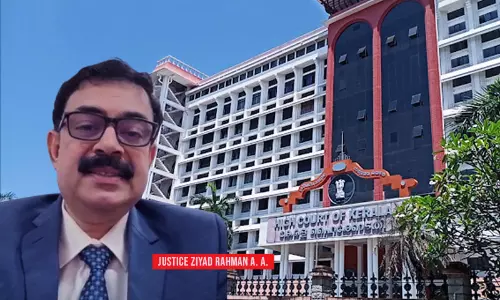
Where No Tax Evasion Is Alleged, Liberal Approach Warranted in Transitional ITC Case: Kerala High Court
The Kerala High Court has recently observed that a bona fide mistake committed by a taxpayer while filing revised TRAN-1 and TRAN-2 forms cannot justify denial of transitional Input Tax Credit, especially in the absence of any allegation of tax evasion.TRAN-1 and TRAN-2 are statutory forms under Section 140 of the CGST Act through which taxpayers carried forward eligible input tax credit from the pre-GST regime into GST."However, I am of the view that, when it comes to a case where no evasion of...

GST Registration Cannot Be Cancelled Based On Investigative Dictation Alone: Gauhati High Court
The Gauhati High Court on 17 February, held that cancellation of GST registration cannot be sustained when it is based on vague allegations and issued at the behest of the investigating wing, without independent application of mind by the proper officer. A Bench of Justice Arun Dev Choudhury allowed a writ petition was filed by Ankit Choudhary, sole proprietor of Ankit Enterprises, challenging a show cause notice, the subsequent order cancelling his GST registration, and the order rejecting...

CBIC's 2024 Policy Barring Govt Appeals Below ₹2 Crore Covers Pending Cases, Not Merely Future Filings: Supreme Court
Holding that the Centre's 2024 litigation policy applies even to pending appeals, the Supreme Court on February 5, 2026 dismissed appeals filed by the Commissioner of Commercial Tax against Vikaram Cement, ruling that the Rs. 25.47 lakh tax demand involved fell well below the Rs. 2 crore monetary limit fixed under the June 26, 2024 circular issued by the Central Board of Indirect Taxes and Customs. Rejecting the State's contention that the circular would not apply to appeals already filed under...
Bombay High Court Allows Videography Of GST Summons Proceedings After Taxpayer Undertakes to Bear Cost
Taking note that a director of Tuesonpower International Pvt. Ltd. is undergoing treatment for cancer and has expressed willingness to cooperate with the investigation, the Bombay High Court permitted videography of summons proceedings under Section 70 of the Central Goods and Services Tax Act, 2017. It also allowed his advocate to remain present at a visible but not audible distance during recording of the statement. The Court clarified that the relief is confined to the facts of the case,...