
GST&VAT&CST
![[GST Rate-Cuts] Karnataka High Court Refuses Ex-Parte Stay On Guideline Mandating Revised MRP Stickers On Existing Stock](https://assets.livelawbiz.com/h-upload/2025/05/01/500x300_598083-justice-bm-shyam-prasad.webp "[GST Rate-Cuts] Karnataka High Court Refuses Ex-Parte Stay On Guideline Mandating Revised MRP Stickers On Existing Stock")
[GST Rate-Cuts] Karnataka High Court Refuses Ex-Parte Stay On Guideline Mandating Revised MRP Stickers On Existing Stock
The Karnataka High Court on Monday refused to pass an ex-parte order staying the guideline dated September 9 issued by the Union of India mandating the declaration of revised retail sale price (MRP), on unsold stock manufactured/packed/imported, which would be effective from September 22, in addition to the existing retail sale price (MRP).Justice B M Shyam Prasad refused the ex parte interim order on the petition filed by Kitchen and Home Products Company, TTK Prestige Limited. The company has...
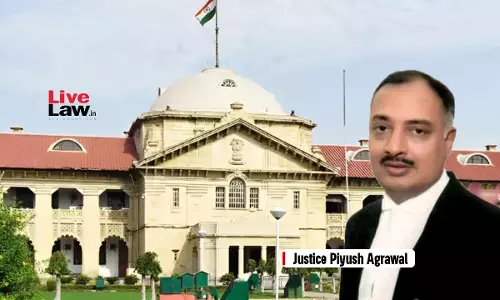
Once Actual Movement Of Goods Proved By Assessee Remains Unrebutted, Proceedings U/S 74 GST Act Are Unjustified: Allahabad High Court
The Allahabad High Court has recently held that when the actual movement of goods has been proved by the assesee and the same remains unrebutted by the authority, proceedings under Section 74 of Goods and Service Tax Act, 2017 are unjustified. Proceedings under Section 74 of GST Act can be initiated if an assesee has not paid or short paid or erroneously refunded or input tax credit wrongly availed or utilized by fraud or any willful- misstatement or suppression of facts. Justice...
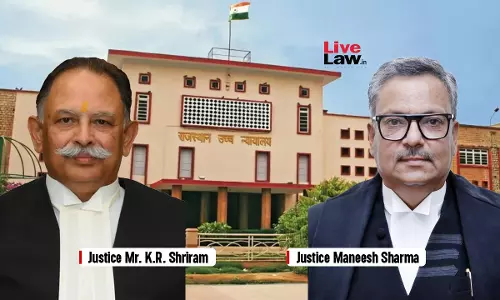
IGST Act | Party Providing Services Under Bipartite Agreement Cannot Be Labelled As “Intermediary”: Rajasthan High Court
While hearing a petition against the decision of Department of Revenue by a company providing services to a foreign entity, Rajasthan High Court held that for someone to be called an “intermediary”, there had be existence of 3 parties in the contract, in the absence of which, the services rendered under a bipartite agreement could not be called “intermediary”.The division bench of Justice Mr. K.R. Shriram and Justice Maneesh Sharma was hearing the petition filed by a subsidiary of IDP Australia,...
[CGST Act] Tax Officers Expected To Know Law Laid Down By Higher Courts: Allahabad High Court
While calling for personal affidavit from Principal Secretary, Institutional Finance, Government of U.P., Lucknow explaining the conduct of the tax officers in the State in not following the orders of the High Court, the Allahabad High Court observed that the Officers must know the law. Justice Piyush Agrawal observed that “While it is expected from the citizen to know law, the duty of the Officers increases that they should also know the law laid down by the higher courts.” ...

No Refund Of Unutilised ITC On Closure Of Business U/S 54 CGST Act, Must Be Reversed U/S 29(5): Sikkim High Court
The Sikkim High Court stated that no refund of unutilised ITC (Input Tax Credit) on closure of business under section 54 CGST Act (Central Goods and Services Tax), must be reversed under section 29(5). Section 54 of the CGST Act, 2017 deals with refund of tax, intertest, or any other amount paid under GST. The refund can be claimed in case of excess tax payment, zero-rated supplies, deemed exports, or unutilised ITC. Section 29(5) of the CGST Act, 2017 provides that when the...
![[CGST Act] Absence Of Document Identification Number Doesnt Render Assessment Orders Void: Andhra Pradesh High Court](https://assets.livelawbiz.com/h-upload/2025/09/08/500x300_619391-r-raghunandan-rao-and-sumathi-jagadam.webp "[CGST Act] Absence Of Document Identification Number Doesnt Render Assessment Orders Void: Andhra Pradesh High Court")
[CGST Act] Absence Of Document Identification Number Doesn't Render Assessment Orders Void: Andhra Pradesh High Court
The Andhra Pradesh High Court held that absence of document identification number doesn't render assessment orders void.The bench consists of Justices R Raghunandan Rao and Sumathi Jagadam were addressing the issue where the assessee/petitioner has challenged the assessment orders passed against him. The main ground for challenge is the lack of a Document Identification Number on the orders, passed by the assessing officers.The assessee submitted that the instructions issued by the Central Board...

CIRP Order Based On GST Dept Letter Neither Addressed To, Nor Received By Corporate Debtor Is Invalid: NCLAT New Delhi
The National Company Law Appellate Tribunal (NCLAT), Principal Bench, New Delhi, comprising Justice Rakesh Kumar Jain (Member-Judicial), Justice Mohammad Faiz Alam Khan (Member-Judicial), and Mr. Naresh Salecha (Member-Technical), has invalidated a CIRP Order Passed by the Adjudicating Authority Based on a Letter Neither Addressed to Nor Received by the Corporate Debtor. The corporate debtor was engaged in the business of manufacturing the non-ferrous metals used in the batteries, and...
GST Council Announces Revised Slabs Of 5%, 18% And 40% , Cuts Rates On Small Cars, ACs
The 56th meeting of the GST Council was held on 3rd September, 2025. The GST Council inter-alia made the recommendations relating to changes in GST tax rates.The changes in GST rates on services will be implemented with effect from 22nd September 2025.The changes in GST rates of all goods except pan masala, gutkha, cigarettes, chewing tobacco products like zarda, unmanufactured tobacco and bidi, will be implemented with effect from 22nd September 2025. Further, the Goods and Services Tax...

State Gains Revenue Only If Businesses Operate; Cancelling GST Registration On Procedural Grounds Serve No Purpose: Calcutta High Court
The Calcutta High Court stated that the state gains revenue only if business operates; GST registration cancellation on procedural grounds serves no purpose. Justice Aniruddha Roy stated that the cancellation of GST registration of the assessee on the procedural ground would not enure any benefit either to the revenue authority or to the assessee. On the contrary, if the GST certificate stands restored and the assessee is allowed to carry on its business, the State can earn revenue to...
Refund Of CVD & SAD Paid After GST Introduction Maintainable U/S 142(3) Of CGST Act: CESTAT
The Ahmedabad Bench of Customs, Excise, and Service Tax Appellate Tribunal (CESTAT) has stated that refund of CVD (Countervailing Duty) & SAD (Special Additional Duty) paid after GST introduction maintainable U/S 142(3) CGST Act. Dr. Ajaya Krishna Vishvesha (Judicial Member) was addressing the issue of whether refund claim is admissible under Section 142 (3) of CGST Act, 2017 in lieu of CENVAT credit of CVD & SAD, where such CVD & SAD are paid after introduction of GST due...

GST Dept Can't Probe Misuse Of GSTIN By Third Party, Power Lies With Economic Offences Wing: Delhi High Court
The Delhi High Court has made it clear that allegations of misuse of a trader's GST identification number by a third party cannot be probed by the GST Department.A division bench of Justices Prathiba M. Singh and Shail Jain observed,“Section 132 of the CGST Act, 2017 provides for certain offences which the GST Department can take cognizance of. However, the allegation here is that the GST number of the Petitioner has been misused by a third party, who is unknown. In the opinion of this Court,...
Department Can't Withhold Refund In Terms Of S.54(11) GST Act Unless Appeal Against Refund Order Is Filed: Delhi High Court
The Delhi High Court has made it clear that the power to withhold refund under Section 54(11) of the Central Goods and Service Tax Act 2017 cannot be exercised by the Department in absence of an appeal against the refund order.The provision stipulates that where an order giving rise to a refund is the subject matter of an appeal and the Commissioner is of the opinion that grant of such refund is likely to adversely affect the revenue, he may withhold the refund after giving an opportunity of...