
COMPANY LAW

NCLT Ahmedabad Sanctions Amalgamation Of Penna Cement Into Ambuja Cements
The Ahmedabad Bench of the National Company Law Tribunal (NCLT) on 30 March sanctioned the scheme of amalgamation between Penna Cement Industries Ltd. (Transferor Company) and Ambuja Cements Ltd. (Transferee Company) under Sections 230–232 of the Companies Act, 2013. A Bench comprising Judicial Member Shammi Khan and Technical Member Sanjeev Sharma approved the scheme, holding that the scheme is fair, reasonable, and in public interest. The Tribunal held: “The objections/observations...
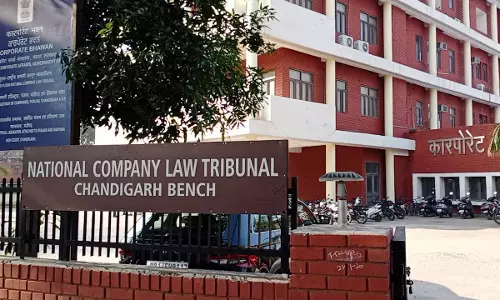
NCLT Chandigarh Confirms UKIBC India's 55.39% Capital Reduction Scheme
The Chandigarh Bench of the National Company Law Tribunal (NCLT) on 25 March, approved the petition filed by UK India Business Council India Private Limited seeking a reduction of its share capital under Section 66 of the Companies Act, 2013. A Bench comprising Judicial Member Khetrabasi Biswal and Technical Member Kaushalendra Kumar Singh held: “In view of the submissions made by the Petitioner Company, we are of the considered view that the reduction of share capital of the Petitioner...
NCLT Chennai Compounds AGM Delays By Seal Infotech, Imposes ₹17.61 Lakh Penalty On Company, Directors
The National Company Law Tribunal (NCLT) at Chennai has recently compounded delays of up to 587 days in holding Annual General Meetings by Seal Infotech Private Limited, taking a lenient view and imposing penalties aggregating to Rs 17.61 lakh. A coram of Judicial Member Sanjiv Jain and Technical Member Venkataraman Subramaniam passed the order. The tribunal was dealing with three petitions filed by the company and its directors seeking compounding of offences for failure to hold Annual...
NCLAT Dismisses MMTC Appeal Against NSEL's Settlement Scheme With Traders
The National Company Law Appellate Tribunal (NCLAT) at Delhi on Monday rejected a challenge by state-run trading company MMTC Limited to a settlement scheme approved for National Spot Exchange Ltd., holding that the scheme cannot be reopened once it has been upheld in earlier proceedings and affirmed by the Supreme Court.The Mumbai bench of the National Company Law Tribunal had, on November 28, 2025 approved the settlement scheme between NSEL, along with its promoter 63 Moons, and its creditors,...
Share Capital Reduction A 'Domestic Decision', Minority Shareholders Can't Veto It: NCLT Chennai
The National Company Law Tribunal (NCLT) at Chennai has approved a scheme of reduction of share capital for Ocean Healthcare Private Limited, holding that the reduction of share capital under Section 66 of the Companies Act is a “Domestic decision” of the company, with minority shareholders not having a “Veto Right”. A coram of Judicial Member Sanjiv Jain and Technical Member Venkataraman Subramaniam passed the order. Referring to precedents, the Bench observed: "It is imperative to take note...
NCLT Indore Directs Meetings In HEG Demerger, Bhilwara Energy Merger; Some Meetings Dispensed
The Indore bench of the National Company Law Tribunal (NCLT) has recently issued directions on convening and dispensing with meetings of shareholders and creditors in the proposed Composite Scheme of Arrangement involving HEG Ltd, HEG Graphite Ltd, and Bhilwara Energy Ltd.The order was passed by the bench of Judicial Member Brajendra Mani Tripathi and Technical Member Man Mohan GuptaHEG Ltd is a leading company in the manufacturing of graphite electrodes. HEG's shares are listed on the BSE and...

NCLT Mumbai Compounds Companies Act Violations By Wadhwagroup Directors On Payment Of ₹36.10 Lakh
The National Company Law Tribunal (NCLT) at Mumbai has compounded offences by directors of Wadhwagroup Holdings Pvt Ltd, a real estate firm, for failure to file consolidated financial statements and for not charging depreciation on investment properties in accordance with accounting standards. The order was passed by a bench of Judicial Member K. R. Saji Kumar and Technical Member Anil Raj Chellan, held that the admitted defaults warranted compounding subject to payment of a fee The...

Statutory Auditors Cannot Claim Blanket Immunity Under Section 339 Of Companies Act: NCLT Mumbai
The Mumbai National Company Law Tribunal (NCLT) on 24 March, held that statutory auditors cannot claim blanket immunity under Section 339 of the Companies Act if they are found to have facilitated or consciously ignored fraudulent conduct. A Bench of Judicial Member Sushil Mahadeorao Kochey and Technical Member Prabhat Kumar passed the order in proceedings initiated by the Union of India to investigate IL&FS and its group entities, and implead its auditors SRBC & Co LLP and BSR...

No 'Deemed Liability' For Company Directors Under Negotiable Instruments Act: Calcutta High Court
The Calcutta High Court has recently held that there is no deemed liability for a director merely by virtue of his designation, emphasising that specific factual averments in a complaint linking a director to the day-to-day management of the company are a jurisdictional prerequisite under Section 141 of the Negotiable Instruments Act. The court said that silence in a complaint regarding a director's role constitutes a substantive failure to establish a prima facie case. Justice Uday Kumar,...

NCLT Kochi Allows First Motion In Scheme To Merge 51 Malabar Group Companies Into Malabar Gold
The National Company Law Tribunal (NCLT) Kochi on Wednesday allowed the first-motion application in a composite scheme of amalgamation involving the merger of 51 Malabar Group companies into Malabar Gold and Diamonds Limited. The order was passed by Judicial Member Vinay Goel on a joint application filed under Sections 230-232 of the Companies Act seeking directions regarding meetings of shareholders and creditors for approval of the proposed scheme. The tribunal dispensed with meetings in 10...
NCLT Delhi Clears First Motion For Amalgamation Between Equinox India Infraestate And Spero Properties
The Delhi Bench of the National Company Law Tribunal (NCLT) on Wednesday allowed a first-motion application relating to a proposed amalgamation of Equinox India Infraestate Limited with Spero Properties and Services Private Limited. A coram of Judicial Member Jyotsna Sharma and Technical Member Anu Jagmohan Singh, after noting that the equity shareholders, secured creditors, and unsecured creditors of the transferee company had given their written consent, dispensed with the requirement of...
NCLT Mumbai Allows First Motion For Merger Of Tata Group Firm Rujuvalika Investment Into Tata Steel
The National Company Law Tribunal at Mumbai on Wednesday allowed a first-motion application for the proposed merger of Rujuvalika Investment Ltd, a Tata group company, into Tata Steel Ltd. A coram of Judicial Member Ashish Kalia and Technical Member Sanjiv Dutt passed directions for regulatory compliances and issuance of notices to statutory authorities while dealing with the first-motion plea. The scheme, jointly filed by the companies on May 27, 2025 under Sections 230 to 232 of the...