
COMPANY LAW
NCLT Mumbai Upholds SFIO's Authority To Act On Behalf Of Union Of India In IL&FS Case, Rejects Locus Challenge
The National Company Law Tribunal (NCLT) at Mumbai has upheld the locus standi of the Serious Fraud Investigation Office (SFIO) to file an application on behalf of the Union of India in proceedings arising out of the IL&FS matter, rejecting objections that the agency lacked authority to institute such proceedings. A coram of Judicial Member Sushil Mahadeorao Kochey and Technical Member Prabhat Kumar held that the application filed through SFIO was maintainable and could not be rejected on...
Bombay High Court Allows Raj Kundra's Company To Challenge UK Anti-Suit Injunction In Rajasthan Royals Dispute
The Bombay High Court on Monday granted leave under Clause XII of the Letters Patent to Kuki Investments Limited, a company owned by Raj Kundra, to institute a suit challenging an anti-suit injunction passed by the High Court of England and Wales in a dispute relating to the affairs of IPL franchise Rajasthan Royals. Allowing the petition seeking permission to file the suit against Emerging Media Ventures Ltd. and others, Justice Abhay Ahuja observed that the court was satisfied that grounds...
NCLT Kolkata Sanctions Merger Of Group Companies Sresta Natural Bioproducts, Wimco Into ITC
The National Company Law Tribunal (NCLT) at Kolkata has sanctioned a scheme of amalgamation under which Sresta Natural Bioproducts Pvt Ltd, which operates in organic packaged foods, and Wimco Ltd, an inactive group company, are being merged into their parent ITC LimitedA coram of Judicial Member Labh Singh Technical Member Rekha Kantilal Shah passed the order. The scheme was approved by the respective boards of the companies on August 1, 2025. ITC, the transferee company, had earlier acquired...
Corporate Laws (Amendment) Bill 2026: Govt Proposes Decriminalising Minor Comapanies Act Defaults, CSR Changes
The Corporate Laws (Amendment) Bill, 2026, was introduced in the Lok Sabha on Monday, proposing changes to the Companies Act, 2013, and the Limited Liability Partnership Act, 2008, that would remove criminal liability for several procedural violations, revise penalty provisions, and give wider statutory powers to regulators. One of the central proposals in the bill is to move a number of compliance-related offenses out of the criminal framework. At present, certain technical defaults can lead...
Share Capital Increase Without Notice To Family Shareholders Amounted To Oppression In Daruka Papers Case: NCLAT
The National Company Law Appellate Tribunal (NCLAT) at Delhi has held that increasing the authorised share capital and issuing rights shares without notice to continuing shareholders in a closely-held family company amounted to oppression, after finding that the company proceeded on the assumption that certain shareholders had resigned even though the validity of their resignation itself was disputed. Disposing of the appeal in a dispute concerning J.B. Daruka Papers Ltd, a bench of Judicial...

NCLT Mumbai Allows BASF India's First Motion In Demerger Scheme, Dispenses With Meetings Of Shareholders, Creditors
The National Company Law Tribunal (NCLT) at Mumbai on Friday allowed a plea filed by BASF India Ltd and BASF Agricultural Solutions India Ltd seeking directions in relation to a proposed demerger of the agricultural solutions business. A coram of Judicial Member Sushil Mahadeorao Kochey and Technical Member Prabhat Kumar was dealing with an application under Sections 230 to 232 of the Companies Act seeking dispensation of meetings of shareholders and creditors. The scheme was approved by the...

Calcutta High Court Holds Issue Of Appointing Woman Director Triable In Case Against Rashmi Metaliks
Today, the Calcutta High Court refused to quash criminal proceedings against Rashmi Metaliks Ltd and its directors for alleged non-compliance with the mandatory requirement under Section 149 of the Companies Act to appoint at least one woman director. A Single-Judge Bench of Justice Ajay Kumar Gupta was hearing a criminal revision petition under Section 482 CrPC challenging proceedings pending before the Chief Judicial Magistrate, Alipore, including an order dated 19 September 2015. He...
NCLT Chennai Allows First-Motion Application In Veranda Learning Amalgamation-Demerger Scheme
The Chennai Bench of the National Company Law Tribunal on 18 March allowed the first motion application for a composite scheme of amalgamation and demerger involving Veranda Learning Solutions Ltd, J.K. Shah Commerce Education Ltd, and Veranda XL Learning Solutions Pvt Ltd. A Bench comprising Judicial Member Sanjiv Jain and Technical Member Venkataraman Subramaniam considered a batch of applications filed under Sections 230–232 of the Companies Act, 2013, relating to the composite scheme. It...
NCLT Chennai Directs TVS Holdings' Shareholders' Meeting for Surplus Reserve Scheme
On 18 March, the National Company Law Tribunal, Chennai directed TVS Holdings Ltd to hold a meeting of its equity shareholders to approve a plan for using surplus reserves. It also dispensed meetings for unsecured creditors and debenture holders as they had already given their consent. A Bench of Judicial Member Sanjiv Jain and Technical Member Venkataraman Subramaniam heard the company's application under Sections 230–232 of the Companies Act, 2013, which sought approval for a scheme to...
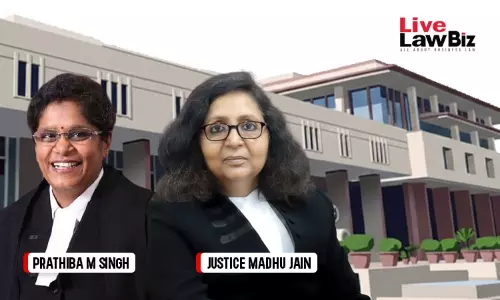
Extending Vigil Mechanism To Unlisted Companies Is Policy Decision; Delhi High Court Asks MCA To Consider After Consultation
The Delhi High Court has observed that the question of extending the vigil/whistleblower mechanism prescribed under Section 177 of the Companies Act, 2013, to unlisted companies is a matter of legislative policy and cannot be directed by courts through judicial orders.A Division Bench of Justices Prathiba M. Singh and Madhu Jain thus directed the Union Ministry of Corporate Affairs to undertake a stakeholder consultation in this regard, and thereafter take a decision, within a reasonable period,...
NCLT Ahmedabad Sanctions Prima Plastics Demerger Of Rotational Moulding Business Into Subsidiary
The Ahmedabad Bench of the National Company Law Tribunal (NCLT) has recently sanctioned a Scheme of Arrangement providing for the demerger of the Rotational Moulding Business of Prima Plastics Limited into its wholly owned subsidiary, Prima Innovation Limited. The order was passed by Judicial Member Shammi Khan and Technical Member Sanjeev Sharma on March 16, 2026. The appointed date is July 1, 2024. Prima Plastics Limited is listed on BSE Limited, while Prima Innovation Limited is its...
NCLT Ahmedabad Sanctions Amalgamation Of UR Energy With Listed Jhaveri Credits
The Ahmedabad Bench of the National Company Law Tribunal (NCLT) has approved a scheme of amalgamation under which solar power company U R Energy (India) Private Limited will merge with BSE-listed Jhaveri Credits and Capital Limited, holding that the scheme is not prejudicial to the interests of shareholders or creditors.The order was pronounced on March 16, 2026, by a bench of Judicial Member Shammi Khan and Technical Member Sanjeev Sharma. U R Energy, the transferor company, was incorporated...