
High Courts

Karnataka High Court Allows Alternate Security In Arbitral Award Execution Despite Finality Of Stay Condition
The Karnataka High Court has held in an arbitral award execution matter that courts can modify conditions imposed while granting a stay, even if such conditions have attained finality, to secure the ends of justice. Justice H. T. Narendra Prasad observed: “While the condition imposed earlier has attained finality, the same does not preclude this Court from moulding the relief in execution proceedings so as to secure the ends of justice, particularly when adequate alternative security is...
Karnataka High Court Dismisses AVTEC Appeal, Holds Unilateral Appointment Of Sole Arbitrator Invalid
The Karnataka High Court on 29 April dismissed an appeal filed by AVTEC Limited and upheld the Commercial Court's order setting aside an arbitral award. A Division Bench of Justices Anu Sivaraman and T.M. Nadaf held that parties cannot permit unilateral appointment of a sole arbitrator under the Arbitration and Conciliation Act, 1996, and also ruled that a party which participates in arbitration without objection cannot later dispute jurisdiction. It observed: “The appellant having...

Madras HC Refuses To Strike Off Suit In Dispute Over 49th South India Motor Rally Despite Arbitration Clause
The Madras High Court has refused to strike off a civil suit over disputes relating to a motorsports event, including the 49th South India Rally, holding that the existence of an arbitration clause does not by itself bar the jurisdiction of a civil court. “Further, the existence of an arbitration clause does not ipso facto bar the jurisdiction of the Civil Court unless the procedure contemplated under the Section 8 of the Arbitration and Conciliation Act, 1996 is duly invoked before the...

Madras High Court Paves Way for Release of Gautham Vasudev Menon's Dhruva Natchathiram Subject To Conditions
The Madras High Court recently permitted the release of Dhruva Natchathiram, a Gautham Vasudev Menon directorial, subject to the condition that pre-release payments be made to creditors and that all revenues from the film be routed through a court-monitored bank account. The film, which stars Chiyaan Vikram in the lead role, has been delayed by nearly eight years since it was first slated for release. The injunction had originally been obtained in 2023 by two parties to the production...
Madhya Pradesh HC Upholds Continuation Of Court-Granted Interim Relief After Arbitral Tribunal Formation
The Madhya Pradesh High Court has upheld an interim order restraining parties from alienating disputed property in an arbitration matter and held that the interim injunction shall continue during the pendency of arbitration proceedings. “we are of the view that the learned trial Court was right in exercising its jurisdiction under Section 9 of the Act, 1996 considering the fact that the sole arbitrator was appointed and arbitral tribunal was constituted after the learned trial Court had applied...
Withdrawn Claim Cannot Be Revived In Arbitration: Delhi HC Upholds Setting Aside Of Award Against Omaxe
The Delhi High Court has upheld an order setting aside an arbitral award that granted buyers of a commercial unit about ₹1.05 lakh per month as assured returns from Omaxe Limited, after finding that the arbitrator had granted relief on a claim that was no longer part of the arbitration. Explaining why, a Division Bench of Justices V. Kameswar Rao and Vinod Kumar held that the arbitrator “erred in awarding the AMR as compensation as it was beyond his jurisdiction,” noting that once the claim was...

West Asia Hostilities No Ground: Delhi HC Dismisses SpiceJet Review Plea Against ₹144.51 Crore Deposit Order
The Delhi High Court on Monday dismissed review petitions filed by SpiceJet Ltd and its promoter Ajay Singh, refusing to modify its March 18, 2026 order and grant further time, thereby requiring compliance with directions to deposit ₹144.51 crore in an arbitration dispute with Kal Airways Pvt. Ltd. Justice Subramonium Prasad held that subsequent developments such as the outbreak of hostilities in West Asia cannot be used to avoid compliance with binding judicial directions or as a ground for...
Only High Courts Can Entertain Section 34 Challenges In International Arbitration: Madras High Court
The Madras High Court on 21 April, held that Section 34 challenges arising from international commercial arbitration must be filed before the High Court and not District Courts, in view of Section 2(1)(e) of the Arbitration and Conciliation Act, 1996 as amended in 2015. Justice Senthilkumar Ramamoorthy upheld the order of the Principal District Judge, Salem returning the Section 34 petition filed by Waterbury Farrel against Steel Authority of India Limited (SAIL) and Shriram EPC Limited for...
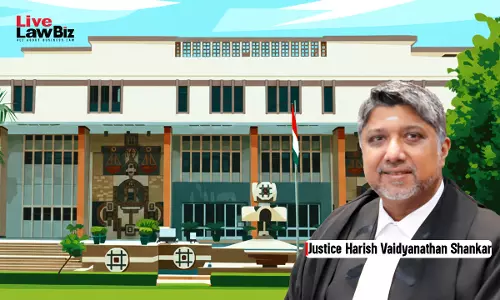
Interim Arbitral Orders Cannot Be Enforced Separately Once Subsumed Into Final Award: Delhi High Court
The Delhi High Court has held that interim orders passed by an arbitral tribunal cannot be independently enforced in cases where they stand subsumed into a final arbitral award covering the same subject matter, holding that such directions must thereafter be enforced only under the statutory framework governing arbitral awards. Justice Harish Vaidyanathan Shankar dismissed an enforcement petition filed by Sunder Lal Gupta, ruling that the interim direction requiring Sahyog Hospitality to...

LiveLawBiz Arbitration Cases Weekly Digest: April 27 To May 2, 2026
NOMINAL INDEXM/s Paramount Learning Solutions and Others v. Aakash Educational Services Ltd., 2026 LLBiz SC 173The State of Andhra Pradesh Vs. M/s Dataevolve Solutions Pvt Limited, 2026 LLBiz SC 169Ocean View Properties LLP v. Baleshwar Sharma & Ors., 2026 LLBiz HC (DEL) 449Future Coupons Private Limited & Ors. v. Amazon.com NV Investment Holdings LLC & Ors., 2026 LLBiz HC (DEL) 443PTC Techno Pvt. Ltd. v. Samsung India Electronics Pvt. Ltd., 2026 LLBiz HC (DEL) 429Sahaj Bharti...
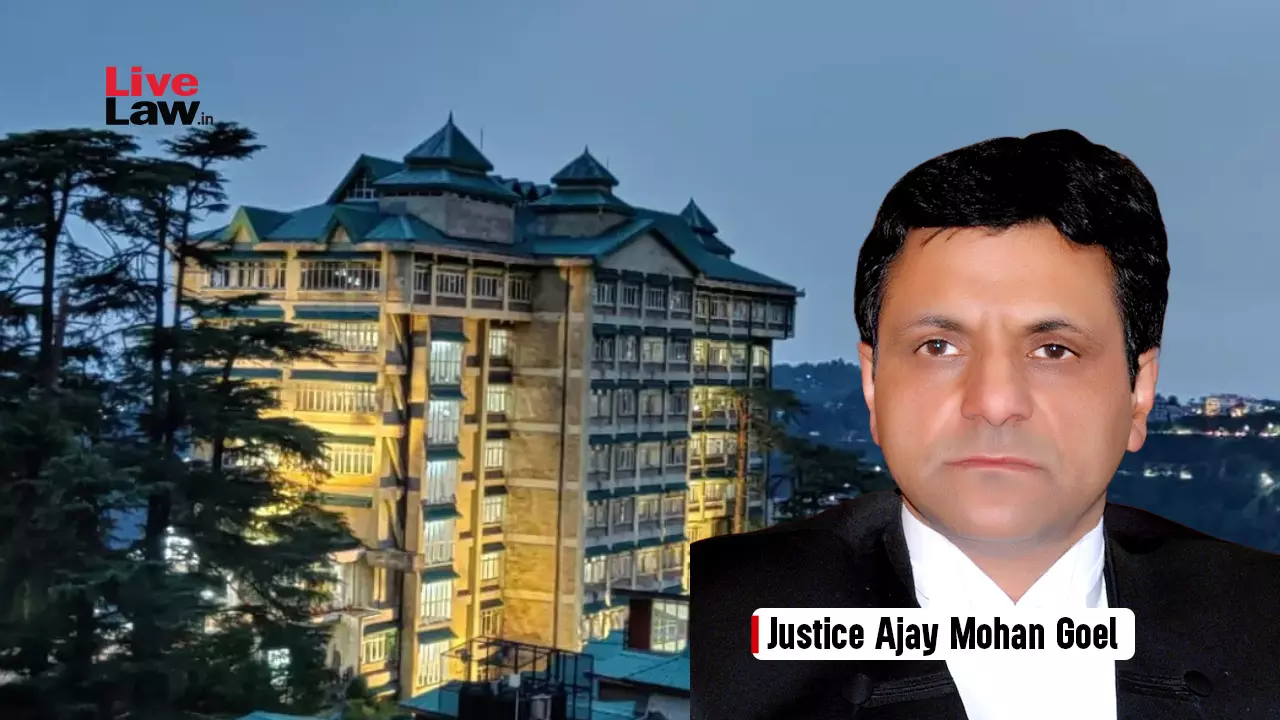
Himachal Pradesh HC Refuses To Stay IIT Mandi's Campus School Agreement Termination With Learning Curve Trust
The Himachal Pradesh High Court has refused interim relief to The Learning Curve Educational Trust, which sought a stay on the termination of its agreement to run a campus school at IIT Mandi. The court held that, in the facts of the case, a party that failed to challenge a termination notice for nearly two years could not seek protection under Section 9 of the Arbitration and Conciliation Act, 1996. Justice Ajay Mohan Goel observed that the Trust had “slept over the matter” and failed to...
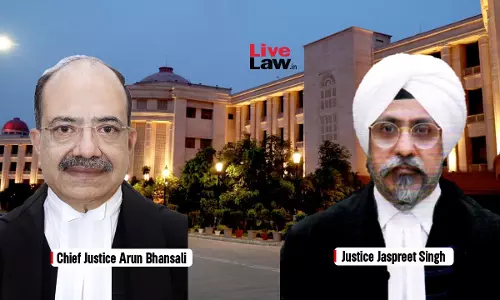
Dealer's Counter-Offer Not Consent: Allahabad HC Sets Aside HPCL Arbitrator Appointment
The Allahabad High Court has set aside an arbitral award after finding that Hindustan Petroleum Corporation Ltd. could not validly appoint its own officer as arbitrator without a clear written waiver from the dealer after the dispute had arisen. "Hence, the appellant cannot be non-suited for not taking a precise ground in its petition under Section 34 of the Act of 1996 as the ground of illegibility could be raised at any stage and having done so and examined by this Court, it is found that the...