
Non-Compete Clauses In Hospital-Doctor Professional Agreements Opposed to Public Policy: Madras High Court
Shivani PS
24 Feb 2026 3:30 PM IST
Holding so, the Court refused to appoint an arbitrator in the dispute between MIOT Hospitals and a cardiothoracic surgeon, imposing ₹1 lakh costs on the hospital.
Holding that hospitals cannot restrain doctors from practicing their profession after termination of service, the Madras High Court has ruled that post-contract non-compete and non-solicitation clauses in doctor agreements are opposed to public policy and void under the Indian Contract Act. The court said such clauses are unlawful, unenforceable, and void ab initio.
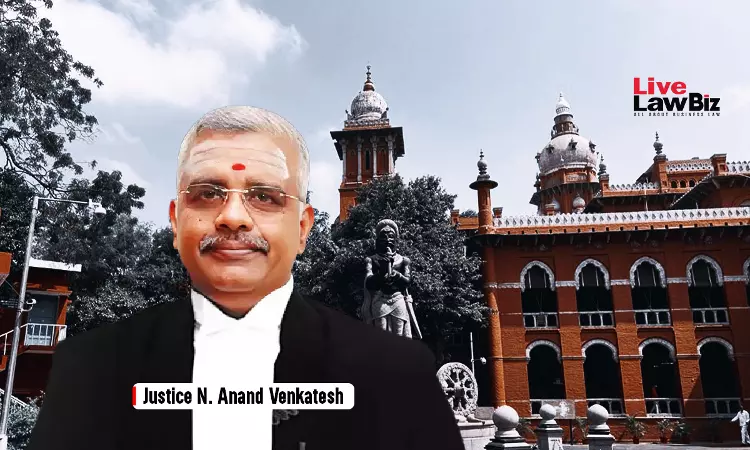
Dismissing a petition filed by MIOT Hospitals Private Limited seeking appointment of a sole arbitrator against cardiothoracic surgeon Dr. Balaraman Palaniappan, Justice N. Anand Venkatesh imposed costs of Rs1 lakh on the hospital, finding that there was no surviving arbitrable dispute.
“An agreement entered into by a doctor with a hospital, which contains a non solicitation and or non compete clause, is certainly opposed to public policy and such an agreement is squarely hit by Section 23 of the Indian Contract Act, 1872. Consequently, it must be held to be unlawful, unenforceable and void ab initio to that extent,” the Court held.
The Court emphasised that doctors are independent professionals and cannot be treated like factory workmen or regular commercial employees. “Doctors can thrive without hospitals whereas a hospital can never exist without doctors supporting such hospitals by rendering their services. Therefore, by no stretch, a hospital can treat a doctor like a workman in a factory or a technical person or a regular employee,” it observed.
It further remarked that the restrictive clause appeared to be lifted from commercial contracts, stating that the hospital had “forgotten the fact that they are running a hospital to serve the patients and that they are indirectly admitting that the organization is nothing short of a profit making entity like any other business entity.”
The Court rejected the concept of a “rival hospital” in the context of medical services and said rivalry is a commercial business term that cannot be imported into the functioning of hospitals.
MIOT Hospitals and Dr. Palaniappan had entered into a professional agreement dated 8 September 2022 appointing him as a Consultant Cardio Thoracic Surgeon. Clause 8.3 of the agreement restrained the doctor, for three years after termination, from joining any rival hospital or setting up practice within a 15 kilometre radius of the hospital in Chennai. The clause also provided for liquidated damages.
After resigning and later joining Apollo Speciality Hospital, the hospital alleged that the doctor had breached the non-compete and non-solicitation clauses and claimed Rs. 42 lakh as liquidated damages.
It also alleged violation of Clause 10.2, which required three months' notice or payment in lieu thereof. When the doctor refused to accept the claims and denied any breach, the hospital approached the High Court under Section 11(6) of the Arbitration and Conciliation Act, 1996, asking the Court to appoint a sole arbitrator to decide the dispute.
The Court, however, pointed out that an arbitration clause cannot operate in isolation. Referring to Section 7 of the Act, it said that an arbitration agreement must itself form part of a valid and lawful contract. If the underlying clause is void in law, the arbitration mechanism cannot be used to enforce it.If the underlying covenant is void under Sections 23 or 27 of the Contract Act, the arbitration clause cannot survive for the purpose of enforcing such a void stipulation.
The Court held that the restrictive clauses were hit by Sections 23 and 27 since they restrained a doctor from practising his profession even after expiry of the contract.
On the hospital's claim that the doctor had failed to serve the required three-month notice, the Court examined the record and found otherwise. It noted that the doctor had submitted his resignation on 29 January 2024 and had sought to be relieved on 29 April 2024, which satisfied the contractual requirement of three months' notice.
“The petitioner hospital is conveniently taking the communication through the email dated 21.4.2025 as the resignation letter whereas the resignation letter had been given much earlier,” the court said.
Holding that there was no subsisting dispute capable of arbitration, the Court dismissed the petition with costs of Rs 1 lakh payable by MIOT Hospitals Private Limited to Dr. Palaniappan. It observed that the petition had been filed “to witch-hunt a doctor, whom the petitioner hospital expected to dance to their tunes for ever.”
Appearances for Respondent (Dr. Balaraman Palaniappan): Advocate S. Balamurugan