
ARBITRATION
Party Cannot Reopen Maintainability Of Fresh Arbitration After Challenging Earlier Award: MP High Court
The Madhya Pradesh High Court has recently held that a party cannot reopen the issue of maintainability at the stage of appointment of an arbitrator after having challenged an earlier arbitral award and after a court permitted fresh arbitration if disputes persisted. The ruling came while the court appointed a fresh arbitrator to adjudicate a dispute between MSP Infrastructures Limited and Madhya Pradesh Road Development Corporation Ltd. (MPRDCL). Justice Deepak Khot held that the question of...

Bombay High Court Appoints Arbitrator In GE Power-Unistar Dispute Despite Defective Section 21 Notice
The Bombay High Court on 14 July held that a defective notice invoking arbitration does not invalidate the commencement of arbitral proceedings where the arbitration agreement has been invoked and the disputes between the parties are clearly identified. Justice Arun R. Pedneker appointed former Bombay High Court Judge Justice Anuja Prabhudessai as the sole arbitrator to adjudicate the dispute between Unistar Metals Private Limited and GE Power Limited under Section 11(6) of the Arbitration and...
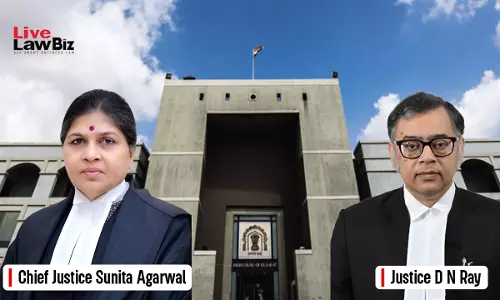
Arbitrator's Hasty Closure of Evidence During COVID Violated Section 18, Vitiating Award: Gujarat High Court
The Gujarat High Court has set aside an arbitral award after finding that the arbitrator unnecessarily hastened to close a party's right to lead evidence during the second wave of the COVID-19 pandemic.The Court held that such treatment violated the requirement under Section 18 of the Arbitration and Conciliation Act, 1996 to treat the parties equally and give each side a full opportunity to present its case. A Division Bench of Chief Justice Sunita Agarwal and Justice D.N. Ray set aside...
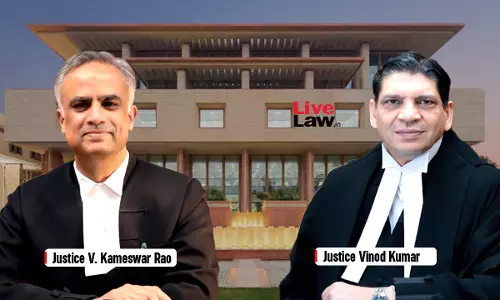
Delhi High Court Says NHAI Cannot Avoid Payments After PCC Issuance, Upholds ₹411 Crore Escrow Awards
The Delhi High Court on 9 July held that a party cannot avoid contractual obligations arising from a Provisional Completion Certificate (PCC) after its issuance by subsequently keeping the certificate in abeyance. A Division Bench comprising Justices V. Kameswar Rao and Vinod Kumar dismissed two appeals filed by the National Highways Authority of India (NHAI) against lender banks led by South Indian Bank Limited. It observed: “The aforesaid conclusion of the learned Tribunal and the learned...

High Courts Should Exercise Caution Before Invoking Article 227 In Ongoing Arbitration: Supreme Court
The Supreme Court on Tuesday ruled that High Courts should exercise "extreme circumspection" before using their supervisory powers to interfere with ongoing arbitral proceedings. It held that orders rejecting jurisdictional objections during arbitration are ordinarily challengeable only after the final arbitral award. A bench of Justice K.V. Viswanathan and Justice Vijay Bishnoi observed that the constitutional power of High Courts cannot be taken away. At the same time, it observed that the...
Party Aware Of Arbitration Can't Challenge Unilateral Arbitrator's Appointment For First Time In Appeal: Madras HC
The Madras High Court has held that a party that knew of arbitral proceedings, sought adjournments, and then remained ex parte cannot raise a challenge to the unilateral appointment of the arbitrator for the first time in a Section 37 appeal after remaining silent for nearly ten years. A Division Bench of Justice P. Velmurugan and Justice K. Govindarajan Thilakavadi dismissed an appeal by Nirmal Datacomm Private Limited and others against an arbitral award directing them to pay Redington...
Supreme Court Refuses To Interfere With Madras HC Order On Arbitrator Appointment In Adani-Tamil Nadu Coal Dispute
The Supreme Court on Wednesday refused to interfere with the Madras High Court's ruling upholding the appointment of a sole arbitrator in a dispute between Adani Global Pte. Ltd. and Tamil Nadu Power Generation Corporation Ltd. over a contract for the supply of 39 lakh tonnes of imported coal. The court, however, recorded Adani's statement that it would be free to raise all other grounds available to it in the pending proceedings under Section 34 of the Arbitration and Conciliation Act. A...
Relief Sought, Not Property Location, Decides Jurisdiction If Arbitration Seat Is Unspecified: Bombay High Court
The Bombay High Court has recently held that territorial jurisdiction cannot be determined solely by the location of partnership properties or the registered office of a partnership firm where the partnership deed containing an arbitration clause does not specify the arbitral seat.Instead, the court held, the material facts constituting the foundation of the relief sought must determine jurisdiction.Justice Amit Borkar delivered the ruling while deciding a petition filed by Vinod Kumar Saraf...
Withdrawal Of Civil Suit Doesn't Extinguish Arbitration Agreement: Calcutta High Court
The Calcutta High Court has held that withdrawal of an earlier civil suit without liberty to institute fresh proceedings does not extinguish the arbitration agreement or bar a subsequent petition under Section 11(6) of the Arbitration and Conciliation Act, 1996 for constitution of an arbitral tribunal. In doing so, the Court distinguished the Supreme Court's decision in HPCL Bio-Fuels Ltd. v. Shahaji Bhanudas Bhad, which involved the unconditional withdrawal of an earlier Section 11...

Requirement To File Commercial Suits Before Commercial Division Applies To Applications Too: Calcutta High Court
The Calcutta High Court has held that the requirement to institute commercial disputes before its Commercial Division applies not only to suits but also to applications involving the specified value. A Division Bench of Justices Debangsu Basak and Md. Shabbar Rashidi clarified that Section 7 of the Commercial Courts Act, 2015 governs not only commercial suits but also applications, including petitions under Section 9 of the Arbitration and Conciliation Act, 1996. It accordingly set aside the...

Arbitral Award Overlooking Enabling Statute Contravenes Fundamental Policy of Indian Law: Kerala High Court
The Kerala High Court has held that overlooking the provisions of the enabling statute while passing an arbitral award is an act in contravention of the fundamental policy of Indian law. It said such a glaring contravention justifies interference under Section 34 of the Arbitration and Conciliation Act, while upholding the setting aside of an arbitral award that had enhanced compensation for land acquired for the NH-47 bypass. Justice S. Manu observed, "Above all, the arbitrator has not...
Conflicting Dispute Resolution Clauses Should Be Interpreted in Favour of Arbitration: Bombay High Court
The Bombay High Court has recently held that where a commercial contract contains conflicting dispute resolution clauses, courts should lean in favour of arbitration if the agreement, read as a whole, reflects the parties' intention to resolve disputes through arbitration. Justice M. W. Chandwani of the Nagpur bench delivered the ruling while deciding an application filed by Sri Buddha–SVEC JV against Western Coalfields Ltd. The court referred the parties to conciliation before Advocate...