
Rajasthan High Court Upholds Excise Duty On Scrap Of CENVAT-Credited Capital Goods
Nupur Agrawal
24 Aug 2026 12:10 PM IST
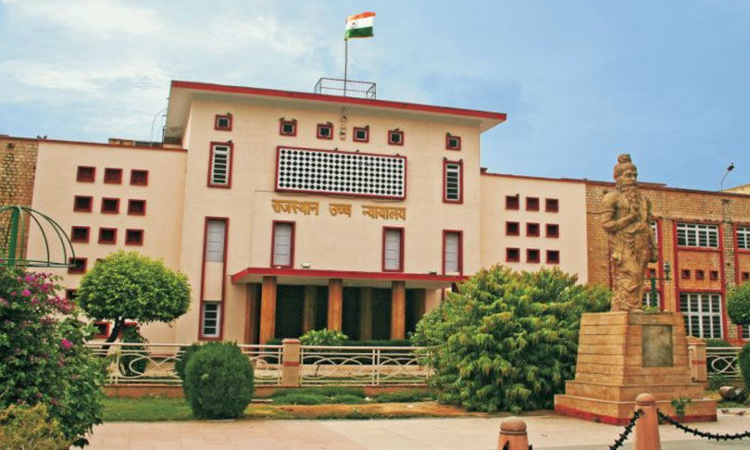
The Rajasthan High Court on 3 August held that excise duty is payable when capital goods on which CENVAT credit was availed are subsequently cleared as waste or scrap, even if the scrap does not fall under a specific tariff entry.
A Division Bench of Justices Arun Monga and Ashutosh Kumar dismissed an appeal filed by Shree Cement Ltd. against the Customs, Excise and Service Tax Appellate Tribunal (CESTAT) order upholding the excise duty demand on the clearance of such scrap. The judges held:
“The credit mechanism is a concession granted to the manufacturer on the premise that the capital goods are put to use in, or in relation to, the manufacture of dutiable final products. When such credit availed capital goods exit the tax net in the form of scrap sold for value, the Rule ensures that an amount commensurate with the duty on such transaction value is remitted, so that the credit availed at the time of receipt is not converted into an unintended windfall.”
Shree Cement Ltd., a manufacturer of cement and clinker, had procured and deployed refractory bricks, conveyor belts, ACCR, cables and other capital goods during its manufacturing process and availed CENVAT credit on them.
As these capital goods became unusable or deteriorated over time, the company sold them as scrap. It paid excise duty on scrap falling under specified tariff headings under the Central Excise Tariff Act, 1985. However, it did not pay duty on scrap which did not fall under any specific tariff entry.
The Department issued a show cause notice seeking recovery of excise duty on the latter category of scrap. Shree Cement challenged the demand before the adjudicating authority and subsequently before the appellate forums. The CESTAT ultimately upheld the duty demand, following which the company approached the High Court.
The Court referred to Rule 3(5A) of the CENVAT Credit Rules, 2004, which deals with clearance of capital goods as waste and scrap and requires a manufacturer to pay an amount equal to the duty leviable on the transaction value of such waste and scrap. It held that once a manufacturer had availed CENVAT credit on capital goods, it could not avoid the corresponding obligation under Rule 3(5A) when those goods were later cleared as scrap.
The Bench rejected Shree Cement's contention that duty could not be charged because the scrap did not fall under a specific tariff entry or because it was not generated as a result of the manufacturing process. It held that the duty liability in such cases did not arise because the scrap was a manufactured product of the appellant. Instead, it arose from the statutory condition attached to the CENVAT credit availed on the capital goods.
Further, the Bench observed that a contrary interpretation would allow a manufacturer to avail CENVAT credit on capital goods and subsequently sell their remnants for consideration without any corresponding fiscal consequence.
It also relied on the Gujarat High Court's decision in GNFC Limited v. Union of India, which considered the same issue under a pari materia provision and reached the same conclusion.
Accordingly, the High Court dismissed the appeal.
For Appellant(s): Mr. Kinshuk Jain, Standing Counsel (CBIC) Mr. Daksh Pareek Mr. Arjun Singh Mr. Keshav Parashar Mr. Parth Khandel Mr. Saurabh Jain.