
Top Stories

UK-Based Arms Consultant Sanjay Bhandari Moves SC Against Delhi HC Fugitive Economic Offender Ruling
Businessman Sanjay Bhandari has approached the Supreme Court against the Delhi High Court's decision affirming his declaration as a Fugitive Economic Offender under the Fugitive Economic Offenders ActBhandari, a defence consultant is under investigation in the alleged Pilatus basic trainer aircraft procurement and Tatra all terrain military truck procurement cases apart from proceedings under the Black Money Act.The special leave petition filed on July 9 is yet to be listed before the apex...

NCLT Mumbai Rejects 100 Jet Lite Employees' Bid To Claim Dues In Jet Airways Liquidation
The tribunal held that secondment alone did not create an employer-employee relationship or an enforceable claim against Jet Airways

LiveLawBiz: Corporate Legal News Daily Round-Up: July 10, 2026
IBC NCLT Kochi Says CoC Cannot Cripple Insolvency Process By Refusing To Fund Essential CIRP CostsNCLT Mumbai Dismisses Insolvency Plea Against Shapoorji PallonjiNCLT Bengaluru Issues Notice To Ola Electric Technologies In ₹9.57 Crore Insolvency PleaAppeal Against Deferred Intervention Application In Insolvency Case Not Maintainable: NCLAT ChennaiNCLAT New Delhi Expunges Remarks Against Mahavir Medicare RP, Clarifies RP's Independent IBC DutySuit Filed During IBC Interim Moratorium Attracts...

Delhi High Court Refuses To Stay Former Congress MLA Rajendra Bharti's Conviction In Gramin Vikas Bank Fraud Case
The Delhi High Court on Friday refused to stay the conviction of former Madhya Pradesh MLA and Congress leader Rajendra Bharti for defrauding the Zila Sahkari Krishi Aur Gramin Vikas Bank The order leaves his conviction operative and his disqualification from the Madhya Pradesh Assembly undisturbed ahead of the scheduled by-election for the Datia constituency. A single-judge bench of Justice Manoj Jain dismissed Bharti's application seeking a stay on his conviction pending the disposal of his...

Advanced Liquidation Cannot Be Shifted To NCLT Merely Because Assets Are Unsold: Karnataka High Court
The Karnataka High Court on 23 June, held that winding up proceedings cannot be transferred to the National Company Law Tribunal (NCLT) merely because the company's assets have not yet been sold. It noted that once liquidation has progressed substantially in time and substance, transfer would disrupt a mature liquidation process and is not warranted. Justice Suraj Govindaraj dismissed an application filed under the fifth proviso to Section 434(1)(c) of the Companies Act, 2013 (which empowers...

NSE Chief Performs Public Duty; Delhi High Court Rejects Former CEO Chitra Ramkrishna's Challenge To PC Act
The Delhi High Court on Thursday held that the Managing Director and Chief Executive Officer of the National Stock Exchange performs a public duty in which the public at large is invested. It dismissed former NSE chief Chitra Ramkrishna's challenge to the constitutional validity of provisions of the Prevention of Corruption Act, the sanction granted for her prosecution, and the criminal proceedings arising out of the NSE co-location case. A division bench of Justice Navin Chawla and Justice...

LiveLawBiz: Corporate Legal News Daily Round-Up: July 09, 2026
BANKING/NBFC Bombay High Court Quashes BOI's Fraud Tag Against Future Lifestyle, Promoters Kishore Biyani, Rakesh BiyaniRajasthan High Court To Decide If Police Can Levy Fees On Banks For SARFAESI Possession AssistanceRBI's Bank Amalgamation Scheme Doesn't Override Landlord's Rights Under Delhi Rent Control Act: Supreme CourtCivil Courts Can't Grant Interim Relief Against SARFAESI Proceedings Despite Suit Being Maintainable: Kerala High CourtSupreme Court Sets Aside Delhi HC Ruling That PNB-HCB...
Commercial Litigants Cannot Produce Additional Documents In Piecemeal Manner: Supreme Court
The Supreme Court on Thursday ruled that parties to commercial disputes cannot repeatedly seek to place additional documents on record after leading evidence, ruling that such an approach is incompatible with the purpose of ensuring the speedy resolution of commercial disputes. "The plaintiff when leading evidence, is expected to not only produce all documents but also properly anticipate the questions that may be put to its witnesses by the other side. What cannot be countenanced is a stop and...

Bombay High Court Quashes BOI's Fraud Tag Against Future Lifestyle, Promoters Kishore Biyani, Rakesh Biyani
The Bombay High Court has recently quashed Bank of India's order classifying Future Lifestyle Fashions Ltd.'s (FLFL) loan account as fraud. The order had also named the company's promoters, Kishore Biyani and Rakesh Biyani, and its Managing Director, Vishnuprasad Mokkapatty.The court found that the bank's decision did not explain why the account and the individuals had been brought within the fraud classification despite referring to the show cause notice, the replies received, and the forensic...

Rajasthan High Court To Decide If Police Can Levy Fees On Banks For SARFAESI Possession Assistance
The Rajasthan High Court is set to examine whether the Police Department can levy charges on banks for providing police assistance to recover secured assets under Section 14 of the Securitisation and Reconstruction of Financial Assets and Enforcement of Security Interest (SARFAESI) Act, 2002. A Single Bench of Justice Sameer Jain on 6 July was hearing a petition filed by AU Small Finance Bank Ltd challenging the Rajasthan Police Department's levy of charges for providing police assistance in...
RBI's Bank Amalgamation Scheme Doesn't Override Landlord's Rights Under Delhi Rent Control Act: Supreme Court
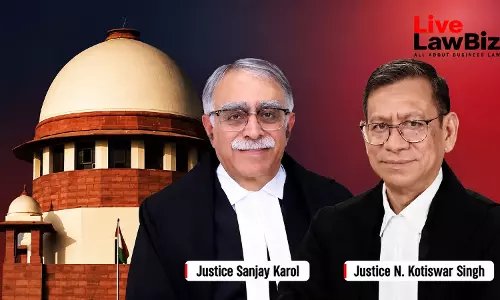
The Supreme Court on Thursday held that a banking amalgamation carried out under a Reserve Bank of India scheme does not take away a landlord's right to seek eviction under the Delhi Rent Control Act where tenancy rights vest in another entity without the landlord's written consent. A bench of Justices Sanjay Karol and Nongmeikapam Kotiswar Singh held that the amalgamation of Hindustan Commercial Bank with Punjab National Bank did not prevent eviction after the tenancy rights vested in Punjab...

Supreme Court Sets Aside Delhi HC Ruling That PNB-HCB Bank Merger Did Not Amount To Unlawful Subletting
The Supreme Court on Thursday allowed the appeal filed by British Motor Car Company (1934) Ltd against the Delhi High Court's judgment which had held that the statutory amalgamation of Hindustan Commercial Bank (HCB) with Punjab National Bank (PNB) did not amount to unlawful subletting under the Delhi Rent Control Act.The High Court had set aside the eviction order passed by the Rent Control Tribunal, holding that the transfer of tenancy rights to PNB pursuant to the statutory amalgamation of...