
Top Stories
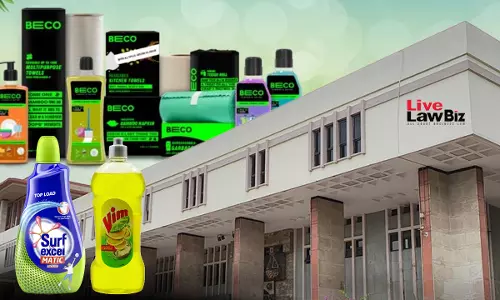
HUL Drags Beco To Delhi High Court Over Ads Claiming Surf Excel, Vim Cause Skin Allergies
The Delhi High Court on Wednesday issued notice to Beco in a product disparagement and trademark infringement suit filed by consumer goods giant Hindustan Unilever Limited (HUL)HUL moved the Court against Kwick Living (I) Private Limited, which runs the cleaning products brand Beco, alleging that Beco's advertisements disparage HUL's detergent brands Surf Excel and Vim by claiming they contain chemicals that cause skin irritation and allergies. Justice Anup Jairam Bhambhani heard extensive...
NCLAT Dismisses Byju Raveendran's Appeal Against Glas Trust's Voting Share In BYJU'S' Committee of Creditors
The National Company Law Appellate Tribunal (NCLAT), Chennai, on Monday dismissed an appeal filed by Byju Raveendran, suspended director and promoter of Think & Learn Pvt. Ltd., challenging Glas Trust's majority voting share in the company's Committee of Creditors (CoC).The NCLT order had merely listed for hearing Byju's application challenging Glas Trust's majority voting share in the Committee of Creditors (CoC) of Think & Learn Pvt. Ltd.A bench of Judicial Member Justice N. Seshasayee...

LiveLawBiz: Corporate Legal News Daily Round-Up: August 18, 2026
IBC SARFAESI Proceedings, ED Provisional Attachment Do Not Bar CIRP: NCLT AhmedabadBank's Internal Policies Cannot Override IBC Or RP Appointment Order: NCLT Guwahati'Judicial Discipline' Requires HC To Refrain From Entertaining Writ Against Appealable NCLT Order: Supreme CourtIPR Delhi High Court Temporarily Restrains Sale Of 'THUNDER 15000' Beer In InBrew's Trademark SuitDelhi High Court Upholds Injunction Against 'Noviets' Pharma In Trademark Dispute With Novartis'India Gate' Trademark...
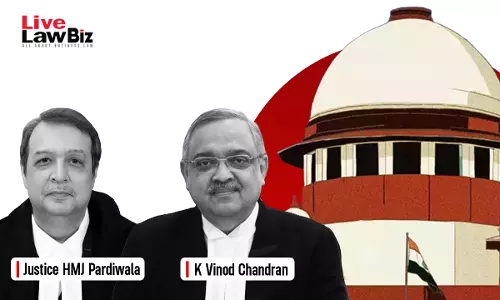
Supreme Court To Examine If Winding-Up Petitions Transferred From HC To NCLT Must Meet IBC Threshold
The Supreme Court on Wednesday agreed to examine whether a winding-up petition filed before a High Court can be subjected to the ₹1 crore minimum default threshold under the Insolvency and Bankruptcy Code after being transferred to the National Company Law Tribunal. The case concerns winding-up proceedings instituted before the ₹1 crore threshold was introduced under the Code. The court will consider whether the threshold applicable when the proceedings were originally filed should continue...
Supreme Court Directs No Coercive Steps Against ITC In ₹11.59-Crore CST Demand
The Supreme Court on Tuesday directed that no coercive steps be taken against ITC Ltd in its challenge to the Telangana High Court judgment that upheld a ₹11.59 crore commercial tax demand on its inter State stock transfers.The High Court on July 22, 2026 dismissed ITC's six writ petitions. It held that the transactions involving movement of goods from Andhra Pradesh to other States were, in substance inter State sales under Section 3(a) of the Central Sales Tax Act and therefore liable to tax.A...
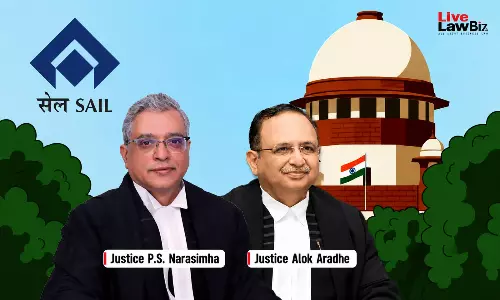
Supreme Court Directs Status Quo On SAIL Employees Cooperative Credit Society Winding-Up Order
The Supreme Court on Tuesday directed status quo on a Delhi High Court order concerning the winding up of Steel Authority of India (SAIL) Employees Cooperative Credit Society Ltd. The High Court in May 2026 had directed the Central Registrar to pass an order for winding up the Society and appoint a Liquidator to take charge of its assets and facilitate repayment of claims.A bench of Justices Pamidighantam Sri Narasimha and Alok Aradhe directed the parties to file their responses. It listed the...
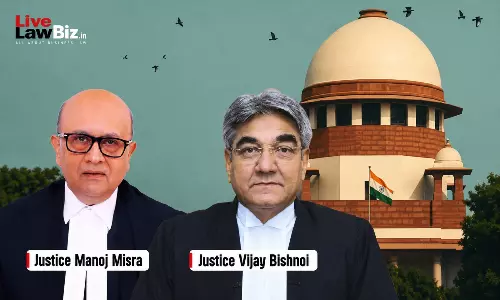
'Judicial Discipline' Requires HC To Refrain From Entertaining Writ Against Appealable NCLT Order: Supreme Court
The Supreme Court has set aside a Kerala High Court order that entertained a writ petition challenging an NCLT order passed during liquidation proceedings. The court held that judicial discipline requires the High Court to refrain from entertaining such a challenge when the aggrieved person can pursue an appeal under the Insolvency and Bankruptcy Code (IBC).A Bench of Justices Manoj Misra and Vijay Bishnoi observed that Section 61 of the IBC gives a broad right of appeal to any “person...

LiveLawBiz: Corporate Legal News Daily Round-Up: August 17, 2026
IBC Suspended Director Status Alone Cannot Justify Harsher Standard For His Resolution Plan: NCLT KochiSupreme Court Issues Notice On NBCC Plea Seeking RERA Exemption For 16 Supertech ProjectsIPR Karnataka High Court Refuses Plea Seeking $2.5 Million From eBay Over Alleged Copyright InfringementMadras High Court Grants Anti-Piracy Injunctions For 'Batwara 1947,' 'Awarapan 2'Sonu Nigam Namesake Agrees Before Bombay High Court To Stop Using Singer's Name On Social MediaTAX Madras High Court...
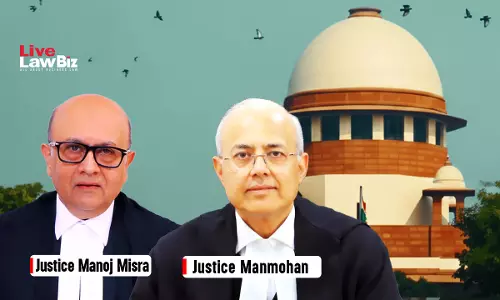
Supreme Court Asks CJI To Consider Larger Bench To Examine Validity Of Pre-Deposit Clauses In Arbitration Agreements
The Supreme Court on Monday requested the Chief Justice of India to consider whether a larger Bench should examine the validity of contractual clauses requiring a party to deposit a percentage of its claim before invoking arbitration. The issue arose from a clause requiring the contractor in the present case to deposit 10% of its claim before the dispute could be referred to arbitration.A Bench of Justices Manoj Misra and Manmohan expressed doubts over the correctness of the three-Judge ruling...

Karnataka High Court Refuses Plea Seeking $2.5 Million From eBay Over Alleged Copyright Infringement
The Karnataka High Court has recently declined to entertain a writ petition by retired Army officer Lt. Col. D.K. Havanoor seeking USD 2.5 million in damages from eBay entities over alleged copyright infringement.Justice M.G.S. Kamal passed the order on August 3, 2026, while giving Havanoor liberty to pursue his grievance before a competent court.Havanoor's grievance concerned a book that he claimed belonged to him and which, according to the order, was displayed and sold through eBay.com for...

LiveLawBiz Indirect Tax Weekly Round-Up: August 10 - August 16, 2026
SUPREME COURTOrder Authorising Arrest Under GST Law Must Be Communicated Before Arrest: Supreme CourtCase Title : UNION OF INDIA vs SUNIL BIYANI Case Number : DIARY NO. 34138/2026The Supreme Court on Wednesday ruled that an order authorising arrest under the GST law must be communicated to the person concerned before the authorities proceed with the arrest. “To ensure that anyone who is facing the apprehension of arrest is not left in a position of irreparable damage, we have said that Section...

LiveLawBiz Direct Tax Weekly Round-Up: August 10 - August 16, 2026
HIGH COURTSAllahabad HCIncome Tax Act | 18-Month Period To Decide Settlement Application Cannot Restart On Transfer Between Interim Boards: Allahabad High CourtCase Title : B.L. Agro Industries Limited, Bareilly Thru. Mr. Amit Kumar Authorised Signatory v. Union of India Ministry of Finance Deptt. Revenue Govt. of India New Delhi Thru. Secy. and others Case Number : WRIT TAX No. - 77 of 2024 CITATION : 2026 LLBiz HC (ALL) 63The Allahabad High Court at Lucknow has recently held that the period...